
Story
Michael Burry Sells Alibaba Stake, Buys JD.com Amid Dilution and Valuation Concerns
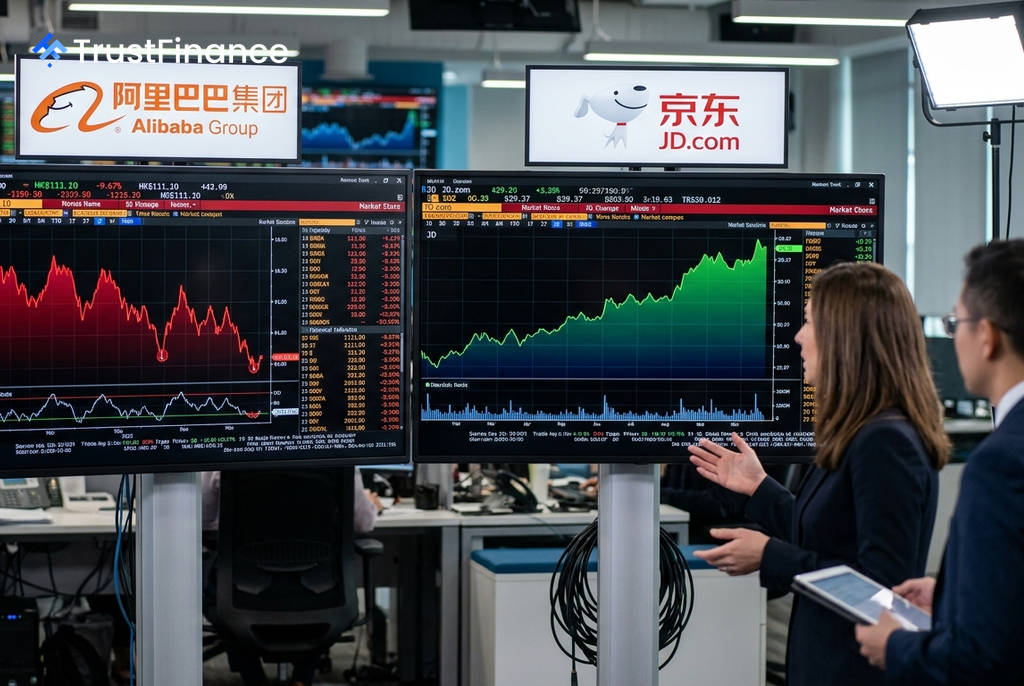
Prominent investor Michael Burry has liquidated his entire stake in Alibaba Group Holdings (BABA) and initiated a significant new position in rival JD.com (JD), according to a disclosure on August 23, 2026. The move signals a clear preference for JD.com's valuation and cash generation over Alibaba's capital-intensive growth strategy.
The Rationale Behind the Trade
Burry's decision to exit Alibaba is directly linked to the company's announcement of a HK$80 billion ($10.2 billion) share placement. The offering, the largest primary follow-on in Hong Kong's history, will issue 710 million new shares, increasing the share count by approximately 3.7% and diluting existing shareholders. Alibaba shares fell 9.67% in Hong Kong following the news.
Burry argued that Alibaba's heavy spending on artificial intelligence infrastructure is eroding its return on invested capital (ROIC), which has fallen to just 2.6%. He stated he would need Alibaba's stock to fall by roughly 50% before reconsidering an investment, citing concerns over the company's cash consumption.
A Divergence in Financial Health
The strategic shift highlights a stark valuation and performance gap between the two Chinese tech giants. As of August 24, 2026, the contrast in key financial metrics is significant:
 Ad
- Valuation: JD.com trades at a trailing price-to-earnings (P/E) ratio of 17.9x, compared to Alibaba's 25.0x.
- Cash Flow: JD.com boasts a positive free cash flow (FCF) yield of 10.7%, while Alibaba's is a negative -4.2%, indicating it is burning cash.
- Profitability: Alibaba's net income has been pressured by AI spending, with its June-quarter net profit falling approximately 75% year-over-year. While JD.com's net income also declined, the source attributes this to strategic investments rather than a deteriorating core business.
- Shareholder Returns: JD.com offers a dividend yield of 3.3%, whereas Alibaba's is 0.9%.
Investor Considerations and Risks
While Burry's trade is rooted in a clear value thesis, investors should note the distinct risks associated with each company. Analysts at Morgan Stanley recently downgraded JD.com to "Underweight," citing its heavy reliance on electronics and appliances—sectors vulnerable to the winding down of government subsidies. A Barclays analysis also pointed to projections of declining net margins for JD.com by 2030.
Conversely, the consensus among analysts for Alibaba remains bullish, with an average target price suggesting significant upside. The market may be overly penalizing the company for its long-term AI investments, which could eventually yield substantial returns. Burry's strategy focuses on current cash generation and valuation, a contrast to the market's potential pricing of Alibaba's future AI-driven growth.
Read next
More on Stocks
FTC Orders Walmart, Uber, Delta to Disclose Data on Personalized Pricing
The U.S. Federal Trade Commission is demanding nine major companies, including leading retail, travel, and gig economy firms, to provide information on how they use consumer data for setting individual prices and wages.

Google Launches Gemini 4 Carbon AI Model to Bolster Cybersecurity Capabilities
Alphabet's Google has unveiled Gemini 4 Carbon, its latest AI model specifically designed for advanced cybersecurity tasks like vulnerability detection and secure code generation. The launch escalates competition with rivals OpenAI and Anthropic in the enterprise AI market.

Oracle Shares Surge After Unveiling $225 Billion Revenue Target for 2030
Oracle stock rose sharply after the company presented a long-term financial outlook targeting at least $225 billion in annual revenue by fiscal 2030, driven by its expanding AI infrastructure business.

DOJ Scrutinizes Nvidia's $12.9B Hugging Face Deal Amid Broader Antitrust Probe, Sources Say
The U.S. Department of Justice is reportedly examining Nvidia's planned $12.93 billion acquisition of AI platform Hugging Face as part of a wider, ongoing antitrust investigation into the chipmaker's market conduct.