
Story
Meta's $18 Billion Settlement Leaves Core Ad Business Intact, Pressures Rivals
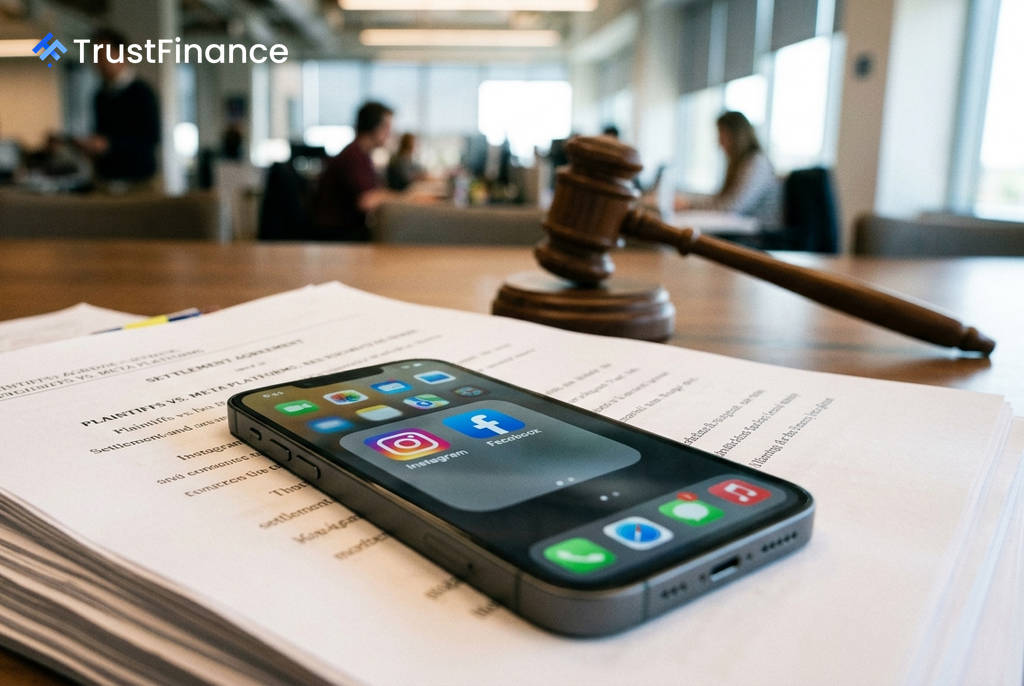
Meta Platforms has agreed to a sweeping settlement with nearly all U.S. states, resolving claims that it knowingly designed Facebook and Instagram to be addictive to children. The social media giant will pay as much as $18 billion over ten years and implement new limits on features for teenage users, according to the agreement announced Wednesday.
Financial Impact and Market Reaction
While the headline figure is one of the largest ever for a technology company, the settlement is unlikely to strain Meta, which reported over $60 billion in profit last year. Crucially, the deal leaves the company's core business model of personalized feeds and targeted advertising—its primary profit engine—unscathed. Meta, which denied wrongdoing as part of the settlement, saw its shares rise about 1% following the news.
Investors appeared to welcome the resolution, which removes a significant regulatory overhang and avoids a potentially damaging trial. The payment is a fraction of the $1.4 trillion in penalties that Meta said the states had initially sought, according to Reuters. "This is a business decision — it will cost them more to finish the trial and lose than to pay just over $1 billion every year for ten years," said Mary Graw, a law professor at the Catholic University of America.
A Strategic Move Against Competitors
The settlement includes a provision designed to put pressure on Meta's rivals. According to the terms, about 30% of the payout and some of the stricter limits on teen usage are contingent on competitors like TikTok, YouTube, and Snapchat agreeing to comparable obligations in their own potential settlements.
 Ad
This structure effectively aligns Meta with the state attorneys general against its competition, according to Eric Goldman, a professor at Santa Clara University School of Law. The market reflected this pressure, with shares of Alphabet (GOOGL) closing down 1.4% and Snap (SNAP) falling 8.4% after the announcement.
Lingering Doubts and Future Hurdles
Despite the settlement, questions remain about the effectiveness of the new guardrails. Internal Meta documents previously made public showed that disabling the "like" count—one of the proposed changes—was projected to reduce the daily user base by only about 0.09%.
Meta's legal challenges are also not entirely over. Florida and New Mexico were not part of the agreement, and the company faces separate scrutiny in Europe, where the European Commission has preliminarily found it in breach of a 2022 content-moderation law. "The bellwether trial is over, but Meta’s trials are just beginning," said James Grimmelmann, a professor of digital and information law at Cornell University.
Read next
More on Stocks
FTC Orders Walmart, Uber, Delta to Disclose Data on Personalized Pricing
The U.S. Federal Trade Commission is demanding nine major companies, including leading retail, travel, and gig economy firms, to provide information on how they use consumer data for setting individual prices and wages.

Google Launches Gemini 4 Carbon AI Model to Bolster Cybersecurity Capabilities
Alphabet's Google has unveiled Gemini 4 Carbon, its latest AI model specifically designed for advanced cybersecurity tasks like vulnerability detection and secure code generation. The launch escalates competition with rivals OpenAI and Anthropic in the enterprise AI market.

Oracle Shares Surge After Unveiling $225 Billion Revenue Target for 2030
Oracle stock rose sharply after the company presented a long-term financial outlook targeting at least $225 billion in annual revenue by fiscal 2030, driven by its expanding AI infrastructure business.

DOJ Scrutinizes Nvidia's $12.9B Hugging Face Deal Amid Broader Antitrust Probe, Sources Say
The U.S. Department of Justice is reportedly examining Nvidia's planned $12.93 billion acquisition of AI platform Hugging Face as part of a wider, ongoing antitrust investigation into the chipmaker's market conduct.