
Story
Merck, Moderna Report Positive Results in Large-Scale Melanoma Vaccine Trial
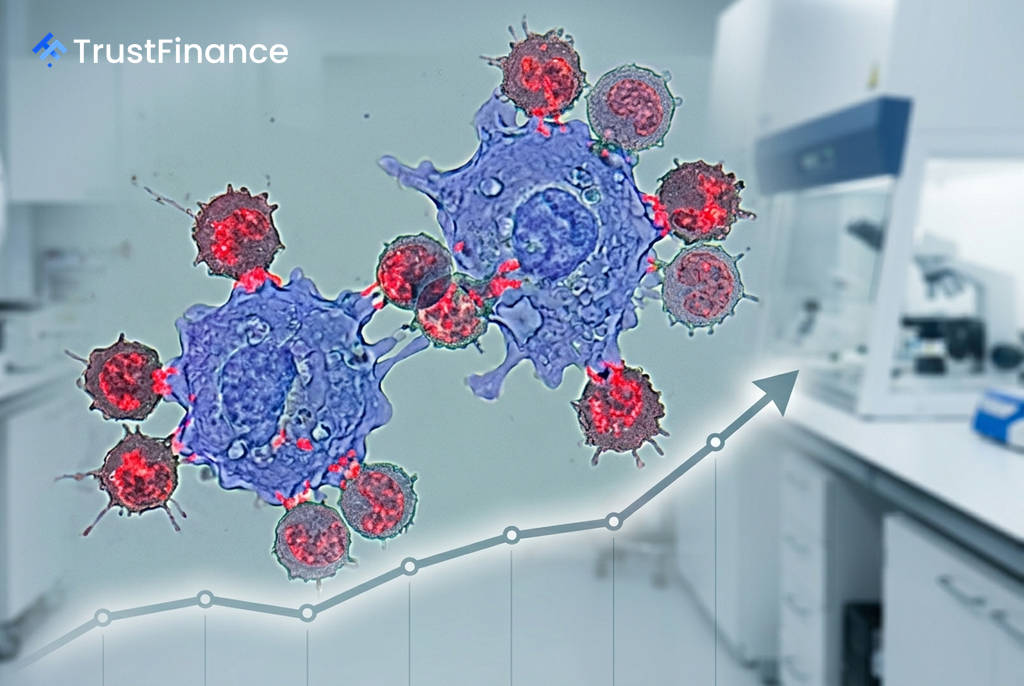
Merck and Moderna have reported a significant breakthrough in a large-scale clinical trial for their personalized mRNA cancer vaccine, demonstrating its effectiveness in preventing the recurrence of high-risk melanoma. The positive results from the trial, which involved more than 1,000 patients, could pave the way for a new class of treatments for a wide range of cancers.
A New Approach to Cancer Treatment
The companies announced Wednesday that their vaccine, known as intismeran autogene, helped prevent the return and spread of disease when used in combination with Merck’s immunotherapy drug Keytruda. The trial focused on patients with localized melanoma tumors that had been surgically removed but carried a high risk of recurrence.
Unlike traditional chemotherapy, this personalized vaccine trains a patient's immune system to specifically attack mutations found only on their tumor cells. Dr. Julie Gralow, chief medical officer of the American Society of Clinical Oncology, called the trial result "a monumental leap forward" that validates mRNA technology as a viable cancer treatment, according to Reuters.
Trial Efficacy and Safety
While the large-scale trial is ongoing and full results have not yet been released, previous data provides a strong indication of the combination's potential. According to a five-year follow-up from a mid-stage trial presented in June:
 Ad
- The vaccine combination cut the risk of cancer recurrence by half compared to Keytruda alone.
- It reduced the risk that the cancer would spread to new locations by 59%.
The companies also reported that the addition of the vaccine did not introduce new side effects beyond those associated with Keytruda, which can include fatigue, rash, and inflammation.
Broader Market and Pipeline Implications
The success in melanoma is seen by experts as a major validation that could spur significant investment and research across the oncology field. "With this positive study, there is hope... that these approaches may change the way we treat cancer more broadly," said Dr. Ryan Sullivan of the Mass General Brigham Cancer Institute.
Merck and Moderna are already expanding their research into other cancers, with several large trials underway for non-small cell lung cancer and mid-stage trials for bladder and kidney cancers. Moderna President Stephen Hoge told Reuters that numerous trial results are expected within the next two years. The field is also seeing activity from competitors like Roche and BioNTech, who are developing a similar treatment for colon and pancreatic cancers, with results expected in 2027 and 2031, respectively.
Read next
More on Stocks
FTC Orders Walmart, Uber, Delta to Disclose Data on Personalized Pricing
The U.S. Federal Trade Commission is demanding nine major companies, including leading retail, travel, and gig economy firms, to provide information on how they use consumer data for setting individual prices and wages.

Google Launches Gemini 4 Carbon AI Model to Bolster Cybersecurity Capabilities
Alphabet's Google has unveiled Gemini 4 Carbon, its latest AI model specifically designed for advanced cybersecurity tasks like vulnerability detection and secure code generation. The launch escalates competition with rivals OpenAI and Anthropic in the enterprise AI market.

Oracle Shares Surge After Unveiling $225 Billion Revenue Target for 2030
Oracle stock rose sharply after the company presented a long-term financial outlook targeting at least $225 billion in annual revenue by fiscal 2030, driven by its expanding AI infrastructure business.

DOJ Scrutinizes Nvidia's $12.9B Hugging Face Deal Amid Broader Antitrust Probe, Sources Say
The U.S. Department of Justice is reportedly examining Nvidia's planned $12.93 billion acquisition of AI platform Hugging Face as part of a wider, ongoing antitrust investigation into the chipmaker's market conduct.