
Story
Low-Volatility Strategies Eyed as Earnings Season Amplifies Market Uncertainty
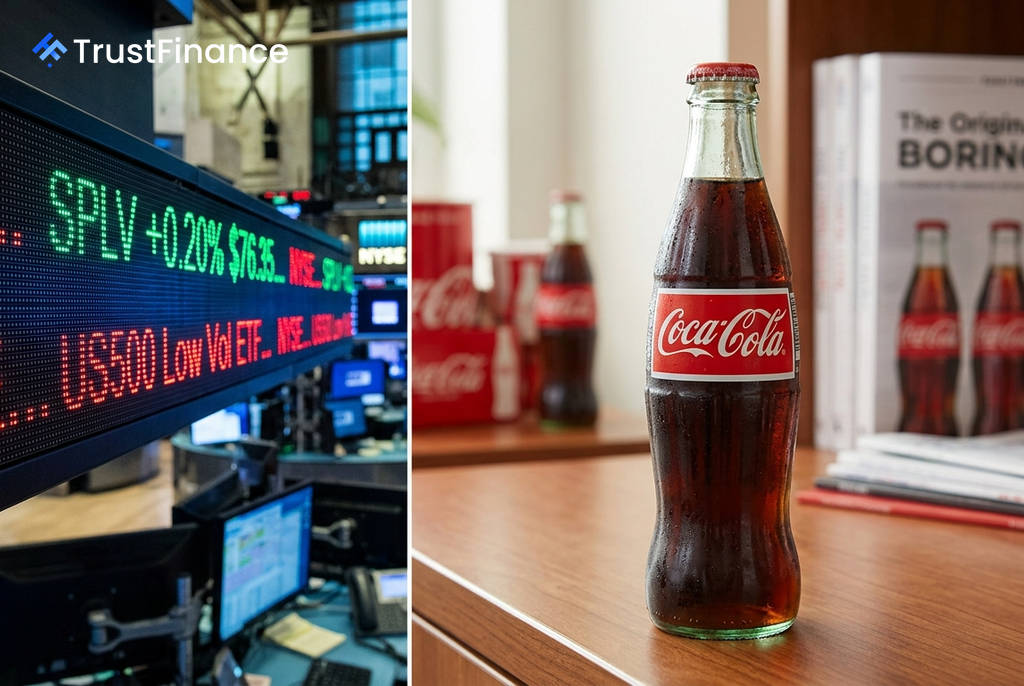
Investors seeking to reduce portfolio volatility during corporate earnings season are examining strategies that prioritize stability, with a recent analysis by Investing.com highlighting two distinct approaches: a rules-based exchange-traded fund and a fundamentally predictable blue-chip stock.
A Systematic ETF Approach
The Invesco S&P 500 Low Volatility ETF (SPLV) is designed to structurally minimize price swings. The fund achieves this by holding the 100 least volatile stocks within the S&P 500 index, with the portfolio rebalanced on a quarterly basis. This systematic process continuously removes stocks prone to sharp movements, including those with a history of significant post-earnings reactions.
This methodology results in a natural tilt toward sectors known for more predictable performance, such as Utilities, Consumer Staples, and Financials. According to data from Investing.com, the fund's key metrics include:
- Assets Under Management (AUM): $7.19 billion
- Dividend Yield: 2.22%
- Expense Ratio: 0.25%
The Fundamentally Stable Stock
 Ad
For a single-stock approach, the analysis points to The Coca-Cola Company (KO) as an example of a business with inherently low earnings-related volatility. The company's global revenue is driven by predictable factors like volume, pricing, and foreign exchange rates, which Wall Street analysts are able to model with a high degree of accuracy.
This predictability leads to tight analyst estimate ranges, minimizing the potential for a significant earnings "surprise" that often fuels sharp stock price movements. Coca-Cola's established bottling partnerships, extensive global distribution network, and powerful brand loyalty create a stable business model that is less susceptible to the operational misses that can impact other industries.
Contrasting Volatility Dampeners
The two examples represent complementary methods for managing risk. SPLV mitigates volatility through a systematic, rules-based diversification strategy that filters out volatile names across the market. In contrast, Coca-Cola's stability is rooted in its fundamental business model, which provides a predictable and resilient revenue stream.
One strategy relies on a quantitative portfolio construction process, while the other depends on the qualitative strength and predictability of a single enterprise. Together, they illustrate how investors can approach the goal of lower volatility from both a broad market and a specific company perspective.
Read next
More on Stocks
FTC Orders Walmart, Uber, Delta to Disclose Data on Personalized Pricing
The U.S. Federal Trade Commission is demanding nine major companies, including leading retail, travel, and gig economy firms, to provide information on how they use consumer data for setting individual prices and wages.

Google Launches Gemini 4 Carbon AI Model to Bolster Cybersecurity Capabilities
Alphabet's Google has unveiled Gemini 4 Carbon, its latest AI model specifically designed for advanced cybersecurity tasks like vulnerability detection and secure code generation. The launch escalates competition with rivals OpenAI and Anthropic in the enterprise AI market.

Oracle Shares Surge After Unveiling $225 Billion Revenue Target for 2030
Oracle stock rose sharply after the company presented a long-term financial outlook targeting at least $225 billion in annual revenue by fiscal 2030, driven by its expanding AI infrastructure business.

DOJ Scrutinizes Nvidia's $12.9B Hugging Face Deal Amid Broader Antitrust Probe, Sources Say
The U.S. Department of Justice is reportedly examining Nvidia's planned $12.93 billion acquisition of AI platform Hugging Face as part of a wider, ongoing antitrust investigation into the chipmaker's market conduct.