
Story
Kalshi Seeks CFTC Approval for S&P 500 Perpetual Futures
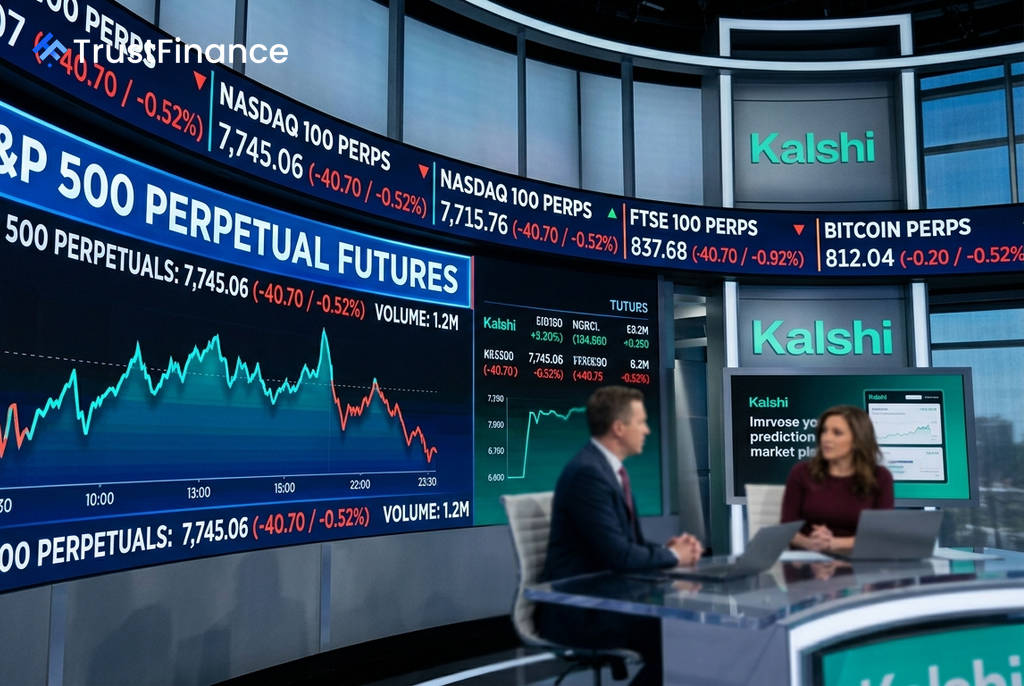
Prediction market operator Kalshi has filed a proposal with U.S. regulators to offer perpetual futures contracts tied to the S&P 500, a direct challenge to the business models of established derivatives exchanges. The move, if approved, would allow traders to take leveraged positions on the major stock market benchmark without a fixed expiration date.
A Challenge to Traditional Exchanges
In a filing with the Commodity Futures Trading Commission (CFTC) on Tuesday, Kalshi outlined its plan to introduce equity index perpetuals. This would place the company in direct competition with traditional derivatives exchanges by offering a product that tracks a major U.S. stock index.
The proposal is part of Kalshi's broader strategy to expand beyond its core business of event contracts, which allow users to wager on outcomes like elections and sporting events. The company also filed for copper perpetuals, signaling its intent to enter multiple asset classes.
How Perpetual Futures Work
Perpetual futures, or "perps," are a type of derivative contract that, unlike traditional futures, do not have a set expiration date. This structure offers key differences for traders:
 Ad
- It allows them to hold long or short positions indefinitely.
- It eliminates the need to roll over contracts as they approach expiration, a common practice in traditional futures markets.
- The proposed contracts would allow traders to use leverage to amplify their exposure to movements in the underlying index.
Regulatory Path
The company is seeking approval from the CFTC, which regulates futures contracts based on broad-based equity indexes. Because the proposed product falls under this category, Kalshi would not require separate approval from the Securities and Exchange Commission (SEC).
This regulatory pathway could streamline the introduction of a product type that has gained significant popularity in cryptocurrency markets but has yet to be offered for major U.S. equity indexes through a regulated U.S. exchange.
Read next
More on Stocks
FTC Orders Walmart, Uber, Delta to Disclose Data on Personalized Pricing
The U.S. Federal Trade Commission is demanding nine major companies, including leading retail, travel, and gig economy firms, to provide information on how they use consumer data for setting individual prices and wages.

Google Launches Gemini 4 Carbon AI Model to Bolster Cybersecurity Capabilities
Alphabet's Google has unveiled Gemini 4 Carbon, its latest AI model specifically designed for advanced cybersecurity tasks like vulnerability detection and secure code generation. The launch escalates competition with rivals OpenAI and Anthropic in the enterprise AI market.

Oracle Shares Surge After Unveiling $225 Billion Revenue Target for 2030
Oracle stock rose sharply after the company presented a long-term financial outlook targeting at least $225 billion in annual revenue by fiscal 2030, driven by its expanding AI infrastructure business.

DOJ Scrutinizes Nvidia's $12.9B Hugging Face Deal Amid Broader Antitrust Probe, Sources Say
The U.S. Department of Justice is reportedly examining Nvidia's planned $12.93 billion acquisition of AI platform Hugging Face as part of a wider, ongoing antitrust investigation into the chipmaker's market conduct.