
Story
Just 13% of Active U.S. Large-Cap Funds Beat Benchmarks Over Past Decade
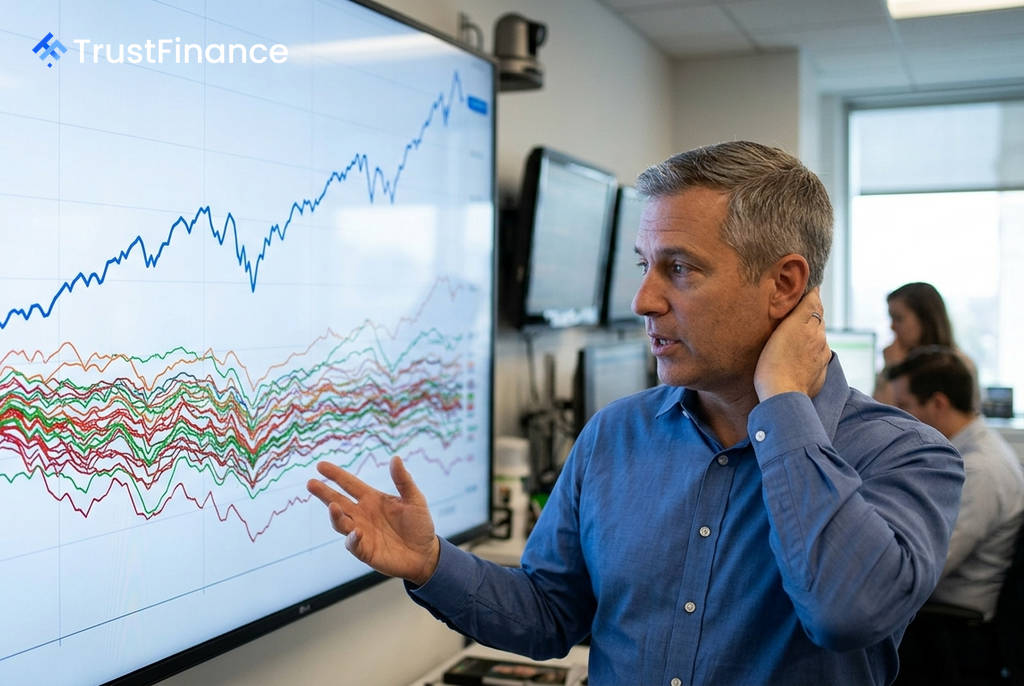
The vast majority of actively managed U.S. large-cap equity funds have failed to outperform their passive counterparts over the long term, with just 13% beating their benchmarks in the decade through June, according to data from Morningstar reported by The Wall Street Journal.
A Challenging Environment for Stock Pickers
The underperformance persists despite what many fund managers viewed as favorable conditions for stock selection, such as higher interest rates and the rise of artificial intelligence. While performance gaps between individual stocks have widened to multi-decade highs—theoretically creating more opportunities for active managers—market returns have remained highly concentrated.
Performance in major indices like the S&P 500 has been dominated by a small number of highly valued technology companies. The 10 largest companies in the S&P 500 now account for over 40% of the index's total market capitalization, the highest concentration since the 1960s, according to Dow Jones Market Data. Many active managers are reluctant to match this concentration due to risk management principles, causing them to lag when these mega-cap stocks rally.
Even over a shorter time frame, the results were modest. In the 12 months ended June 30, only 27% of active large-cap funds managed to beat their passive alternatives.
Investors Accelerate Shift to Passive Funds
 Ad
This prolonged performance gap has continued to fuel a significant investor shift away from actively managed mutual funds and toward lower-cost, tax-efficient passive vehicles like exchange-traded funds (ETFs). According to the Investment Company Institute, assets in passive U.S. funds now hold almost twice as much money as their active counterparts, having first matched them in 2020.
This trend shows no signs of slowing, as low-cost passive ETFs are on pace to attract a record $1 trillion in net inflows this year.
Active Management Finds More Success in Bonds
While stock picking in the large-cap space has proven difficult, active managers have demonstrated more success in fixed income. Approximately 66% of intermediate core bond funds outperformed their benchmarks over the past year, with a majority doing so for three consecutive years.
Citing this divergence, State Street Global Advisors suggested that investors could use low-cost ETFs for broad equity exposure while directing their active-management budgets toward areas with better odds of outperformance, such as bonds.
Read next
More on Stocks
FTC Orders Walmart, Uber, Delta to Disclose Data on Personalized Pricing
The U.S. Federal Trade Commission is demanding nine major companies, including leading retail, travel, and gig economy firms, to provide information on how they use consumer data for setting individual prices and wages.

Google Launches Gemini 4 Carbon AI Model to Bolster Cybersecurity Capabilities
Alphabet's Google has unveiled Gemini 4 Carbon, its latest AI model specifically designed for advanced cybersecurity tasks like vulnerability detection and secure code generation. The launch escalates competition with rivals OpenAI and Anthropic in the enterprise AI market.

Oracle Shares Surge After Unveiling $225 Billion Revenue Target for 2030
Oracle stock rose sharply after the company presented a long-term financial outlook targeting at least $225 billion in annual revenue by fiscal 2030, driven by its expanding AI infrastructure business.

DOJ Scrutinizes Nvidia's $12.9B Hugging Face Deal Amid Broader Antitrust Probe, Sources Say
The U.S. Department of Justice is reportedly examining Nvidia's planned $12.93 billion acquisition of AI platform Hugging Face as part of a wider, ongoing antitrust investigation into the chipmaker's market conduct.