
Story
JPMorgan and Bank of America Present Divergent Bets on Future Rate Cycle
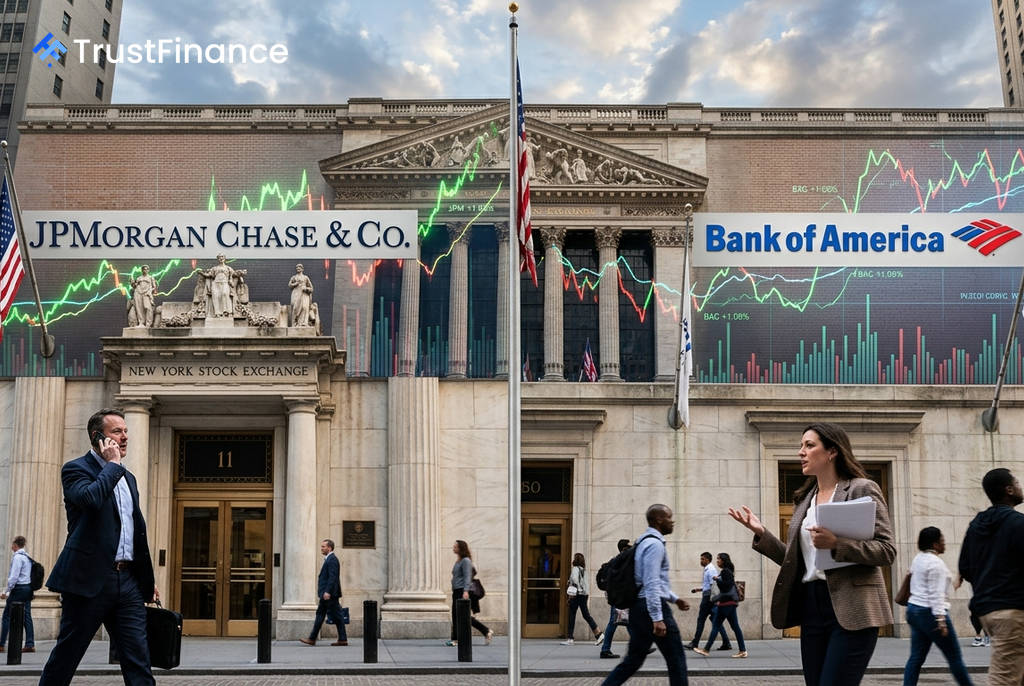
Investors weighing positions in U.S. banking giants face a strategic choice between JPMorgan Chase's diversified quality and Bank of America's pronounced sensitivity to interest rates. While JPMorgan stands as a leader in profitability, Bank of America offers a more compelling valuation and greater potential upside if interest rates remain elevated.
JPMorgan: The Premium on Quality
JPMorgan Chase (JPM) is positioned as the sector's quality leader, a status reflected in its premium valuation and superior operating metrics. The bank's strength lies in its diversified revenue streams, which span investment banking, trading, wealth management, and traditional consumer banking, providing a buffer against shifts in the economic cycle.
Key metrics underscore its performance:
- Return on Equity (ROE): 18.4% compared to Bank of America's 11.6%.
- Price-to-Book (P/B) Ratio: A premium 2.7x.
- Diversification: Strong performance in capital markets and wealth management can offset potential net interest income (NII) compression if rates fall, while higher rates boost its lending business.
This all-weather model comes at a price, with the stock trading near all-time highs and analysts seeing modest upside. The market has largely priced in JPMorgan's stability and consistent execution.
Bank of America: The Rate-Sensitive Value Play
 Ad
Bank of America (BAC) presents a different thesis, offering a direct play on the trajectory of interest rates. The bank is the most rate-sensitive among its megabank peers, meaning its profitability, particularly its NII, is significantly leveraged to a higher-for-longer rate environment.
Investors are presented with a more attractive valuation and signs of improving fundamentals:
- Price-to-Book (P/B) Ratio: 1.6x, a significant discount to JPMorgan.
- Fair Value Upside: An estimated 22.3% gap between its current price and fair value, versus 8.9% for JPM.
- Piotroski Score: A strong 7 out of 9, indicating positive trends in balance sheet health.
The primary risk is a reversal in the rate cycle. Aggressive rate cuts would pressure BAC's NII, and its higher beta of 1.17 suggests it would underperform more severely in a market downturn. Unrealized losses on its securities portfolio also remain an overhang.
What This Means for Investors
The choice between the two banks hinges on an investor's macroeconomic outlook. JPMorgan represents a long-term, stable compounder suitable for most economic scenarios, albeit at a premium price. Bank of America offers more torque and valuation upside, making it an asymmetric bet for those who believe interest rates will stay firm or rise, but it carries higher risk in a recessionary or rate-cutting environment.
Read next
More on Stocks
FTC Orders Walmart, Uber, Delta to Disclose Data on Personalized Pricing
The U.S. Federal Trade Commission is demanding nine major companies, including leading retail, travel, and gig economy firms, to provide information on how they use consumer data for setting individual prices and wages.

Google Launches Gemini 4 Carbon AI Model to Bolster Cybersecurity Capabilities
Alphabet's Google has unveiled Gemini 4 Carbon, its latest AI model specifically designed for advanced cybersecurity tasks like vulnerability detection and secure code generation. The launch escalates competition with rivals OpenAI and Anthropic in the enterprise AI market.

Oracle Shares Surge After Unveiling $225 Billion Revenue Target for 2030
Oracle stock rose sharply after the company presented a long-term financial outlook targeting at least $225 billion in annual revenue by fiscal 2030, driven by its expanding AI infrastructure business.

DOJ Scrutinizes Nvidia's $12.9B Hugging Face Deal Amid Broader Antitrust Probe, Sources Say
The U.S. Department of Justice is reportedly examining Nvidia's planned $12.93 billion acquisition of AI platform Hugging Face as part of a wider, ongoing antitrust investigation into the chipmaker's market conduct.