
Story
JD.com Offers EU Concessions to Secure $2.5 Billion Ceconomy Takeover
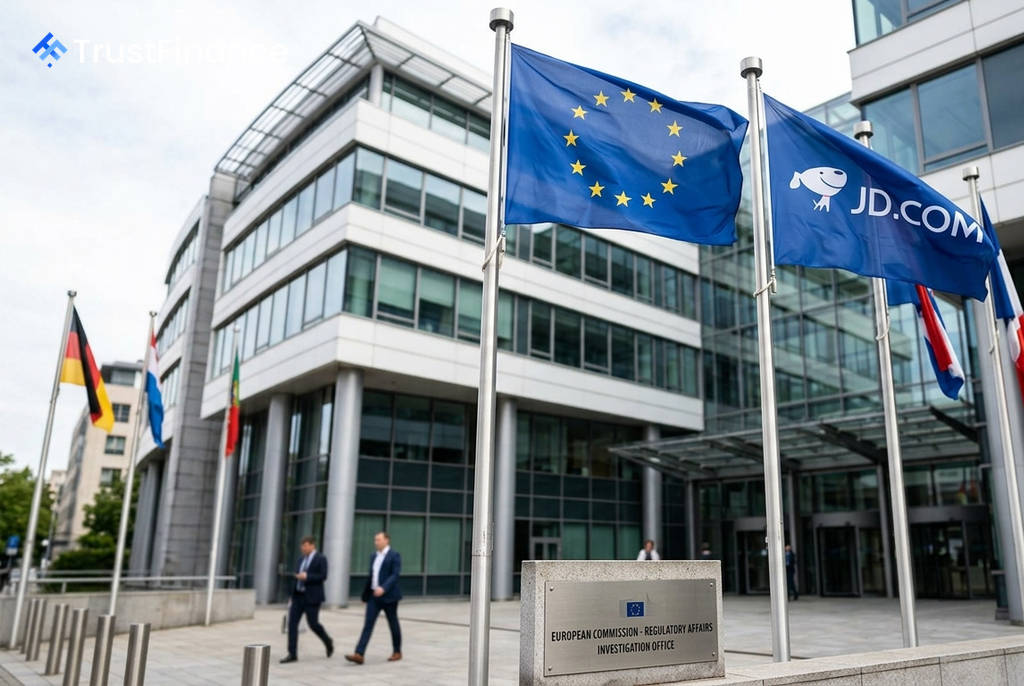
Chinese e-commerce company JD.com has proposed remedies to European Union antitrust regulators in an effort to secure approval for its $2.5 billion takeover of German electronics retailer Ceconomy. The move comes as the deal faces an in-depth investigation over concerns about potentially market-distorting foreign subsidies.
Concessions Submitted in Subsidy Probe
According to a European Commission regulatory filing on Tuesday, JD.com submitted a package of concessions to address the watchdog's concerns. The specific details of the remedies were not disclosed in the filing, which is standard procedure at this stage of a review.
The offer is a critical step by the Chinese retailer to allay fears that its acquisition could harm competition within the EU's single market. Regulators will now typically assess the proposal, often by seeking feedback from competitors and customers, before deciding whether to accept the remedies or block the transaction.
Scrutiny Under Foreign Subsidies Regulation
The European Commission launched its full-scale investigation into the proposed acquisition in May, deploying its powers under the Foreign Subsidies Regulation (FSR). This relatively new legal framework is designed to prevent companies that have received substantial state support from non-EU governments from gaining an unfair advantage in Europe.
 Ad
Regulators are specifically concerned that subsidies received by JD.com in China may have allowed it to make a more generous offer for Ceconomy, potentially distorting the mergers and acquisitions landscape. Last month, the Commission formalized its concerns in a formal notice sent to the company.
Broader EU-China Trade Tensions
The probe into the Ceconomy deal highlights increasing regulatory friction between Brussels and Beijing. In a statement on Wednesday, the Chinese government criticized the EU's investigation, describing it as an act of "improper extraterritorial jurisdiction," according to a Reuters report.
Beijing also reportedly ordered Chinese entities not to cooperate with or assist in the EU's probe, adding a layer of geopolitical complexity to the corporate transaction. For investors, the outcome will serve as a key test case for how the FSR will be applied to major cross-border deals involving Chinese firms.
Read next
More on Stocks
FTC Orders Walmart, Uber, Delta to Disclose Data on Personalized Pricing
The U.S. Federal Trade Commission is demanding nine major companies, including leading retail, travel, and gig economy firms, to provide information on how they use consumer data for setting individual prices and wages.

Google Launches Gemini 4 Carbon AI Model to Bolster Cybersecurity Capabilities
Alphabet's Google has unveiled Gemini 4 Carbon, its latest AI model specifically designed for advanced cybersecurity tasks like vulnerability detection and secure code generation. The launch escalates competition with rivals OpenAI and Anthropic in the enterprise AI market.

Oracle Shares Surge After Unveiling $225 Billion Revenue Target for 2030
Oracle stock rose sharply after the company presented a long-term financial outlook targeting at least $225 billion in annual revenue by fiscal 2030, driven by its expanding AI infrastructure business.

DOJ Scrutinizes Nvidia's $12.9B Hugging Face Deal Amid Broader Antitrust Probe, Sources Say
The U.S. Department of Justice is reportedly examining Nvidia's planned $12.93 billion acquisition of AI platform Hugging Face as part of a wider, ongoing antitrust investigation into the chipmaker's market conduct.