
Story
Iran's New Supreme Leader Vows Revenge for Slain Predecessor, Heightening Regional Tensions
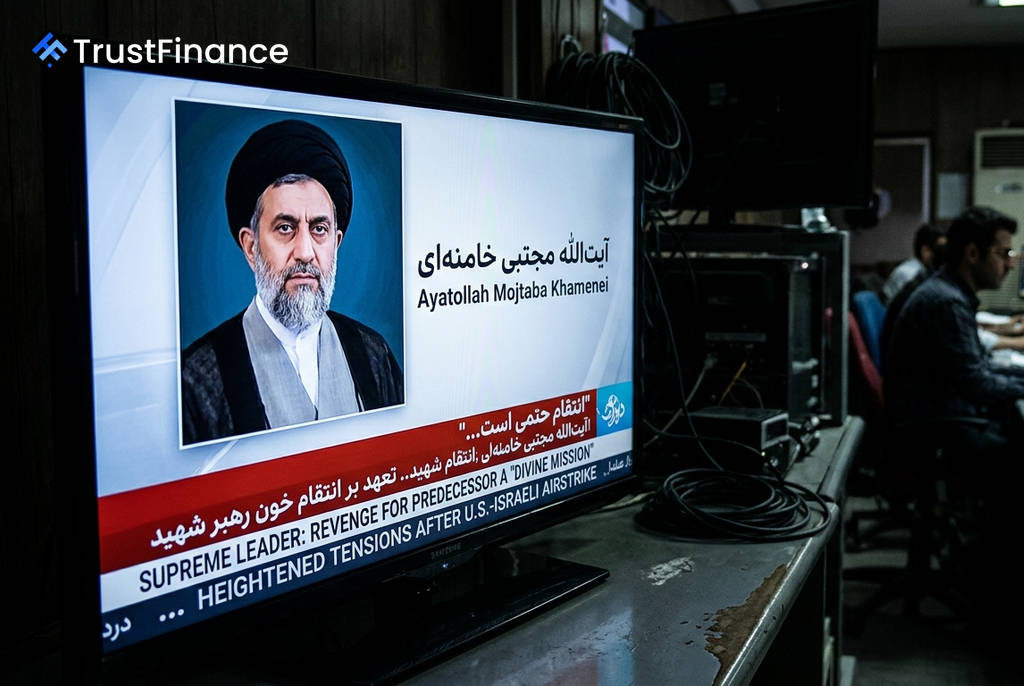
Iran's new Supreme Leader, Ayatollah Mojtaba Khamenei, has vowed to seek revenge for the killing of his father and predecessor, Ayatollah Ali Khamenei, in his first public statement since assuming the role. The message, read on Iranian state television Saturday, escalates regional tensions and threatens a fragile truce aimed at ending a four-month war.
A Pledge for Vengeance
The statement declared that vengeance for the former leader, who was killed in a U.S.-Israeli airstrike on February 28, is "the demand of the nation" and "must certainly" be carried out. It was delivered a week after funeral ceremonies began for the late Ayatollah, who had ruled for 37 years.
"We pledge to avenge the blood of the martyred leader and all the martyrs of these two wars from the criminal and disgraced killers," the statement said. It added that the mission would not solely depend on Iran, but also on "every free person around the world," signaling a broader call to action.
Market Impact and Geopolitical Risk
This rhetoric directly challenges a ceasefire agreement between Washington and Tehran. The recent exchange of attacks had already cast doubt on the deal, which Iran anticipates will yield significant economic benefits. The threat of retaliation from Iran's new leadership introduces a fresh layer of uncertainty for global markets, particularly in the energy sector, as heightened conflict in the Middle East often leads to volatility in oil prices.
 Ad
Despite the flare-up, U.S. President Donald Trump stated Friday that while the ceasefire was over, the two countries had agreed to continue talks. However, investors will be closely monitoring for any signs of military escalation that could disrupt global trade and risk sentiment.
Leadership Uncertainty
Adding to the instability is the continued absence of Mojtaba Khamenei from public view. He has not been seen since his appointment on March 8, with senior sources reporting he sustained injuries, including facial disfigurement, in the same strike that killed his father. This has fueled uncertainty within Iran, as the nation navigates a critical leadership transition with a new leader who has yet to appear publicly.
Ayatollah Mojtaba Khamenei's rise to power was backed by the influential Revolutionary Guards. His first official message signals a hardline stance that will likely define Iran's immediate foreign policy and its relationship with the West.