
Story
Humanoid Robots Outrun Humans, But Industry Focus Is on Practical Tasks
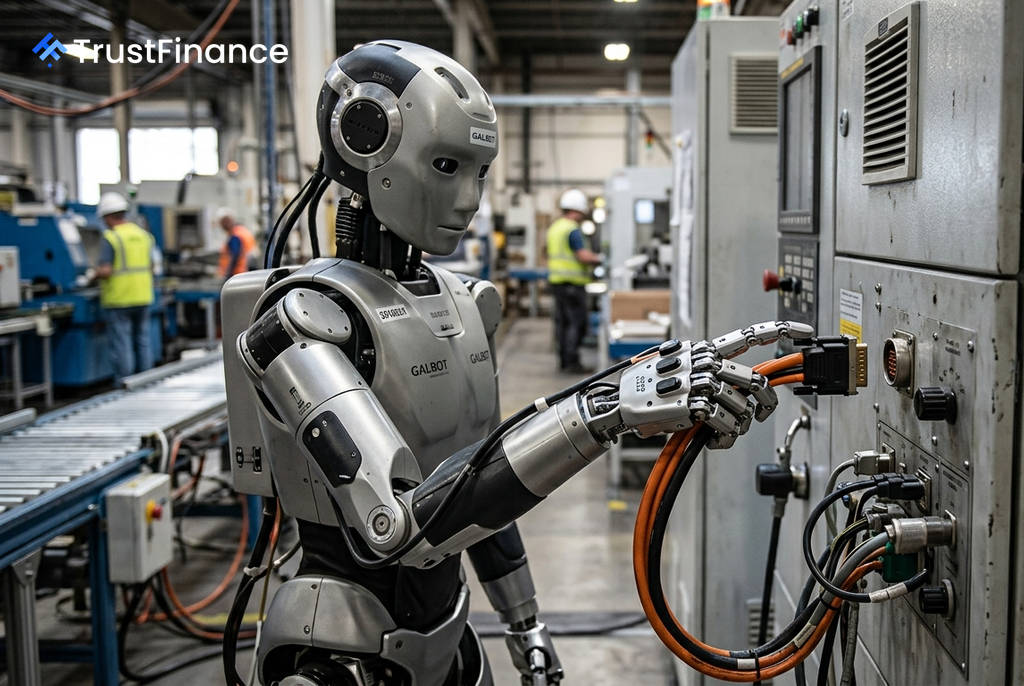
Humanoid robots in Beijing have demonstrated the ability to outpace the world's fastest human sprinters, but the true measure of their commercial potential is being tested in less glamorous, high-precision tasks like industrial assembly and connecting cables.
Spectacle on the Track
At the five-day World Humanoid Robot Games, two robots ran the 100-meter sprint faster than Usain Bolt’s 9.58-second world record, according to a Reuters report. Another humanoid completed a 400-meter run in 39.7 seconds, beating the human world record of 43.03 seconds. The results mark a significant improvement from the 2025 games, where the winning 100-meter time was over 20 seconds.
While these athletic feats showcase advancements in mobility and power management, the focus for investors and industry developers is shifting toward practical applications. The games feature 51 events, including 30 sports competitions and 21 scenario-based contests designed to simulate real-world jobs.
The Real-World Gauntlet
Beyond the racetrack, the more revealing tests for the robotics industry involve tasks that require dexterity, precision, and adaptability. These contests evaluate a robot's ability to operate in environments with small, real-world imperfections.
Key challenges designed to test commercial viability include:
 Ad
- Cable Connection: A test of vision, mechanical alignment, and controlled force application.
- Industrial Assembly & Material Loading: Simulating tasks common in manufacturing and logistics.
- EV Charging & Restaurant Work: Evaluating performance in service-oriented roles.
- Emergency Incident Handling: Assessing autonomous decision-making in unpredictable situations.
These scenarios test whether robots can identify objects, accurately position themselves, apply the correct amount of force, and recover from errors without human intervention—all critical functions for factory, warehouse, and service automation.
Measuring Commercial Viability
Industry executives emphasize that real-world problem-solving, not athletic prowess, will determine the technology's long-term value. Lumos Robotics Chief Executive Yu Chao told Reuters that "only when it can work in those end scenarios does it have real value," adding that "simply running and jumping does not improve efficiency."
This sentiment was echoed by Hua Rong, chief marketing officer at robotics firm Zeroth, who stated that the real competition is whether a product, once sold, "can really solve users’ problems." For investors and potential enterprise customers, the key takeaway from the games will be the progress made in autonomous, practical tasks that can translate into a clear return on investment.
Read next
More on Stocks
FTC Orders Walmart, Uber, Delta to Disclose Data on Personalized Pricing
The U.S. Federal Trade Commission is demanding nine major companies, including leading retail, travel, and gig economy firms, to provide information on how they use consumer data for setting individual prices and wages.

Google Launches Gemini 4 Carbon AI Model to Bolster Cybersecurity Capabilities
Alphabet's Google has unveiled Gemini 4 Carbon, its latest AI model specifically designed for advanced cybersecurity tasks like vulnerability detection and secure code generation. The launch escalates competition with rivals OpenAI and Anthropic in the enterprise AI market.

Oracle Shares Surge After Unveiling $225 Billion Revenue Target for 2030
Oracle stock rose sharply after the company presented a long-term financial outlook targeting at least $225 billion in annual revenue by fiscal 2030, driven by its expanding AI infrastructure business.

DOJ Scrutinizes Nvidia's $12.9B Hugging Face Deal Amid Broader Antitrust Probe, Sources Say
The U.S. Department of Justice is reportedly examining Nvidia's planned $12.93 billion acquisition of AI platform Hugging Face as part of a wider, ongoing antitrust investigation into the chipmaker's market conduct.