
Story
Hims & Hers to Launch Peptides, But Wall Street Tempers Near-Term Revenue Hopes
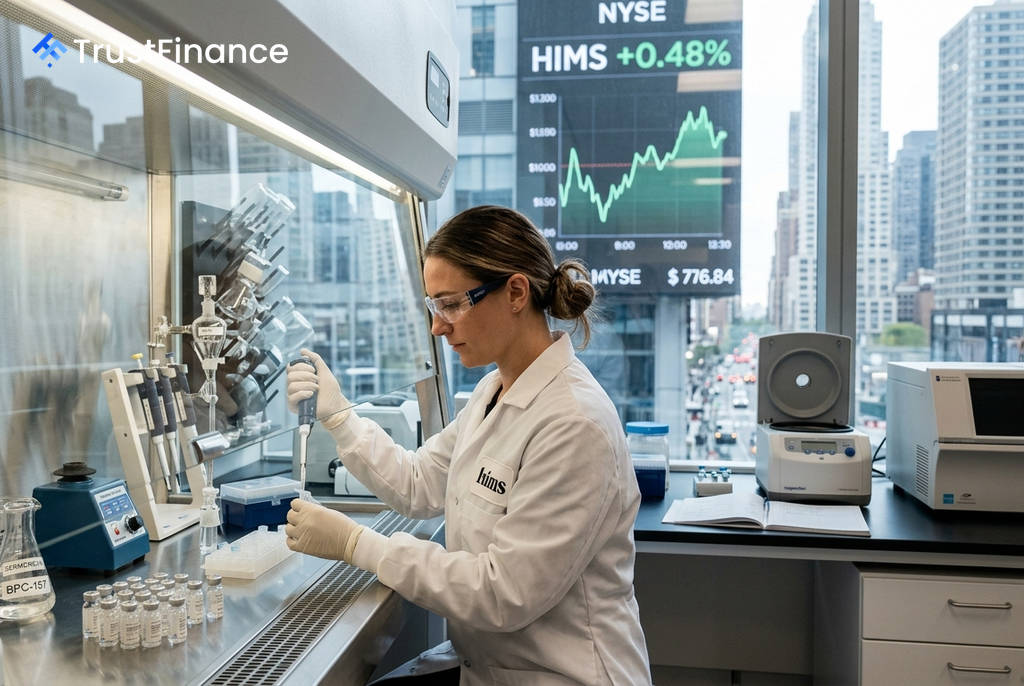
Hims & Hers Health is set to enter the popular peptide treatment market, but Wall Street analysts and investors are cautioning that the new venture is unlikely to be a significant revenue driver this year. The telehealth firm's strategy hinges on a phased rollout that starts with currently legal products while awaiting key regulatory decisions on a wider range of treatments.
A Phased Market Entry
CEO Andrew Dudum confirmed to investors that Hims & Hers will begin selling several legally available peptides by the end of the year. The initial product line will include treatments such as NAD+, sermorelin, and glutathione, which are used for metabolic function, weight loss, and immune support, respectively.
This move taps into a market that analysts estimate could be worth between $2.2 billion and $3.3 billion. Peptides, which are short chains of amino acids, have gained notoriety for uses ranging from anti-aging to muscle recovery, though many operate in a regulatory gray area without formal FDA approval.
Cautious Near-Term Outlook
Analysts remain skeptical about the immediate financial impact of Hims' initial peptide offerings. Because treatments like NAD+ are already available, they do not carry the same pent-up demand as other peptides awaiting potential rescheduling by the U.S. Food and Drug Administration (FDA).
 Ad
"There’s no ‘release the floodgates’ demand like there is for other peptides that are in process of being rescheduled," said Paul Cerro, chief investment officer at Cedar Grove Capital Management, in a comment to Reuters. This contrasts with the rapid growth Hims experienced from selling GLP-1 weight-loss drugs. Morningstar analyst Keonhee Kim added that the prevalence of an unauthorized market for peptides makes it difficult to accurately assess the value of Hims' initial launch.
Long-Term Potential Hinges on FDA
The larger opportunity for Hims lies with peptides currently under FDA review, such as BPC-157, a compound used for tissue repair. The company has already begun testing for BPC-157 but is awaiting "full and final rulemaking" from the agency before a potential launch, according to Dudum.
While an FDA advisory panel recently backed allowing compounding of six peptides, the recommendation is non-binding, and experts believe a final decision could take about a year. Despite the wait, some see a significant long-term prize. Raul Shah, chief investment officer at DocShah Financial, told Reuters he expects Hims’ peptide business could generate over $1 billion in revenue within the next five to 10 years.
Hims holds a strategic advantage through its ownership of a major U.S. compounding pharmacy, which gives it in-house manufacturing capabilities. "Scaling new specialties is one of our core levers," Chief Financial Officer Yemi Okupe told Reuters, highlighting the company's experience in expanding its offerings.
Read next
More on Stocks
FTC Orders Walmart, Uber, Delta to Disclose Data on Personalized Pricing
The U.S. Federal Trade Commission is demanding nine major companies, including leading retail, travel, and gig economy firms, to provide information on how they use consumer data for setting individual prices and wages.

Google Launches Gemini 4 Carbon AI Model to Bolster Cybersecurity Capabilities
Alphabet's Google has unveiled Gemini 4 Carbon, its latest AI model specifically designed for advanced cybersecurity tasks like vulnerability detection and secure code generation. The launch escalates competition with rivals OpenAI and Anthropic in the enterprise AI market.

Oracle Shares Surge After Unveiling $225 Billion Revenue Target for 2030
Oracle stock rose sharply after the company presented a long-term financial outlook targeting at least $225 billion in annual revenue by fiscal 2030, driven by its expanding AI infrastructure business.

DOJ Scrutinizes Nvidia's $12.9B Hugging Face Deal Amid Broader Antitrust Probe, Sources Say
The U.S. Department of Justice is reportedly examining Nvidia's planned $12.93 billion acquisition of AI platform Hugging Face as part of a wider, ongoing antitrust investigation into the chipmaker's market conduct.