
Story
Gold Set for Weekly Decline as Oil Surge Stokes Fed Rate Hike Fears
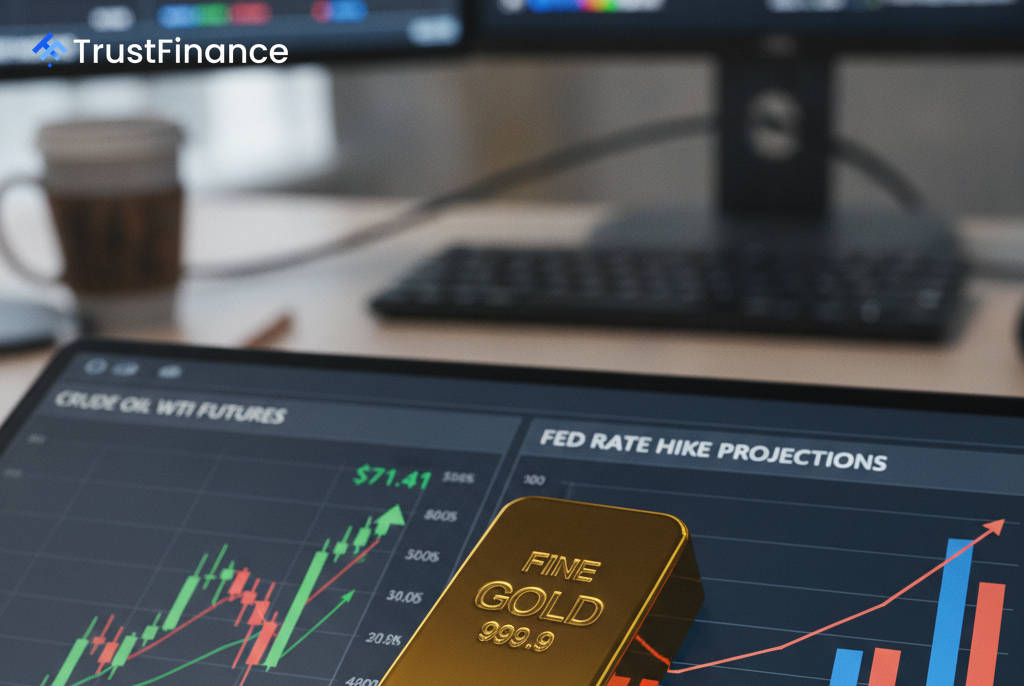
Gold prices fell on Friday, positioning the precious metal for a weekly decline as a spike in oil prices stoked investor fears of persistent inflation, potentially forcing the Federal Reserve to keep interest rates higher for longer.
Higher interest rates increase the opportunity cost of holding non-yielding assets like gold, diminishing its appeal to investors.
Market Snapshot
According to market data from Friday afternoon, gold prices reflected the broader pressure from monetary policy concerns:
- Spot gold declined by 0.2% to $4,114.45 per ounce.
- Gold futures for near-term delivery fell 0.5% to $4,122.47 per ounce.
- Both contracts were on pace for a weekly loss of approximately 1.6%.
Geopolitical Tensions Fuel Inflation Worries
 Ad
The primary driver for market sentiment this week has been the escalation of tensions between the U.S. and Iran. The conflict, which reportedly involved attacks on commercial oil tankers in the Strait of Hormuz, caused oil prices to soar on supply disruption fears. This surge in energy costs has translated directly into heightened concerns about inflationary pressures.
While geopolitical instability can sometimes boost gold's safe-haven status, that effect has been largely overshadowed by the implications for inflation and central bank policy. Analysts at ANZ noted that gold found some support on "expectations of limited escalation in the Middle East conflict," but the dominant market narrative remains focused on interest rates.
Fed Policy and Data in Focus
The market's reaction comes after minutes from the Federal Reserve’s June meeting revealed a divided debate among policymakers regarding the future path of interest rates. The minutes indicated that officials remain concerned about inflationary pressures from multiple sources, including the Middle East conflict.
Investors are now looking ahead to key U.S. inflation data scheduled for next week. The Consumer Price Index (CPI) report for June is due on Tuesday, followed by the Producer Price Index (PPI) on Wednesday, both of which will be critical in shaping expectations for the Fed's next move.