
Story
Glencore's Planned ASX Listing Pits Copper Appeal Against Coal Concerns
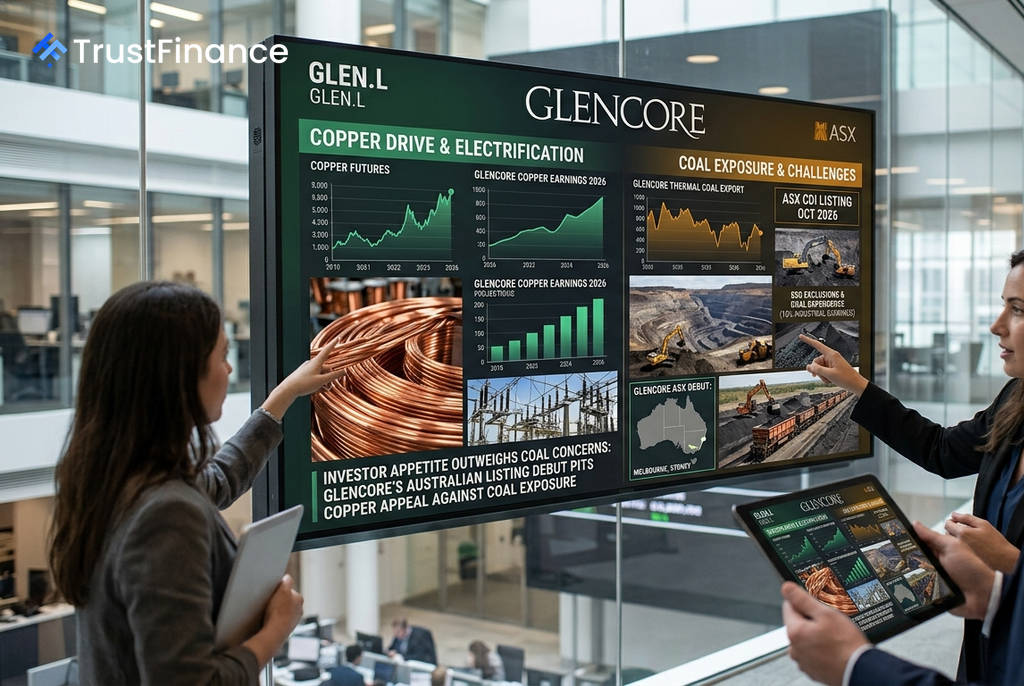
Glencore is targeting an October secondary listing on the Australian Securities Exchange (ASX), a move that has drawn significant interest from investors eager for exposure to its copper assets, according to analysts and fund managers. The $88 billion global commodity giant aims to tap into Australia's deep pool of institutional capital to fund its growth ambitions, particularly in metals crucial for the energy transition.
Path to Index Inclusion
Glencore's listing will be structured through CHESS Depositary Interests (CDIs), a common method for foreign companies on the ASX. Following recent investor briefings held by brokers including JPMorgan, Barrenjoey, and UBS, analysts believe the company could achieve rapid inclusion in key market indices.
- Glencore CEO Gary Nagle has stated a goal of joining the benchmark S&P/ASX 200 index within 12 months, which requires an ASX market value of A$1.5 billion ($1.06 billion).
- To enter the larger S&P/ASX 100, its traded value would need to reach at least A$5.5 billion.
Some analysts see a faster timeline. "It could be in the ASX 100 by as early as March, April next year," said Glyn Lawcock, an analyst at Barrenjoey, in comments reported by Reuters. Such an inclusion would compel investment funds that track the index to consider the stock.
Copper's Allure vs. Coal's Shadow
 Ad
The primary draw for many investors is Glencore's significant copper business, which is poised to benefit from surging demand for electrification and artificial intelligence infrastructure. Copper currently accounts for about 30% of the company's profit, a figure analysts estimate could grow to 50% by 2030 if development plans are met.
However, this appeal is weighed against the company's status as the world's largest exporter of thermal coal. The fossil fuel still represents around 15% of Glencore's underlying industrial earnings, creating a potential hurdle for investors with strict environmental, social, and governance (ESG) mandates.
The ESG Factor
While some market participants, like Andy Forster of Argo Investments, note a potential softening of ESG emphasis among certain funds, data suggests the trend of sustainable investing remains strong. The Responsible Investment Association Australasia (RIAA) reported that Australian funds under management specifically excluding coal investments grew 14% to A$37.9 billion last year.
RIAA Co-CEO Estelle Parker highlighted that younger generations are increasingly driving demand for fossil fuel-free investment options. This trend could gain momentum as a projected A$3.5 trillion in assets is transferred from older generations by 2050, according to a 2021 estimate from Australia’s Productivity Commission.
Read next
More on Stocks
FTC Orders Walmart, Uber, Delta to Disclose Data on Personalized Pricing
The U.S. Federal Trade Commission is demanding nine major companies, including leading retail, travel, and gig economy firms, to provide information on how they use consumer data for setting individual prices and wages.

Google Launches Gemini 4 Carbon AI Model to Bolster Cybersecurity Capabilities
Alphabet's Google has unveiled Gemini 4 Carbon, its latest AI model specifically designed for advanced cybersecurity tasks like vulnerability detection and secure code generation. The launch escalates competition with rivals OpenAI and Anthropic in the enterprise AI market.

Oracle Shares Surge After Unveiling $225 Billion Revenue Target for 2030
Oracle stock rose sharply after the company presented a long-term financial outlook targeting at least $225 billion in annual revenue by fiscal 2030, driven by its expanding AI infrastructure business.

DOJ Scrutinizes Nvidia's $12.9B Hugging Face Deal Amid Broader Antitrust Probe, Sources Say
The U.S. Department of Justice is reportedly examining Nvidia's planned $12.93 billion acquisition of AI platform Hugging Face as part of a wider, ongoing antitrust investigation into the chipmaker's market conduct.