
Story
German Utility Stocks Oversold on Flawed Logic, Morgan Stanley Says
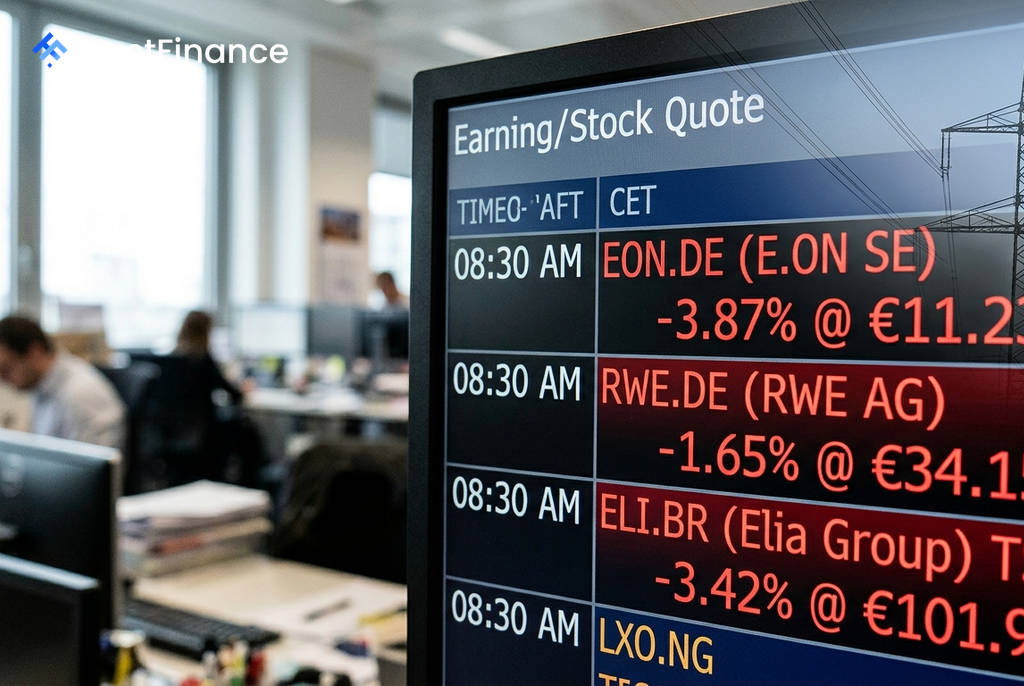
A recent sell-off in German electricity network stocks is an overblown reaction, according to analysts at Morgan Stanley, who are advising investors to view the dip as a buying opportunity. The bank argues that share price declines in companies like E.ON, Elia, and RWE were triggered by a flawed market interpretation of a weak draft ruling on German gas network returns.
A Flawed Read-Across
The market reaction followed a draft proposal for a 4.9% post-tax cost of equity for German gas networks. However, Morgan Stanley stated in a note that applying this logic to electricity networks is incorrect. The bank reiterated its forecast for a post-tax cost of equity of approximately 6.5% for electricity networks heading into the next regulatory period, known as RP5.
Analysts believe the market is mistakenly extrapolating the lower returns proposed for a non-growing gas network to the distinct and growing electricity transmission sector.
 Ad
Stock-Specific Analysis
Morgan Stanley, which maintains an "overweight" rating on all three companies, broke down what it sees as the market's miscalculation for each stock:
- E.ON (EONGn): Shares fell 4%, a move the bank called the "most overblown reaction." It noted that E.ON's German regulated asset base (RAB) is 88% electricity and only 12% gas. Even a worst-case scenario would only impact 2029 earnings per share (EPS) by an estimated 3%, significantly less than the stock's drop implies.
- Elia (ELI): The stock dropped 3.6% despite having zero exposure to gas networks. Morgan Stanley described this as the "most disconnected reaction," as Elia's business is purely in electricity transmission. The bank views a worst-case outcome as unlikely, especially given its German network's projected RAB growth of 23% CAGR from 2026-2030, which it says justifies stronger returns.
- RWE (RWEG): RWE saw the smallest decline at 1.8%. Analysts said this move was more consistent with a worst-case scenario, which would imply a modest 2% hit to 2029 EPS. While the market's reaction was seen as more rational for RWE, the bank does not expect the lower, gas-style returns to ultimately apply to the company's power and renewables network business.
Read next
More on Stocks
FTC Orders Walmart, Uber, Delta to Disclose Data on Personalized Pricing
The U.S. Federal Trade Commission is demanding nine major companies, including leading retail, travel, and gig economy firms, to provide information on how they use consumer data for setting individual prices and wages.

Google Launches Gemini 4 Carbon AI Model to Bolster Cybersecurity Capabilities
Alphabet's Google has unveiled Gemini 4 Carbon, its latest AI model specifically designed for advanced cybersecurity tasks like vulnerability detection and secure code generation. The launch escalates competition with rivals OpenAI and Anthropic in the enterprise AI market.

Oracle Shares Surge After Unveiling $225 Billion Revenue Target for 2030
Oracle stock rose sharply after the company presented a long-term financial outlook targeting at least $225 billion in annual revenue by fiscal 2030, driven by its expanding AI infrastructure business.

DOJ Scrutinizes Nvidia's $12.9B Hugging Face Deal Amid Broader Antitrust Probe, Sources Say
The U.S. Department of Justice is reportedly examining Nvidia's planned $12.93 billion acquisition of AI platform Hugging Face as part of a wider, ongoing antitrust investigation into the chipmaker's market conduct.