
Story
German Auto Suppliers' Debt Costs Exceed Operating Earnings, Study Finds
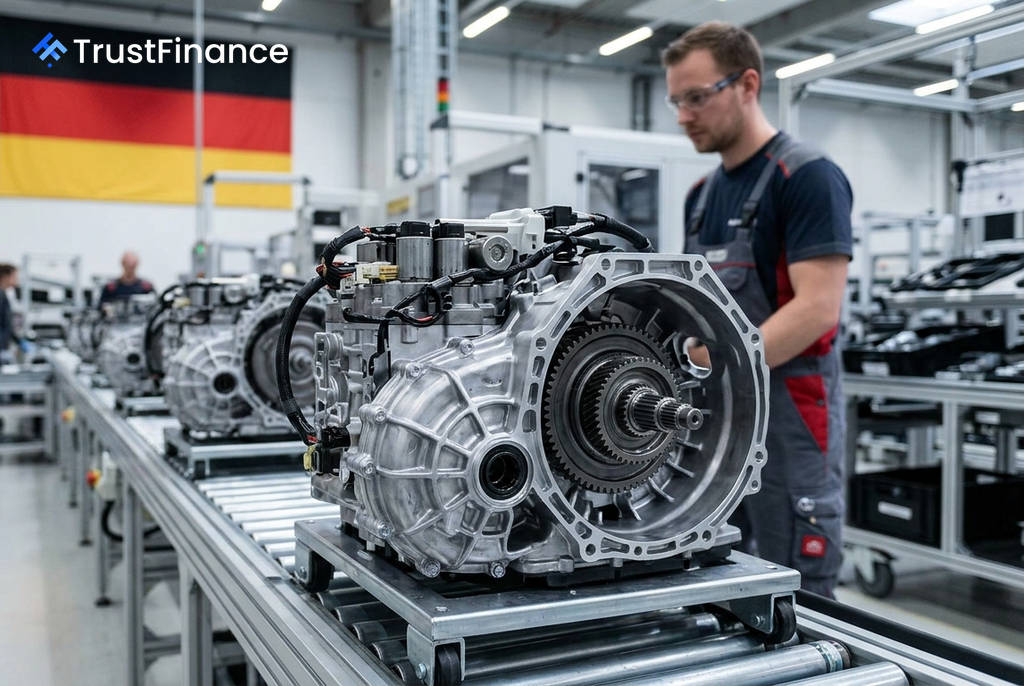
German auto suppliers are facing a critical financial squeeze, with average interest expenses in 2025 climbing to exceed operating earnings, according to an upcoming study by Strategy&, PwC’s German consulting arm. The analysis underscores the growing debt burden on a pivotal sector struggling with intense international competition and a costly industry-wide transformation.
Debt Burden Intensifies
The financial analysis found that average interest expenses at Germany's leading auto suppliers rose for a fourth consecutive year, reaching 102% of operating earnings in 2025. This level of debt servicing cost, according to excerpts of the study seen by Reuters, far exceeds that of rivals in the rest of Europe and China.
"Many companies in the German supplier industry are managing substantial debt loads," said Henning Rennert, a partner at Strategy& Germany. The study, which included firms like ZF, Continental, and Schaeffler, also found that German companies had lower average equity ratios, leaving them more exposed to financial stress.
Widening Gap with Chinese Rivals
The report highlights intensifying competitive pressure, particularly from China. The cost gap between German and Chinese suppliers widened significantly between 2019 and 2025, according to the analysis.
 Ad
While German suppliers’ overhead costs worsened during this period, their Chinese counterparts became more efficient. The study found that Chinese competitors successfully reduced both overhead and manufacturing costs as a share of revenue, strengthening their market position.
Broader Industry Headwinds
The financial challenges facing suppliers are deeply connected to the struggles of their largest customers, including automakers like Volkswagen and Mercedes-Benz. These companies are grappling with the slow and capital-intensive shift to electric vehicles, the impact of steep international tariffs, and a loss of market dominance in China.
These sector-wide pressures create a difficult operating environment that flows down the supply chain, squeezing the margins and balance sheets of the parts manufacturers essential to Germany's automotive industry.
Read next
More on Stocks
FTC Orders Walmart, Uber, Delta to Disclose Data on Personalized Pricing
The U.S. Federal Trade Commission is demanding nine major companies, including leading retail, travel, and gig economy firms, to provide information on how they use consumer data for setting individual prices and wages.

Google Launches Gemini 4 Carbon AI Model to Bolster Cybersecurity Capabilities
Alphabet's Google has unveiled Gemini 4 Carbon, its latest AI model specifically designed for advanced cybersecurity tasks like vulnerability detection and secure code generation. The launch escalates competition with rivals OpenAI and Anthropic in the enterprise AI market.

Oracle Shares Surge After Unveiling $225 Billion Revenue Target for 2030
Oracle stock rose sharply after the company presented a long-term financial outlook targeting at least $225 billion in annual revenue by fiscal 2030, driven by its expanding AI infrastructure business.

DOJ Scrutinizes Nvidia's $12.9B Hugging Face Deal Amid Broader Antitrust Probe, Sources Say
The U.S. Department of Justice is reportedly examining Nvidia's planned $12.93 billion acquisition of AI platform Hugging Face as part of a wider, ongoing antitrust investigation into the chipmaker's market conduct.