
Story
Gasoline Futures Spike Over 80% as Energy Shock Widens Ahead of CPI Report
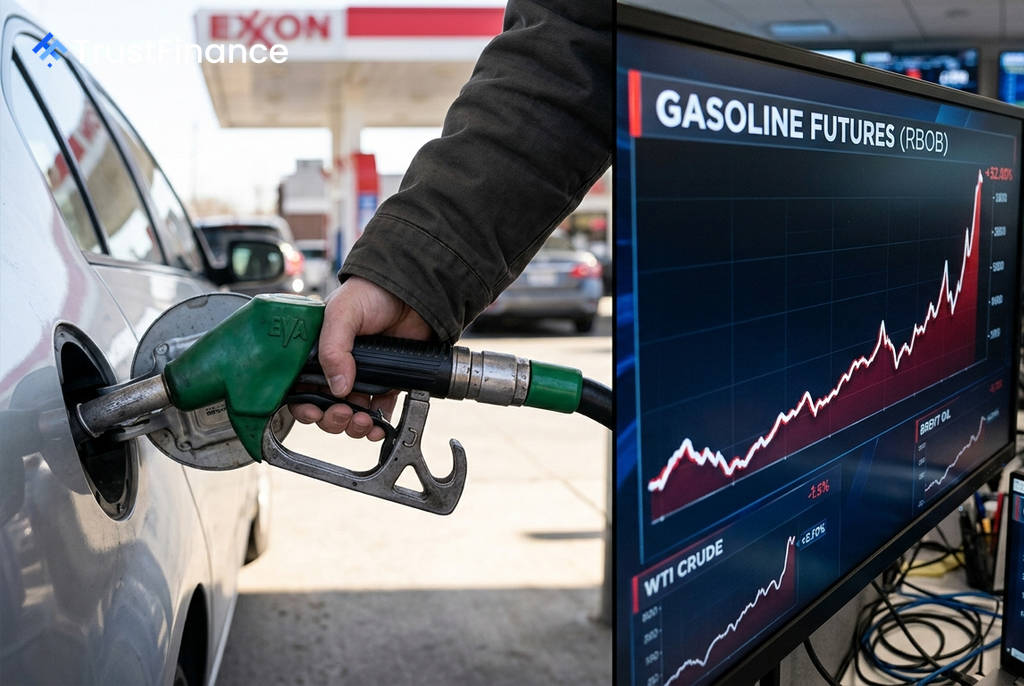
An energy shock stemming from geopolitical conflict in the Middle East has spread from natural gas to refined petroleum products, with U.S. gasoline futures surging over 82% year-to-date. This sharp rise in fuel costs is intensifying inflation concerns as investors and central banks await key U.S. consumer price data due this week.
From Natural Gas to the Pump
The primary driver of the price spike is the severe disruption to shipping through the Strait of Hormuz, a critical global energy chokepoint. According to market analysis, liquefied natural gas (LNG) exports through the strait have plummeted by roughly 95% since U.S. and Israeli military operations involving Iran began in late February 2026, effectively removing nearly a fifth of the world's LNG supply.
While natural gas was the first commodity affected, the impact has now fully transmitted to petroleum. As of Monday, RBOB gasoline futures were up +82.08% year-to-date, reflecting a direct pass-through of higher crude oil prices to the products consumers buy. This trend is exacerbated by low European gas storage, which sits at approximately 56% capacity—well below historical averages for mid-August—raising concerns about winter heating costs.
Inflation Data in Focus
Markets are now focused on the July Consumer Price Index (CPI) report, scheduled for release on Wednesday, August 12. The data is expected to show persistent inflationary pressures that remain well above the Federal Reserve's 2% target.
 Ad
- Headline CPI: Consensus forecasts point to a 3.4% year-over-year increase.
- Core CPI: Expected to be 2.5% year-over-year, a slight moderation.
According to Investing.com, markets are currently pricing in a 44% probability of a September interest rate hike from the Federal Reserve, which holds its benchmark rate in a 3.50%-3.75% range. A hotter-than-expected inflation print could significantly increase those odds as central banks struggle to contain rising prices.
Geopolitical Risks Remain Key
The future trajectory of energy prices hinges on developments in the Middle East. Iran has reportedly stated that a deal to establish an alternative shipping route via Oman is "very close," which could offer a bullish scenario for markets by potentially easing the supply bottleneck and causing prices to unwind.
However, the bearish case remains strong. Iran's conditions for a full reopening of the strait include a permanent halt to U.S. military operations and the lifting of all sanctions, terms that are not considered imminent. Until a diplomatic resolution is found, consumers are likely to face sustained pressure from high fuel costs, which will continue to feed into headline inflation.
Read next
More on Stocks
FTC Orders Walmart, Uber, Delta to Disclose Data on Personalized Pricing
The U.S. Federal Trade Commission is demanding nine major companies, including leading retail, travel, and gig economy firms, to provide information on how they use consumer data for setting individual prices and wages.

Google Launches Gemini 4 Carbon AI Model to Bolster Cybersecurity Capabilities
Alphabet's Google has unveiled Gemini 4 Carbon, its latest AI model specifically designed for advanced cybersecurity tasks like vulnerability detection and secure code generation. The launch escalates competition with rivals OpenAI and Anthropic in the enterprise AI market.

Oracle Shares Surge After Unveiling $225 Billion Revenue Target for 2030
Oracle stock rose sharply after the company presented a long-term financial outlook targeting at least $225 billion in annual revenue by fiscal 2030, driven by its expanding AI infrastructure business.

DOJ Scrutinizes Nvidia's $12.9B Hugging Face Deal Amid Broader Antitrust Probe, Sources Say
The U.S. Department of Justice is reportedly examining Nvidia's planned $12.93 billion acquisition of AI platform Hugging Face as part of a wider, ongoing antitrust investigation into the chipmaker's market conduct.