
Story
FCC to Vote on Scrapping 39% National TV Ownership Cap
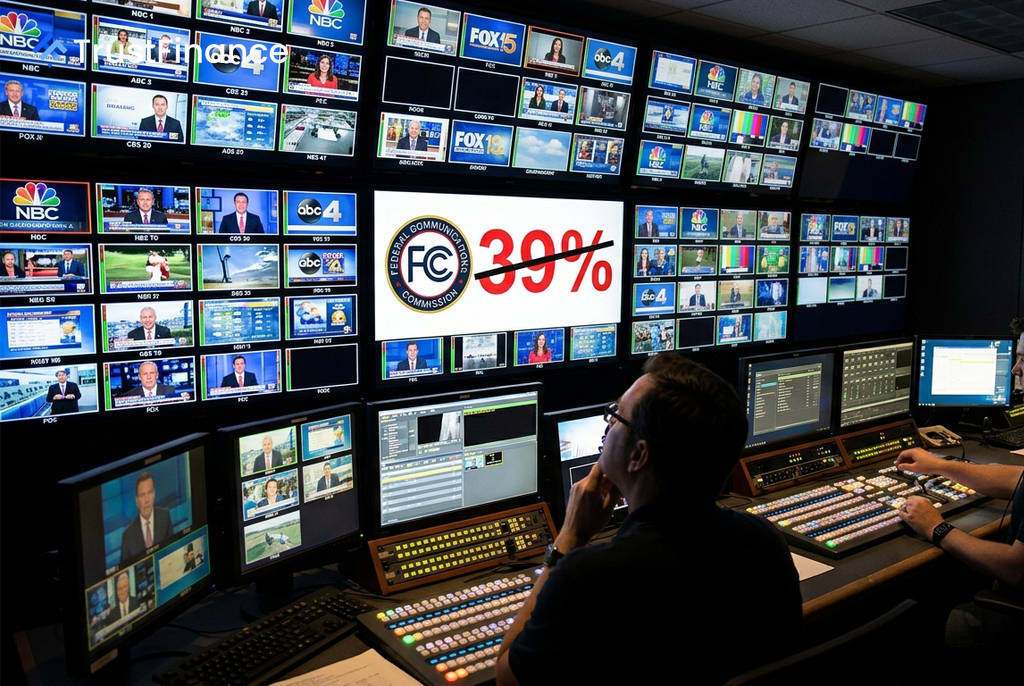
The U.S. Federal Communications Commission (FCC) is set to vote on a proposal to eliminate the 39% national audience cap for local television station ownership, a rule that has governed the broadcast industry for 85 years. The move would replace the hard limit with a case-by-case review process for future mergers and acquisitions.
A Shift in Broadcast Regulation
FCC Chair Brendan Carr confirmed on Wednesday that the agency will vote to rescind the long-standing rule. In its place, the commission would adopt a new framework for evaluating large-scale broadcast deals.
"Our new proposal would allow the FCC to approve deals that exceed the 39 percent cap, but only if doing so would promote the public interest," Carr said in a published essay. This represents a significant potential shift from a quantitative limit to a more qualitative assessment of broadcast mergers.
Division Over Media Consolidation
The proposal has drawn both support from industry groups and sharp criticism from opponents who fear excessive media consolidation. FCC Commissioner Anna Gomez, a Democrat, stated that the cap is not merely a suggestion but reflects a legal mandate from Congress.
 Ad
- Opposition: Commissioner Gomez argued the cap is essential to prevent "excessive concentration" and to protect "competition, localism, and viewpoint diversity."
- Support: The National Association of Broadcasters praised the action, arguing that "decades-old ownership restrictions that apply only to broadcasters... are out of step with today’s media marketplace."
Context and Market Implications
This proposed rule change follows the FCC's recent, and contentious, approval of Nexstar's $3.54 billion acquisition of Tegna. In that decision, the agency waived the 39% rule for the deal, which would expand Nexstar's presence to cover 80% of U.S. TV households.
That acquisition is currently halted by a judge pending a court challenge. Should the FCC formally eliminate the national cap, it could pave the way for further large-scale consolidation in the local television market, a development closely watched by investors in media stocks.
Read next
More on Stocks
FTC Orders Walmart, Uber, Delta to Disclose Data on Personalized Pricing
The U.S. Federal Trade Commission is demanding nine major companies, including leading retail, travel, and gig economy firms, to provide information on how they use consumer data for setting individual prices and wages.

Google Launches Gemini 4 Carbon AI Model to Bolster Cybersecurity Capabilities
Alphabet's Google has unveiled Gemini 4 Carbon, its latest AI model specifically designed for advanced cybersecurity tasks like vulnerability detection and secure code generation. The launch escalates competition with rivals OpenAI and Anthropic in the enterprise AI market.

Oracle Shares Surge After Unveiling $225 Billion Revenue Target for 2030
Oracle stock rose sharply after the company presented a long-term financial outlook targeting at least $225 billion in annual revenue by fiscal 2030, driven by its expanding AI infrastructure business.

DOJ Scrutinizes Nvidia's $12.9B Hugging Face Deal Amid Broader Antitrust Probe, Sources Say
The U.S. Department of Justice is reportedly examining Nvidia's planned $12.93 billion acquisition of AI platform Hugging Face as part of a wider, ongoing antitrust investigation into the chipmaker's market conduct.