
Story
FCC Ban on Chinese Robots Signals Sector Decoupling, Bernstein Says
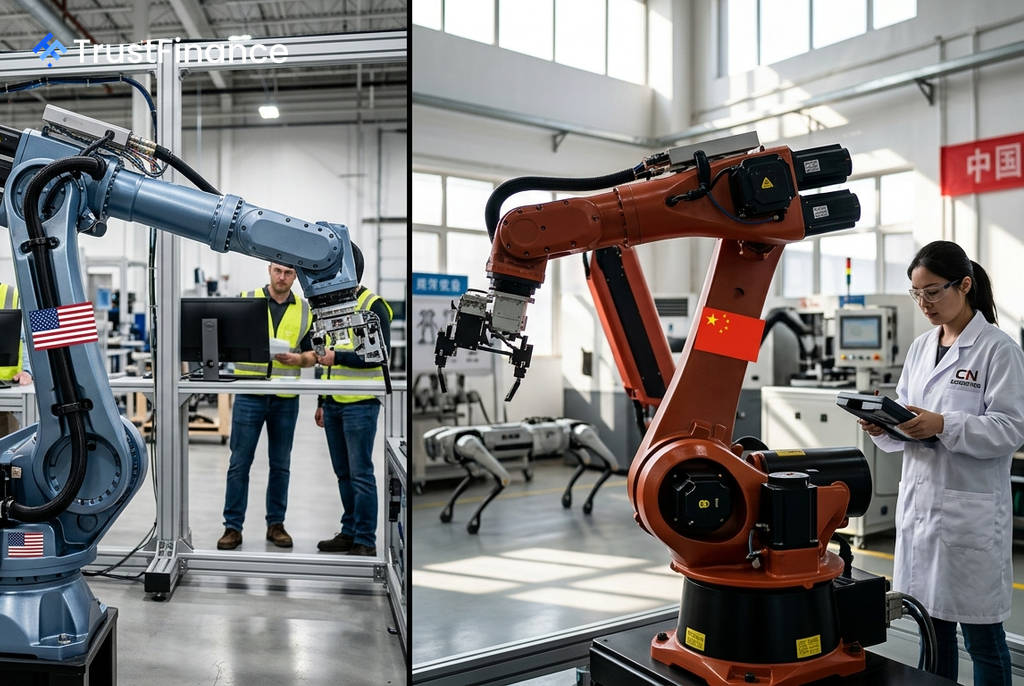
A recent U.S. Federal Communications Commission (FCC) ban on new foreign-made mobile robots marks the beginning of a formal U.S.-China decoupling in the robotics sector, according to an analysis by Bernstein. The firm noted that the direct restriction on market entry for new Chinese robot models, including humanoids and quadrupeds, is a more aggressive initial step than measures seen in other technology sectors.
A New Front in Tech Tensions
Bernstein highlighted that in industries like automobiles, telecommunications, and drones, U.S. market-access restrictions were typically preceded by a series of other measures. The FCC's direct ban on robotics represents a significant escalation in policy.
The firm anticipates the U.S. could expand these measures further, potentially including Entity List designations and investment restrictions. Such actions would mirror the approach taken against other major Chinese technology companies like Huawei, Hikvision, and DJI.
China's Vulnerabilities and Levers
China's robotics industry has its own vulnerabilities, as it currently relies on U.S. AI chips and simulation platforms, according to Bernstein. These dependencies could be targeted by future U.S. policy actions.
 Ad
In response, Bernstein expects China may implement lifecycle data controls, a policy framework similar to the one used in its automotive industry. As a potential countermeasure, the firm identified China's control over the rare-earth magnet value chain as its most powerful policy lever, given these components are critical for modern humanoid robots.
Market Impact and Potential Beneficiaries
The developing decoupling could create distinct winners and losers in the global market. Bernstein identified several groups that may stand to benefit:
- U.S. Manufacturers: Domestic humanoid robot makers such as Tesla, Figure, and Agility could gain from reduced competition due to policy barriers.
- Chinese Component Suppliers: Companies with overseas manufacturing capacity, including Shuanghuan, Tuopu, Hesai, and Orbbec, may benefit from growth in both the U.S. and Chinese robotics industries.
- Non-Chinese Suppliers: Firms like Schaeffler and Harmonic Drive may see increased business as U.S. customers seek to diversify their supply chains away from China.
- Chinese Chip Makers: If technology restrictions escalate, domestic firms like Horizon Robotics and Black Sesame, which are leveraging smart driving chip expertise for robotics, could see increased demand.
Read next
More on Stocks
FTC Orders Walmart, Uber, Delta to Disclose Data on Personalized Pricing
The U.S. Federal Trade Commission is demanding nine major companies, including leading retail, travel, and gig economy firms, to provide information on how they use consumer data for setting individual prices and wages.

Google Launches Gemini 4 Carbon AI Model to Bolster Cybersecurity Capabilities
Alphabet's Google has unveiled Gemini 4 Carbon, its latest AI model specifically designed for advanced cybersecurity tasks like vulnerability detection and secure code generation. The launch escalates competition with rivals OpenAI and Anthropic in the enterprise AI market.

Oracle Shares Surge After Unveiling $225 Billion Revenue Target for 2030
Oracle stock rose sharply after the company presented a long-term financial outlook targeting at least $225 billion in annual revenue by fiscal 2030, driven by its expanding AI infrastructure business.

DOJ Scrutinizes Nvidia's $12.9B Hugging Face Deal Amid Broader Antitrust Probe, Sources Say
The U.S. Department of Justice is reportedly examining Nvidia's planned $12.93 billion acquisition of AI platform Hugging Face as part of a wider, ongoing antitrust investigation into the chipmaker's market conduct.