
Story
Fast Retailing Boosts Annual Forecast as Q3 Profit Jumps 45.7%
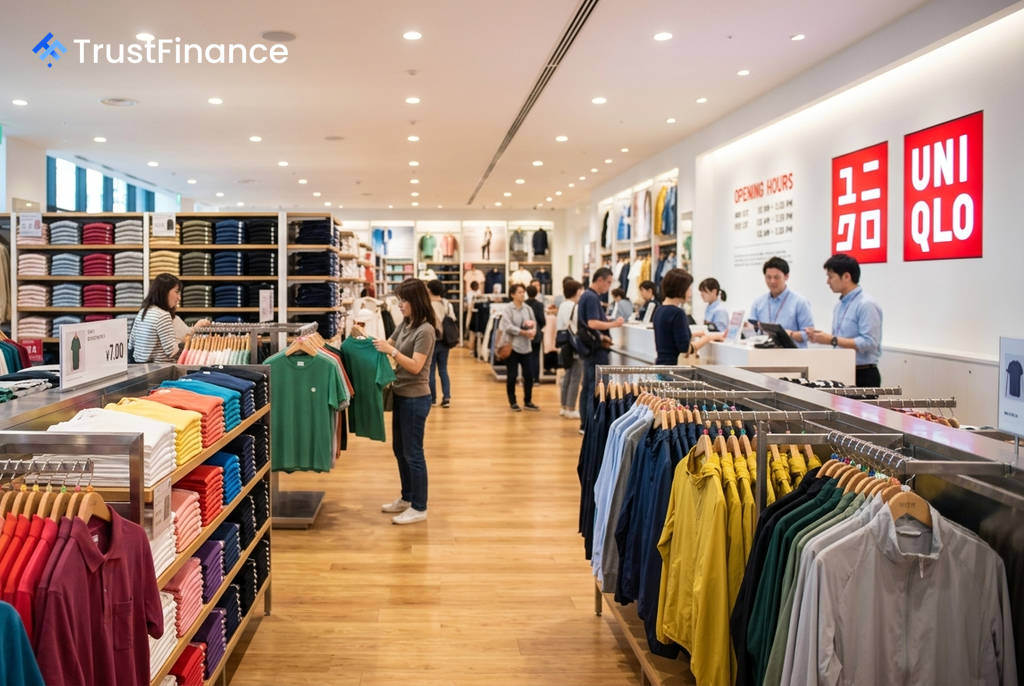
Fast Retailing, the Japanese owner of the Uniqlo clothing brand, reported a 45.7% surge in third-quarter operating profit and raised its full-year earnings forecast, signaling resilience in the face of global supply chain disruptions.
Profit Soars Past Estimates
The company announced an operating profit of 213.79 billion yen ($1.32 billion) for the three months ending in May, according to a company release on Thursday. This figure significantly outpaced the 146.74 billion yen reported in the same period last year and was well above the 177.73 billion yen average analyst estimate compiled by LSEG.
Buoyed by the strong performance, Fast Retailing lifted its full-year operating profit forecast to 730 billion yen from a previous projection of 700 billion yen. The company is on track for what is expected to be its fifth consecutive year of record earnings.
Regional Performance and Strategy
The results highlight a varied performance across its major regions. In Japan, sales have been supported by a tourism boom fueled by a yen hovering near a 40-year low. This contrasts with mainland China, its largest overseas market with nearly 900 stores, where growth has slowed due to weak consumer sentiment.
 Ad
In recent years, the company has pursued an aggressive expansion strategy in Europe and North America to diversify beyond its core Asian markets. Fast Retailing has grown from a single store in 1984 to over 2,500 Uniqlo locations globally.
Navigating Global Headwinds
The strong earnings come as global fashion retailers grapple with significant headwinds. The company said it has weathered the impact of the Middle East conflict on its supply chains and logistics, a challenge complicating air freight from its manufacturing hubs in Southeast Asia.
In April, Fast Retailing CFO Takeshi Okazaki noted that sustained increases in oil prices could also impact costs for synthetic fibres. The broader industry is also adapting to the effects of dramatic weather patterns on seasonal clothing demand.