
Story
FAA Finalizes Inspection Mandate for Boeing 787 Dreamliners Over Wing Gap Flaw
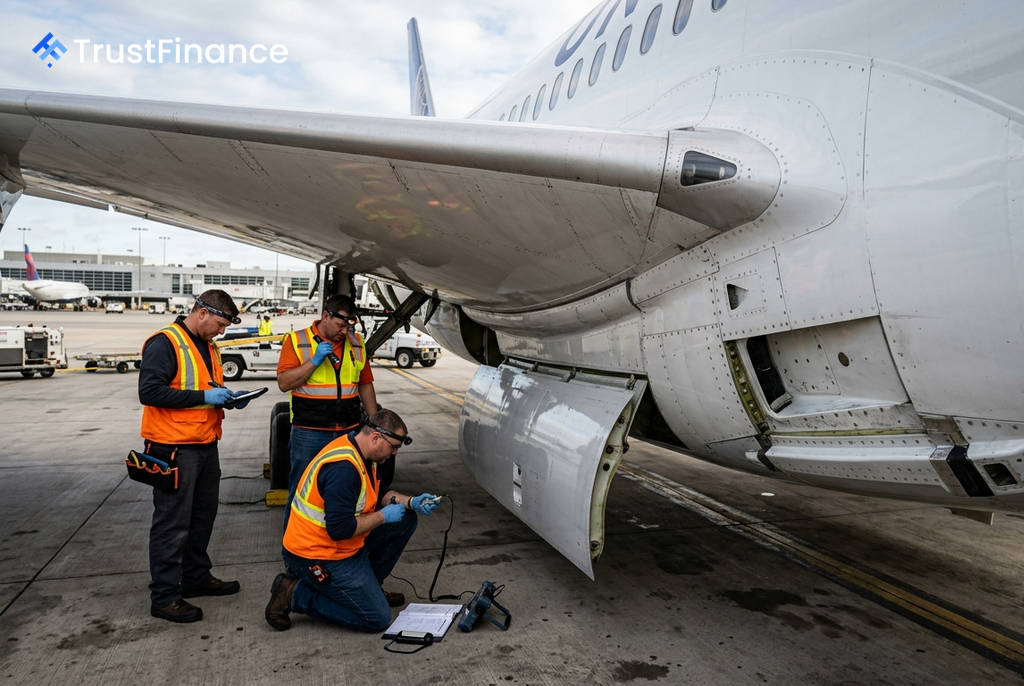
The U.S. Federal Aviation Administration (FAA) has issued a final airworthiness directive mandating inspections for certain Boeing (NYSE:BA) 787 Dreamliner aircraft. The order follows a Boeing investigation that discovered manufacturing gaps in the wing-to-body join area exceeded engineering specifications, creating a potential risk for fatigue cracks.
Details of the Directive
The FAA's directive addresses what it described as "shim gaps" at the lower side of body splice plates, which connect the lower outboard wing skins to the fuselage. According to the regulator, high pull-up forces on these components during flight could lead to the formation of fatigue cracks at the fastener holes, compromising structural integrity over time.
The rule applies to specific Boeing 787-8, 787-9, and 787-10 models. It requires operators to perform repetitive ultrasonic and detailed visual inspections on several key structural components, including splice plates, spar terminal fittings, and jack pads, and to conduct repairs if cracks are found.
Scope and Financial Impact
 Ad
The FAA estimates that the directive will affect 17 airplanes on the U.S. registry. The agency projects the cost of compliance for operators to be up to $24,310 per inspection cycle for each aircraft.
For all affected U.S. operators, the total cost could reach up to $413,270 per inspection cycle. The final rule was published following a public comment period that included input from United Airlines, American Airlines, and The Foundation for Aviation Safety.
Background and Context
Boeing stated that the manufacturing issue originates from 2019 and that the company had previously addressed it by sending a service bulletin to operators in August 2025. The aerospace manufacturer affirmed that it has been collaborating with airlines on the matter and that the affected aircraft can continue to operate normally while the inspection plans are implemented.
Read next
More on Stocks
FTC Orders Walmart, Uber, Delta to Disclose Data on Personalized Pricing
The U.S. Federal Trade Commission is demanding nine major companies, including leading retail, travel, and gig economy firms, to provide information on how they use consumer data for setting individual prices and wages.

Google Launches Gemini 4 Carbon AI Model to Bolster Cybersecurity Capabilities
Alphabet's Google has unveiled Gemini 4 Carbon, its latest AI model specifically designed for advanced cybersecurity tasks like vulnerability detection and secure code generation. The launch escalates competition with rivals OpenAI and Anthropic in the enterprise AI market.

Oracle Shares Surge After Unveiling $225 Billion Revenue Target for 2030
Oracle stock rose sharply after the company presented a long-term financial outlook targeting at least $225 billion in annual revenue by fiscal 2030, driven by its expanding AI infrastructure business.

DOJ Scrutinizes Nvidia's $12.9B Hugging Face Deal Amid Broader Antitrust Probe, Sources Say
The U.S. Department of Justice is reportedly examining Nvidia's planned $12.93 billion acquisition of AI platform Hugging Face as part of a wider, ongoing antitrust investigation into the chipmaker's market conduct.