
Story
European Energy Majors Adjust Buyback Plans; Eni, Repsol Boost Payouts While BP Pauses, Barclays Reports
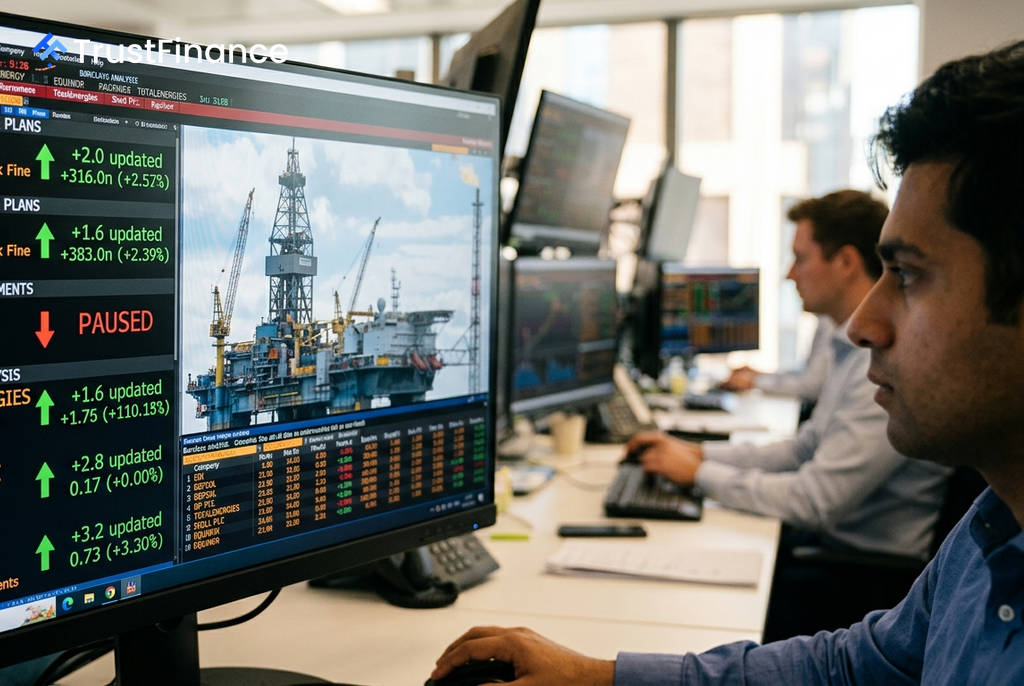
A number of Europe’s top integrated energy firms have adjusted their shareholder return strategies, updating share buyback plans after reporting second-quarter 2026 earnings. A research note from Barclays systematically tracked the changes, revealing a divergence in capital allocation priorities across the sector.
Buyback Increases and Reaffirmations
Several companies signaled confidence by increasing or extending their share repurchase programs, committing to significant capital returns to investors. These moves are often interpreted as a sign of strong cash flow generation and a positive outlook on the business environment.
Key updates, according to Barclays, include:
- Repsol: The Spanish firm increased its buyback for the second half of 2026 to €500 million, bringing the full-year total to €850 million. Repsol plans to return 30% to 40% of its operating cash flow (OCF) to shareholders.
- Equinor: The Norwegian energy giant doubled its 2026 buyback program to $3 billion, up from the $1.5 billion announced on its capital markets day. It also announced a third tranche of up to $1.125 billion.
- Shell: The company will complete its current $3 billion share repurchase before its third-quarter 2026 results are announced. Shell targets distributing 40% to 50% of its OCF through the cycle.
- TotalEnergies: The French major plans to buy back up to $1.5 billion in shares in the third quarter, the upper limit of its guidance range based on a Brent crude price of $60-$70 per barrel. Its goal is to return at least 40% of OCF to shareholders.
- Eni: Italy's Eni set its 2026 share buyback target at €3.4 billion. The company aims to distribute 35% to 45% of its OCF to shareholders via dividends and buybacks.
- Galp: The Portuguese company announced a €250 million buyback for 2026, with a plan to return one-third of its OCF to shareholders.
Contrasting Strategies
 Ad
In contrast to their peers, UK-based BP and Austria's OMV are taking a more cautious or different approach to shareholder distributions.
BP has suspended its share buyback program and withdrawn its previous target of using 30% to 40% of OCF for shareholder returns. Instead, the company stated it expects to increase its dividend per share by 4% annually. Meanwhile, OMV has not announced any new share buyback plans.
What It Means for Investors
Share buybacks are a primary method, alongside dividends, for companies to return excess cash to shareholders, which can support stock prices by reducing the number of shares outstanding. The varied announcements from the European energy sector reflect different corporate strategies, balance sheet strengths, and management outlooks on future commodity prices and cash flow.
The increases by firms like Repsol and Equinor suggest a robust financial position and a commitment to shareholder returns. Conversely, BP's decision to suspend its program in favor of dividend growth indicates a potential strategic pivot toward a more predictable, albeit less flexible, form of capital return.
Read next
More on Stocks
FTC Orders Walmart, Uber, Delta to Disclose Data on Personalized Pricing
The U.S. Federal Trade Commission is demanding nine major companies, including leading retail, travel, and gig economy firms, to provide information on how they use consumer data for setting individual prices and wages.

Google Launches Gemini 4 Carbon AI Model to Bolster Cybersecurity Capabilities
Alphabet's Google has unveiled Gemini 4 Carbon, its latest AI model specifically designed for advanced cybersecurity tasks like vulnerability detection and secure code generation. The launch escalates competition with rivals OpenAI and Anthropic in the enterprise AI market.

Oracle Shares Surge After Unveiling $225 Billion Revenue Target for 2030
Oracle stock rose sharply after the company presented a long-term financial outlook targeting at least $225 billion in annual revenue by fiscal 2030, driven by its expanding AI infrastructure business.

DOJ Scrutinizes Nvidia's $12.9B Hugging Face Deal Amid Broader Antitrust Probe, Sources Say
The U.S. Department of Justice is reportedly examining Nvidia's planned $12.93 billion acquisition of AI platform Hugging Face as part of a wider, ongoing antitrust investigation into the chipmaker's market conduct.