
Story
Essex Bio-Technology Interim Profit Plummets 32% on New China VAT Law
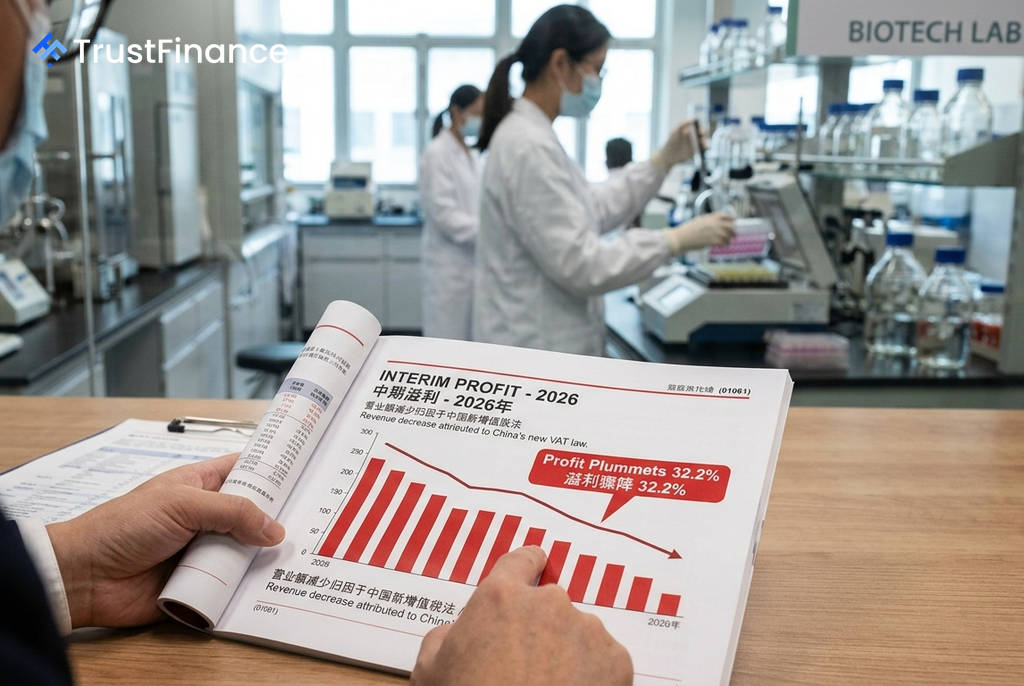
Essex Bio-Technology (1061.HK) announced a significant drop in its first-half earnings, with profit falling 32.2% year-on-year to approximately HK$111 million. The company attributed the sharp decline primarily to a new value-added tax (VAT) law in China that increased the tax burden on its core products.
First-Half Financials
In a filing, the company reported a broad-based decline in its key performance metrics for the interim period. Revenue was also affected, falling by double digits from the prior year.
- Revenue: Approximately HK$785 million, a decrease of 10.5% year-on-year.
- Profit: Approximately HK$111 million, a decrease of 32.2% year-on-year.
- Earnings Per Share: 19.53 HK cents.
- Interim Dividend: The board proposed an interim dividend of 5 HK cents per share.
Impact of Chinese Tax Reform
The company stated that the revenue decrease was a direct result of a new Chinese VAT law, which took retroactive effect from January 1. The regulation changed the tax treatment for wholesale sales of general biological products, including the company's Beifushu® and Beifuji® series.
 Ad
Under the new rules, these products are now subject to the standard 13% VAT rate, consistent with other pharmaceuticals. Previously, wholesalers could opt for a simplified tax method at a 3% rate. Essex Bio-Technology noted that it could not pass this increased tax cost on to customers because its selling prices are fixed under China's centralized procurement system, and revenue is reported net of VAT.
Context for Investors
The results highlight the significant regulatory risk and margin pressure faced by pharmaceutical companies operating within China's state-controlled procurement framework. The inability to adjust prices in response to tax changes directly impacts profitability.
For investors, this underscores the vulnerability of the company's business model to policy shifts in its primary market. The market will be watching for the company's strategy to mitigate these margin pressures in future reporting periods. The declaration of an interim dividend may offer a degree of stability for shareholders despite the profit downturn.
Read next
More on Stocks
FTC Orders Walmart, Uber, Delta to Disclose Data on Personalized Pricing
The U.S. Federal Trade Commission is demanding nine major companies, including leading retail, travel, and gig economy firms, to provide information on how they use consumer data for setting individual prices and wages.

Google Launches Gemini 4 Carbon AI Model to Bolster Cybersecurity Capabilities
Alphabet's Google has unveiled Gemini 4 Carbon, its latest AI model specifically designed for advanced cybersecurity tasks like vulnerability detection and secure code generation. The launch escalates competition with rivals OpenAI and Anthropic in the enterprise AI market.

Oracle Shares Surge After Unveiling $225 Billion Revenue Target for 2030
Oracle stock rose sharply after the company presented a long-term financial outlook targeting at least $225 billion in annual revenue by fiscal 2030, driven by its expanding AI infrastructure business.

DOJ Scrutinizes Nvidia's $12.9B Hugging Face Deal Amid Broader Antitrust Probe, Sources Say
The U.S. Department of Justice is reportedly examining Nvidia's planned $12.93 billion acquisition of AI platform Hugging Face as part of a wider, ongoing antitrust investigation into the chipmaker's market conduct.