
Story
Energy Stocks Face Headwinds as OPEC Cuts Demand Forecast Amid Geopolitical Tensions
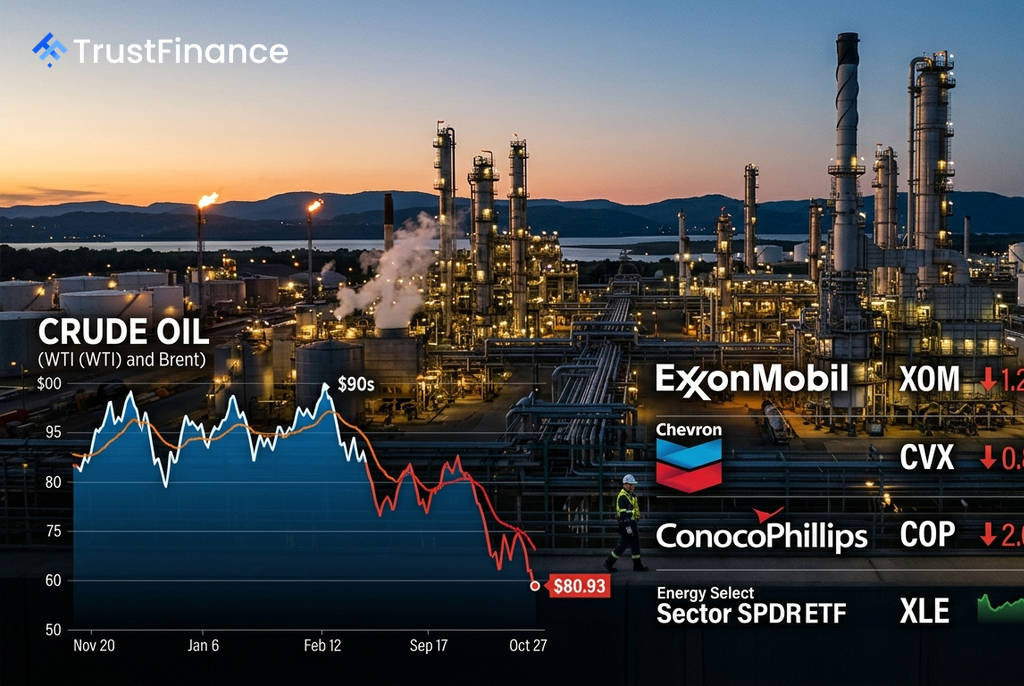
Crude oil prices are facing conflicting pressures as bearish demand signals clash with ongoing geopolitical risks, creating a complex environment for energy stocks. While tensions in the Middle East have kept crude prices elevated, the Organization of the Petroleum Exporting Countries (OPEC) has significantly lowered its oil demand growth forecast for 2026, adding to concerns about a potential market slowdown.
Conflicting Signals Buffet Oil Market
The primary bearish pressure comes from updated demand forecasts. In its August 12 monthly report, OPEC slashed its 2026 demand growth projection to just 580,000 barrels per day (bpd). This sentiment was echoed by the International Energy Agency (IEA), which anticipates a 1.6 million bpd contraction in consumption. A recent surge in U.S. crude inventories by 17.4 million barrels—the largest weekly increase since January 2023—has further weighed on prices.
Despite these headwinds, crude prices remain supported by geopolitical factors. A deadlock in U.S.-Iran talks continues to embed a risk premium in the market, particularly for shipping through the Strait of Hormuz. West Texas Intermediate (WTI) has been trading in a range of approximately $78-$85 per barrel, a level that allows producers to generate substantial cash flow but remains vulnerable to shifts in either demand or geopolitical stability.
Energy Majors Post Strong Gains
Major energy producers have performed strongly year-to-date, with stocks like ExxonMobil, Chevron, and ConocoPhillips posting gains between 31% and 35%. However, their financial profiles and valuations present distinct pictures for investors.
 Ad
- Chevron (CVX) stands out for its income characteristics, offering a 3.6% dividend yield and a 7.0% free cash flow yield, the highest among the three.
- ConocoPhillips (COP) appears to be the most attractively valued based on its enterprise value to EBITDA ratio of 5.9x, though it carries a higher debt-to-equity ratio of 35.6%.
- ExxonMobil (XOM) is characterized by its fortress balance sheet, with the lowest debt-to-equity ratio at 16.3%, but it trades at a richer valuation multiple.
Technical Indicators Signal Caution
While the uptrend in energy stocks remains strong, several technical indicators suggest momentum may be waning and that the sector could be overbought. ConocoPhillips, in particular, appears extended, with its weekly and daily Stochastic RSI indicators at 100, a level that often precedes a consolidation or pullback.
ExxonMobil and Chevron also show signs of being in overbought territory, though to a lesser extent. The readings suggest that after a period of significant appreciation, the so-called "easy money" may have already been made, and the stocks could be due for a period of sideways trading or a modest correction before potentially resuming their uptrend.
Read next
More on Stocks
FTC Orders Walmart, Uber, Delta to Disclose Data on Personalized Pricing
The U.S. Federal Trade Commission is demanding nine major companies, including leading retail, travel, and gig economy firms, to provide information on how they use consumer data for setting individual prices and wages.

Google Launches Gemini 4 Carbon AI Model to Bolster Cybersecurity Capabilities
Alphabet's Google has unveiled Gemini 4 Carbon, its latest AI model specifically designed for advanced cybersecurity tasks like vulnerability detection and secure code generation. The launch escalates competition with rivals OpenAI and Anthropic in the enterprise AI market.

Oracle Shares Surge After Unveiling $225 Billion Revenue Target for 2030
Oracle stock rose sharply after the company presented a long-term financial outlook targeting at least $225 billion in annual revenue by fiscal 2030, driven by its expanding AI infrastructure business.

DOJ Scrutinizes Nvidia's $12.9B Hugging Face Deal Amid Broader Antitrust Probe, Sources Say
The U.S. Department of Justice is reportedly examining Nvidia's planned $12.93 billion acquisition of AI platform Hugging Face as part of a wider, ongoing antitrust investigation into the chipmaker's market conduct.