
Story
Energy Sector Is Best Hedge Against Rising Oil Prices, Morgan Stanley Says
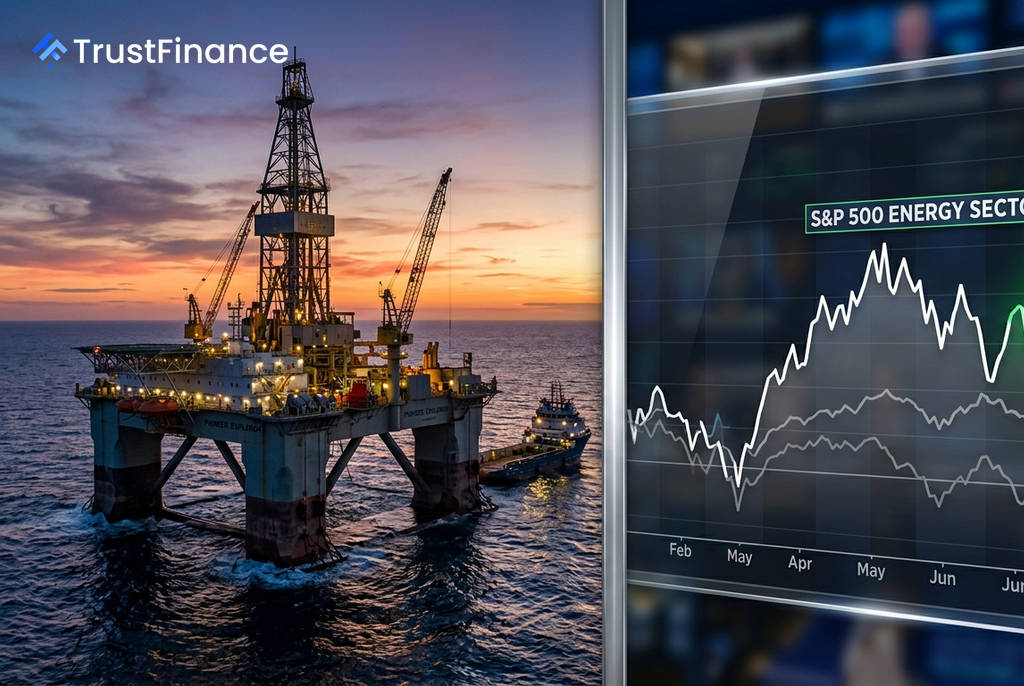
Morgan Stanley strategists have identified rising crude prices as the primary near-term risk for the stock market, advising clients in a Monday note that the Energy sector offers the most effective hedge for equity portfolios.
The Asymmetric Risk of Oil
The bank's analysis, led by strategist Michael Wilson, highlights that Brent crude has surged 13% over the last two weeks, creating a significant headwind for stocks. "Crude is the near-term risk—and it’s asymmetric," Wilson wrote, arguing that rising oil prices have a more reliably negative impact on equities than falling prices have a positive one.
According to Morgan Stanley, the negative correlation between oil and equities has been twice as significant during periods of rising Brent prices over the past two months compared to periods when prices were falling. The note suggests that the constructive case for the broader market does not require oil prices to reverse, but simply to stop rising.
Energy Stocks as a Portfolio Hedge
A renewed spike in oil prices could pressure corporate input costs and likely push bond yields and volatility higher, the note warned. In this environment, Wilson stated that "Energy stocks provide a useful hedge for equity portfolios."
 Ad
The sector's performance is often positively correlated with commodity prices, offering investors a potential buffer against losses in other parts of a portfolio when energy costs are increasing.
Broader Market Leadership Shifts
Beyond the energy call, Morgan Stanley also observed that its recommendation for a rotation into "quality" stocks is playing out. The firm highlighted strong two-month performance from several factors:
- High free cash flow: +16%
- High gross margin: +9%
- Sales growth stability: +9%
- Low capex-to-sales: +8%
The bank sees market leadership shifting toward services-oriented and asset-light companies, with Financial Services and Insurance standing out for their strong earnings revisions. The note also attributed higher interest rates primarily to strong nominal growth rather than structural concerns about government debt.
Read next
More on Stocks
FTC Orders Walmart, Uber, Delta to Disclose Data on Personalized Pricing
The U.S. Federal Trade Commission is demanding nine major companies, including leading retail, travel, and gig economy firms, to provide information on how they use consumer data for setting individual prices and wages.

Google Launches Gemini 4 Carbon AI Model to Bolster Cybersecurity Capabilities
Alphabet's Google has unveiled Gemini 4 Carbon, its latest AI model specifically designed for advanced cybersecurity tasks like vulnerability detection and secure code generation. The launch escalates competition with rivals OpenAI and Anthropic in the enterprise AI market.

Oracle Shares Surge After Unveiling $225 Billion Revenue Target for 2030
Oracle stock rose sharply after the company presented a long-term financial outlook targeting at least $225 billion in annual revenue by fiscal 2030, driven by its expanding AI infrastructure business.

DOJ Scrutinizes Nvidia's $12.9B Hugging Face Deal Amid Broader Antitrust Probe, Sources Say
The U.S. Department of Justice is reportedly examining Nvidia's planned $12.93 billion acquisition of AI platform Hugging Face as part of a wider, ongoing antitrust investigation into the chipmaker's market conduct.