
Story
Dollar Stabilizes After Steep Drop as Traders Await Fed Policy Cues
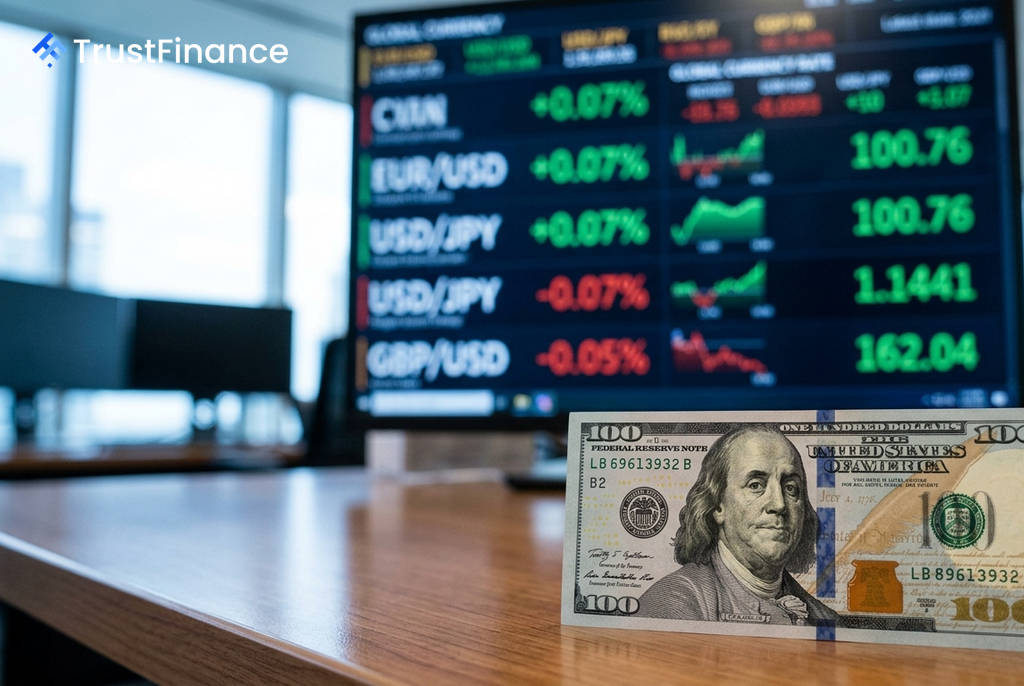
The U.S. dollar was little changed on Monday, finding its footing after posting its largest single-day decline since late April in the previous session. Foreign exchange markets are now squarely focused on the Federal Reserve's monetary policy outlook for further direction.
Fed Policy in the Spotlight
The U.S. Dollar Index (DXY), which tracks the greenback against a basket of six major currencies, was trading near 100.85 on Monday. The stability follows a sharp 0.5% slide on Thursday, which was prompted by a softer-than-expected June nonfarm payrolls report.
Investors interpreted the labor market data as a sign of resilience without overheating, which could give the Fed more flexibility to keep interest rates on hold. The minutes from the Fed’s June meeting, set for release on Wednesday, will be the next key catalyst for markets seeking insight into policymakers' thinking, especially after new chair Kevin Warsh signaled an end to forward guidance.
Yen Weakens, Intervention Watch Continues
The Japanese yen resumed its slide against the dollar, with the USD/JPY pair rising 0.4% to 162.04. The currency continues to languish near a 40-year low, deep into territory that has previously drawn intervention from Tokyo.
 Ad
The yen has remained consistently weaker than 160 per dollar since mid-June, a level that has historically concerned Japanese officials. While authorities last intervened in late April and early May, the yen’s subsequent strength proved temporary. Weakness has persisted even after the Bank of Japan raised interest rates in June.
Euro Edges Higher on Economic Data
Elsewhere, the euro was slightly higher at $1.1441 following the release of key Eurozone economic indicators. According to first estimates from Eurostat, industrial producer prices jumped 5.9% on a year-over-year basis in May, largely driven by a 14% surge in energy prices.
A separate report showed that retail sales in the bloc ticked up by 0.2% in May, a modest improvement from April's 0.3% decline. The European Central Bank (ECB) was the first major central bank to hike rates in response to recent inflationary pressures, but with oil prices having fallen, the case for another hike is seen as less certain.