
Story
Detroit Automakers Warn Proposed Trade Rules Could Add Billions in Costs
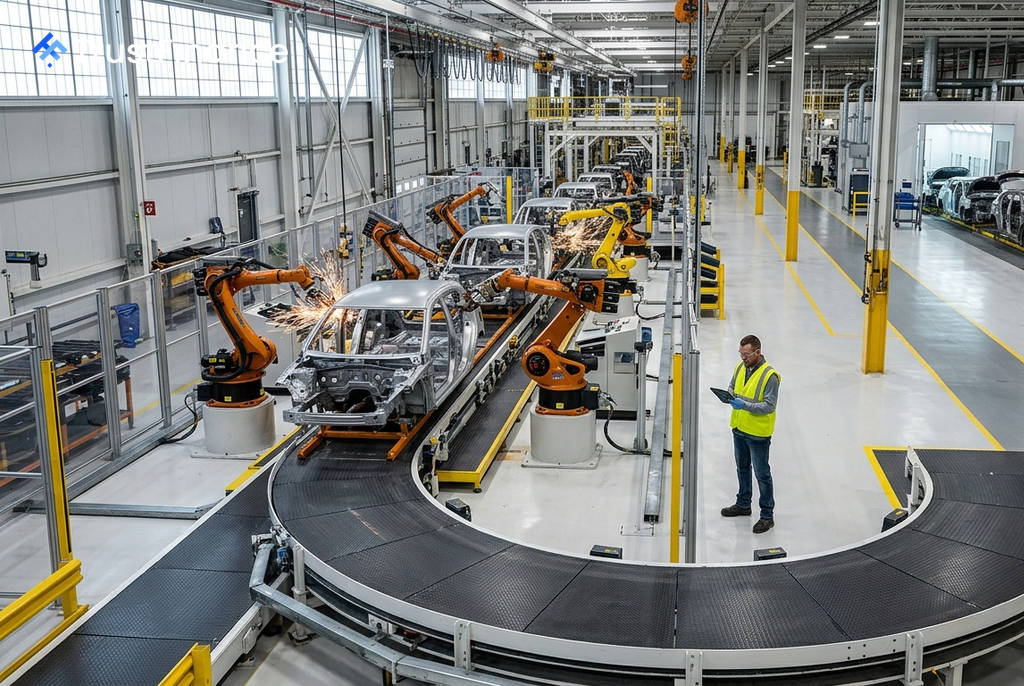
Detroit's leading automakers are preparing to challenge Trump administration proposals for a revised North American trade deal, arguing the changes could saddle each company with billions of dollars in new annual costs. The industry is already navigating a complex tariff environment and fears the new rules could further erode its competitiveness against foreign rivals.
Stricter Content Rules and Cost Projections
A key point of contention is a U.S. proposal that would require vehicles to contain at least 50% U.S.-made content to qualify for preferential tariff treatment, as reported by Reuters. Automakers are also concerned about a separate proposal to increase the overall North American vehicle content requirement from its current 75% level.
According to estimates from two of the automakers, these new rules could add at least $2 billion in annual costs for each company. These potential expenses would be in addition to existing tariff burdens. General Motors has projected its gross tariff-related costs will be $2.5 billion to $3.5 billion this year, while Ford Motor has estimated its net tariff impact at about $1 billion.
Competitive Disadvantage
The American Automotive Policy Council, a trade group representing General Motors, Ford, and Stellantis, has highlighted that U.S. automakers face a competitive disadvantage. While they face duties of about 25% on non-compliant vehicle imports from Mexico and Canada, automakers from Japan, South Korea, and Europe face a flat 15% tariff on vehicles they export to the United States.
 Ad
GM CEO Mary Barra stated on a recent earnings call that the company is focused on "making sure that the U.S. automakers are going to be able to compete and win." In an apparent response to administration pressure, Ford announced it would move production of U.S.-bound Lincoln models from China to American factories, with CEO Jim Farley acknowledging the company had initially underestimated the administration's commitment to boosting domestic production.
Ongoing Negotiations
The administration has maintained that its tariff policies are designed to encourage more factory investment and job creation in the U.S. A fourth round of trade talks between U.S. and Mexican officials is reportedly planned for next month, while U.S. and Canadian officials have also been meeting.
Despite the cost concerns, both GM and Stellantis have issued statements indicating they are encouraged by the progress of the negotiations. GM told Reuters that vehicles with significant U.S. and North American content "should receive better treatment than vehicles that do not."
Read next
More on Stocks
FTC Orders Walmart, Uber, Delta to Disclose Data on Personalized Pricing
The U.S. Federal Trade Commission is demanding nine major companies, including leading retail, travel, and gig economy firms, to provide information on how they use consumer data for setting individual prices and wages.

Google Launches Gemini 4 Carbon AI Model to Bolster Cybersecurity Capabilities
Alphabet's Google has unveiled Gemini 4 Carbon, its latest AI model specifically designed for advanced cybersecurity tasks like vulnerability detection and secure code generation. The launch escalates competition with rivals OpenAI and Anthropic in the enterprise AI market.

Oracle Shares Surge After Unveiling $225 Billion Revenue Target for 2030
Oracle stock rose sharply after the company presented a long-term financial outlook targeting at least $225 billion in annual revenue by fiscal 2030, driven by its expanding AI infrastructure business.

DOJ Scrutinizes Nvidia's $12.9B Hugging Face Deal Amid Broader Antitrust Probe, Sources Say
The U.S. Department of Justice is reportedly examining Nvidia's planned $12.93 billion acquisition of AI platform Hugging Face as part of a wider, ongoing antitrust investigation into the chipmaker's market conduct.