
Story
Cyclosporiasis Outbreak Hits Restaurant Stocks, Sweetgreen Tumbles on Contagion Fears
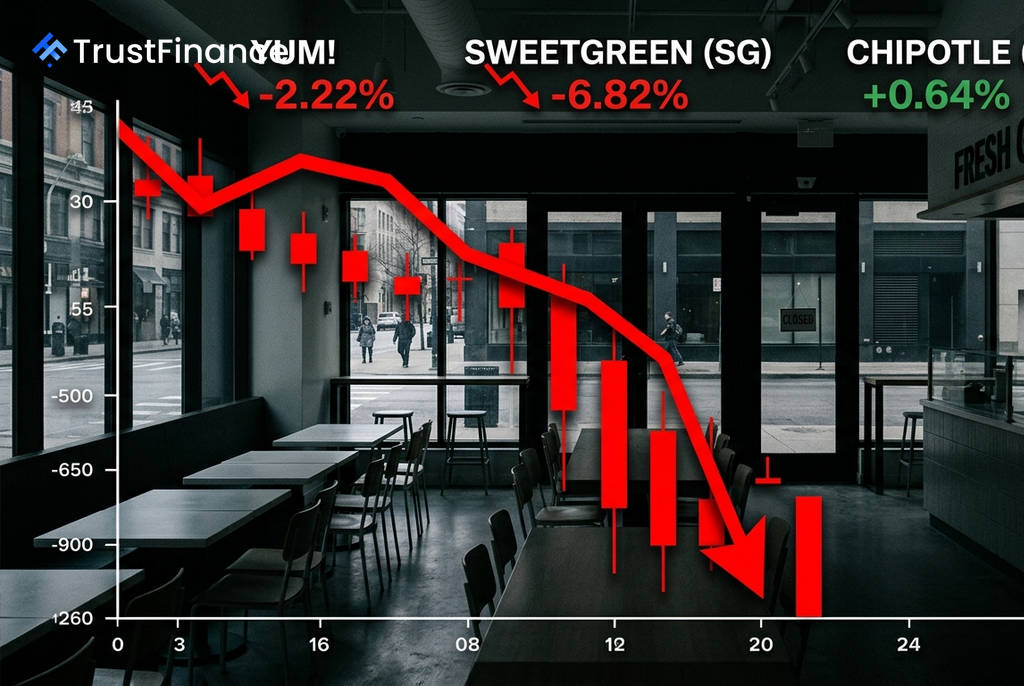
A widespread cyclosporiasis outbreak tied to a supplier for Taco Bell is sending ripples through the restaurant sector, with Yum! Brands shares falling while Sweetgreen experienced a much sharper decline despite having no direct connection to the incident.
The market's reaction highlights how food-safety concerns can create contagion risk, where investor perception of a sector-wide problem outweighs the specific facts of an outbreak.
Outbreak Details
The U.S. Centers for Disease Control and Prevention (CDC) has confirmed 6,707 laboratory cases of cyclosporiasis across 45 states, resulting in 423 hospitalizations. According to the source material, Michigan has been particularly hard-hit, reporting over 11,000 cases and two deaths.
The Food and Drug Administration's (FDA) investigation has traced a significant number of cases to shredded iceberg lettuce from a supplier, Taylor Farms, that was served at Taco Bell locations in nine states. The privately held supplier has since recalled the product and closed its processing plant in central Mexico, the report stated.
Divergent Market Reactions
 Ad
Investor response on Monday varied significantly among publicly traded restaurant companies, reflecting different levels of direct exposure and brand risk.
- Yum! Brands (YUM): The parent company of Taco Bell, saw its stock fall 2.22%. While directly implicated, Yum's diversified portfolio, which also includes KFC and Pizza Hut, helps insulate it from a crisis affecting a single brand. Liability is also expected to focus heavily on the supplier.
- Sweetgreen (SG): The stock plunged 6.82%, the most severe reaction in the group. This decline appears to be a case of "guilt-by-association," as investors sold off shares in a company whose entire brand is built on fresh, raw greens, making it highly sensitive to any foodborne illness headlines.
- Chipotle (CMG): Shares were nearly flat, down just 0.11%. Having overcome its own past food-safety issues, Chipotle's distinct supply chain may be seen by investors as a "flight to perceived safety" amid a competitor's crisis.
Investor Takeaways
The sharp drop in Sweetgreen's stock underscores the power of perception risk in the food industry. When a widespread contamination event occurs, investors often sell first and ask questions later, punishing companies in the same category even if they are not involved.
Because the supplier at the center of the outbreak, Taylor Farms, is a private company, investors cannot directly trade its stock. This often leads to publicly traded companies like Sweetgreen becoming proxies for broader market fears about the food supply chain. The full market impact, including potential litigation and increased regulatory scrutiny, may not yet be fully priced in.
Read next
More on Stocks
FTC Orders Walmart, Uber, Delta to Disclose Data on Personalized Pricing
The U.S. Federal Trade Commission is demanding nine major companies, including leading retail, travel, and gig economy firms, to provide information on how they use consumer data for setting individual prices and wages.

Google Launches Gemini 4 Carbon AI Model to Bolster Cybersecurity Capabilities
Alphabet's Google has unveiled Gemini 4 Carbon, its latest AI model specifically designed for advanced cybersecurity tasks like vulnerability detection and secure code generation. The launch escalates competition with rivals OpenAI and Anthropic in the enterprise AI market.

Oracle Shares Surge After Unveiling $225 Billion Revenue Target for 2030
Oracle stock rose sharply after the company presented a long-term financial outlook targeting at least $225 billion in annual revenue by fiscal 2030, driven by its expanding AI infrastructure business.

DOJ Scrutinizes Nvidia's $12.9B Hugging Face Deal Amid Broader Antitrust Probe, Sources Say
The U.S. Department of Justice is reportedly examining Nvidia's planned $12.93 billion acquisition of AI platform Hugging Face as part of a wider, ongoing antitrust investigation into the chipmaker's market conduct.