
Story
Citadel Securities Challenges SEC Plan to Eliminate 'Best Execution' Stock Rule
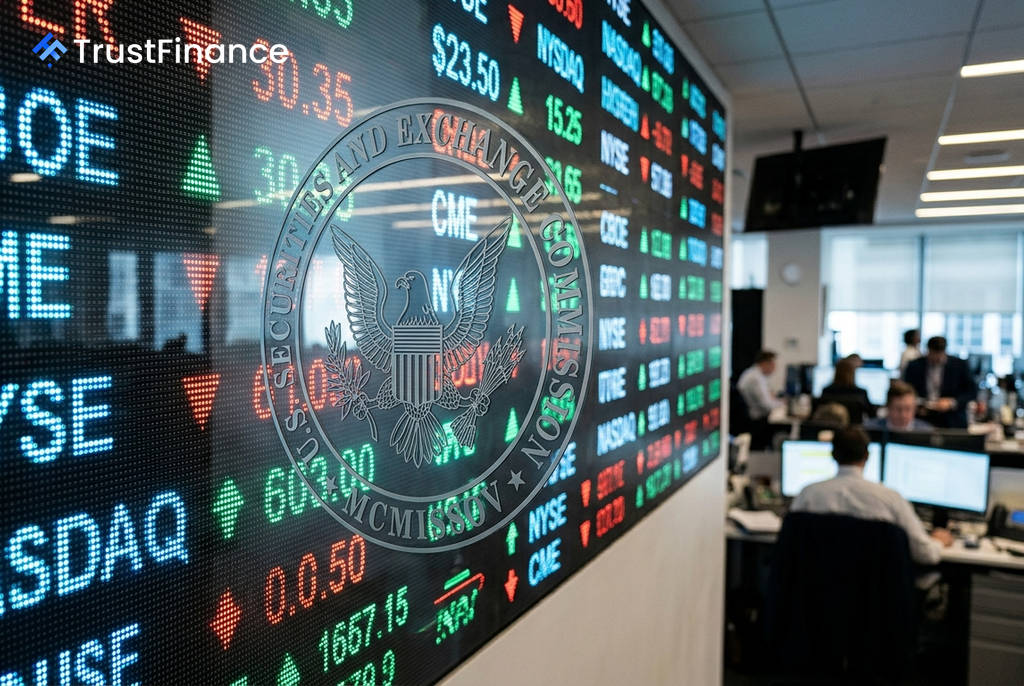
Citadel Securities has formally urged the U.S. Securities and Exchange Commission (SEC) to reconsider a proposal that would eliminate a foundational stock trading regulation. The market-making firm, founded by billionaire Ken Griffin, argued that scrapping the "order protection rule" could divert trading from public exchanges, harm retail investors, and decrease overall market liquidity.
Citadel's Core Arguments
In a letter to the SEC dated Monday, Citadel Securities described the regulator's economic analysis as "fatally flawed." Stephen John Berger, the firm's global head of government and regulatory policy, stated that the SEC has not sufficiently demonstrated that the proposal's benefits would outweigh its significant risks.
The firm contends that removing the rule would make it easier for brokers to bypass the best available prices on public exchanges. This could lead to:
- More customer orders being internalized by brokerages or routed to alternative trading venues.
- Weakened incentives for market participants to display competitive price quotes.
- A potential decline in price discovery, the process by which market prices are set.
Citadel Securities also pointed out that the SEC's projected compliance savings of approximately $250,000 per day are modest in the context of the vast U.S. stock market.
Context of the SEC Proposal
 Ad
The regulation in question, formally known as the "order protection rule," was adopted in 2005. Its primary function is to prevent "trade-throughs," which occur when a trade is executed at a price that is worse than a publicly quoted price on another trading venue.
In June, the SEC unanimously proposed to scrap the rule, arguing it has become outdated, driving up costs and complexity without providing sufficient benefits in modern markets. If adopted, the change would represent one of the most significant overhauls to U.S. equity market structure in years.
Broader Market Implications
Citadel Securities warned that the proposal could inadvertently benefit emerging platforms for tokenized equities. These venues could potentially execute trades without being required to match better prices displayed elsewhere, exposing investors to weaker protections.
Instead of a full repeal, Citadel Securities suggested a less disruptive alternative. The firm urged the commission to consider "the far less risky alternative of imposing a minimum volume threshold for exchanges to receive protected quote status."
Read next
More on Stocks
FTC Orders Walmart, Uber, Delta to Disclose Data on Personalized Pricing
The U.S. Federal Trade Commission is demanding nine major companies, including leading retail, travel, and gig economy firms, to provide information on how they use consumer data for setting individual prices and wages.

Google Launches Gemini 4 Carbon AI Model to Bolster Cybersecurity Capabilities
Alphabet's Google has unveiled Gemini 4 Carbon, its latest AI model specifically designed for advanced cybersecurity tasks like vulnerability detection and secure code generation. The launch escalates competition with rivals OpenAI and Anthropic in the enterprise AI market.

Oracle Shares Surge After Unveiling $225 Billion Revenue Target for 2030
Oracle stock rose sharply after the company presented a long-term financial outlook targeting at least $225 billion in annual revenue by fiscal 2030, driven by its expanding AI infrastructure business.

DOJ Scrutinizes Nvidia's $12.9B Hugging Face Deal Amid Broader Antitrust Probe, Sources Say
The U.S. Department of Justice is reportedly examining Nvidia's planned $12.93 billion acquisition of AI platform Hugging Face as part of a wider, ongoing antitrust investigation into the chipmaker's market conduct.