
Story
Chinese Health Brands Use Misleading 'Foreign' Marketing, Unapproved Claims, Report Finds
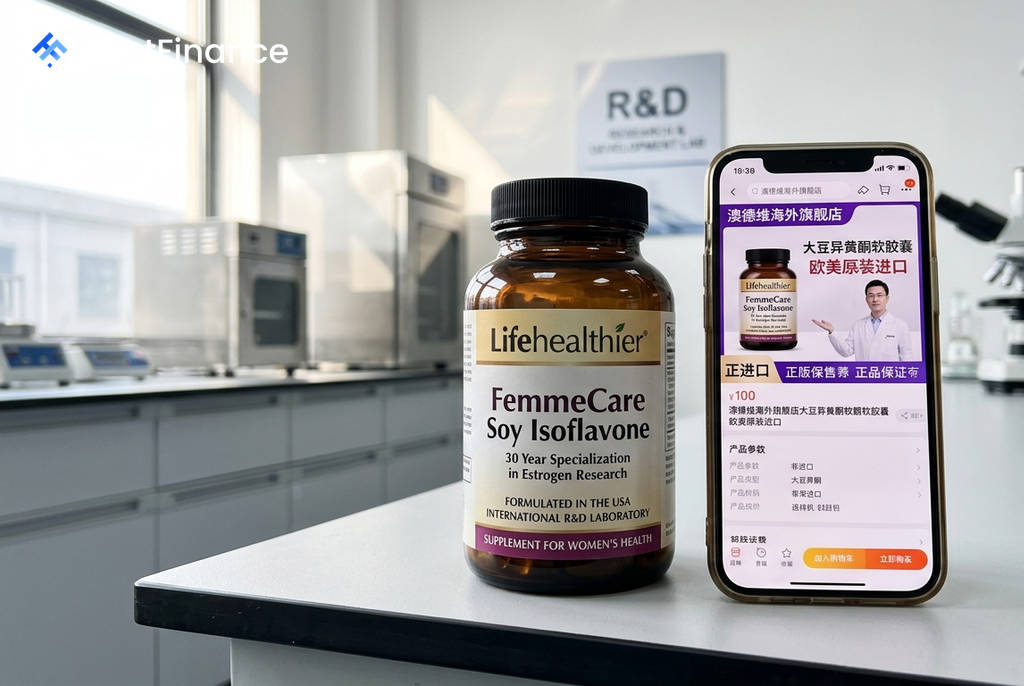
Health supplement brands on major Chinese e-commerce platforms are employing deceptive marketing tactics, presenting domestically-produced products as premium foreign imports while making unapproved health claims, according to an investigation by China's *Consumer Report*.
This practice involves creating a misleading perception of a product's origin and efficacy, potentially causing consumers to overpay for goods based on false pretenses and exposing a regulatory gap that some sellers are exploiting.
Deceptive 'Foreign' Branding
The report highlights the brand "lifehealthier" (奥德维海外, or Aodewei Overseas) as a key example of this strategy. The brand's product pages are filled with marketing materials that strongly suggest a foreign origin, including:
- An English brand name and the word "Overseas" in its Chinese name.
- Imagery of non-Chinese individuals in laboratory coats, alongside claims of "European and American R&D" and international lab affiliations.
- Prominent text urging customers to recognize the "lifehealthier Aodewei Overseas" brand for its authentic imported quality.
However, a crucial detail contradicts this entire narrative. In the product's technical parameters section—a less-visited area of the page—the item is explicitly labeled as "non-imported." This tactic appears designed to mislead the average consumer who browses product descriptions, while formally complying with platform rules in a less conspicuous field.
Unsubstantiated Health Claims
 Ad
Beyond misleading origins, the investigation found that "lifehealthier" makes health claims that are not supported by its official registration. For example, its soy isoflavone softgel capsules are marketed with promises to "replenish estrogen" and "protect the ovaries."
In China, legitimate health foods must carry the "Blue Hat" certification from the National Medical Products Administration, which specifies their approved functions. According to the official database, the registration for this specific product only approves it for the function of "enhancing immunity."
Sun Shubao, a senior partner at Beijing Qiancheng Law Firm, told *Consumer Report* that such claims violate China's Advertising Law. The law prohibits health food advertisements from mentioning disease prevention or treatment, and the advertised benefits far exceed the product's approved scope.
Regulatory Gray Areas
The "lifehealthier" case is not an isolated incident. The report notes a broader trend of products sold as "cross-border dietary/nutritional supplements" that lack the "Blue Hat" certification but still make specific health claims. Legally, without this certification, these products are considered ordinary foods in China and are prohibited from advertising any health benefits.
Legal experts point out that while cross-border e-commerce goods may have exemptions from certain registration requirements at customs, their marketing and sales activities directed at Chinese consumers are still subject to China's Advertising Law. Sun stated that regulators can investigate and penalize companies whose primary operations, such as warehousing and customer service, are based in mainland China, regardless of where the business entity is registered. This suggests a continuing challenge for regulators to enforce compliance against sellers using offshore entities to obscure their domestic operations.
Read next
More on Stocks
FTC Orders Walmart, Uber, Delta to Disclose Data on Personalized Pricing
The U.S. Federal Trade Commission is demanding nine major companies, including leading retail, travel, and gig economy firms, to provide information on how they use consumer data for setting individual prices and wages.

Google Launches Gemini 4 Carbon AI Model to Bolster Cybersecurity Capabilities
Alphabet's Google has unveiled Gemini 4 Carbon, its latest AI model specifically designed for advanced cybersecurity tasks like vulnerability detection and secure code generation. The launch escalates competition with rivals OpenAI and Anthropic in the enterprise AI market.

Oracle Shares Surge After Unveiling $225 Billion Revenue Target for 2030
Oracle stock rose sharply after the company presented a long-term financial outlook targeting at least $225 billion in annual revenue by fiscal 2030, driven by its expanding AI infrastructure business.

DOJ Scrutinizes Nvidia's $12.9B Hugging Face Deal Amid Broader Antitrust Probe, Sources Say
The U.S. Department of Justice is reportedly examining Nvidia's planned $12.93 billion acquisition of AI platform Hugging Face as part of a wider, ongoing antitrust investigation into the chipmaker's market conduct.