
Story
China's Robot Makers Showcase New Tech in Push for Mass Adoption
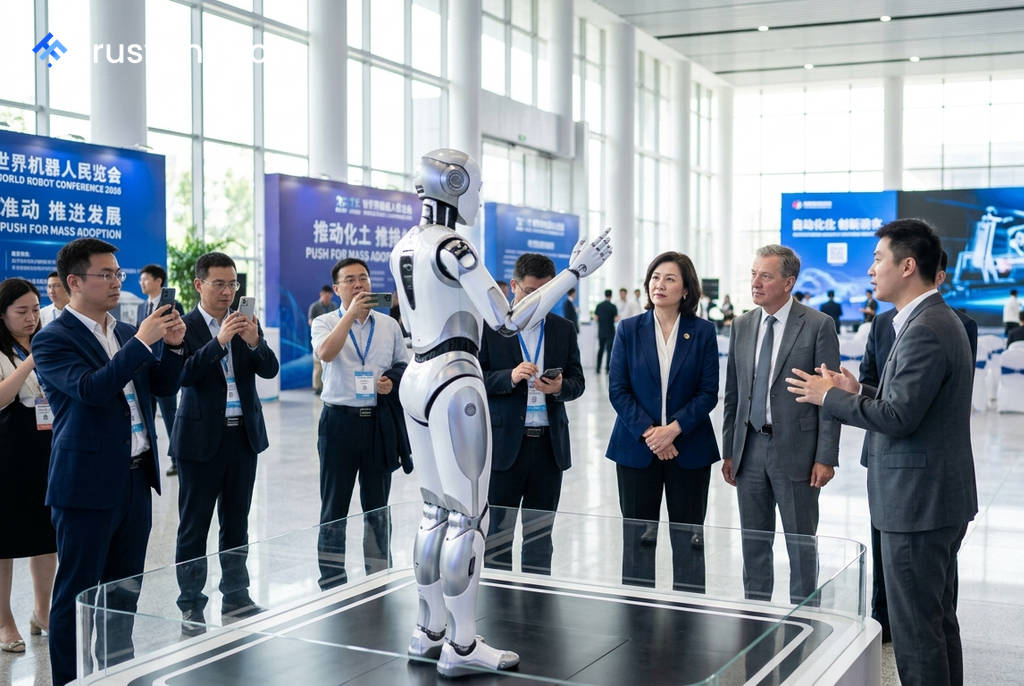
Chinese robot makers are flocking to the World Robot Conference in Beijing this week, showcasing a new generation of machines as they seek to convince investors and customers that the technology is ready for widespread commercial adoption.
More than 300 companies are attending the event, displaying over 2,000 exhibits and launching more than 150 new products, according to Beijing authorities. The conference underscores the growing importance of the sector, which is emerging as a new front in the U.S.-China technological rivalry.
Investor Enthusiasm and Government Backing
Investor appetite for the sector in China is reaching new highs. Shares in Unitree, a well-known Chinese humanoid robot maker, surged nearly six-fold in their Shanghai trading debut on Wednesday. Following this successful IPO, which was reportedly over 8,000 times oversubscribed by retail investors, other firms including startup Lumos Robotics and AiMOGA Robotics, the robotics division of automaker Chery, told Reuters they are also considering stock market listings.
The industry has also received strong government endorsement. At the conference's opening, Xin Guobin, a vice minister at the Ministry of Industry and Information Technology, pledged support for the sector, calling robotics "an important force" in China’s economic development, as reported by state-backed outlet Cailianshe.
The State of Commercial Adoption
 Ad
While robots are increasingly used for specific tasks like hotel deliveries and on some factory lines, large-scale deployment beyond pilot projects remains a key hurdle. Companies at the conference demonstrated progress in industrial applications.
- Industrial humanoid robot firm Leju showcased machines moving and sorting crates, with an official stating its primary use case is in logistics for European and domestic auto plants.
- Startup Robotera displayed a humanoid torso on a wheeled base sorting parcels, which a representative said is 85% as effective as a human worker.
- Other exhibits included DexForce robots packaging mobile phones and UBTECH robots designed to teach English or supervise university exams.
A Competitive but Nascent Market
The rapid growth of robotics companies mirrors the explosion of China's electric vehicle sector a few years ago. Zhang Guibing, head of AiMOGA Robotics, told Reuters that while a large number of firms have appeared "almost overnight," the intense competition is a positive force that will help deepen the industry's technological capabilities.
Despite the progress, the path to mass adoption may be long. Global shipments of humanoid robots nearly quadrupled in the first half of this year to 19,100 units, with Chinese manufacturers dominating the market, according to data from Smart Analytics Global. However, robotics analyst Georg Stieler estimates that 50% to 70% of these robots may be used in "data factories" for training purposes rather than for productive work. AiMOGA's Zhang suggested it could take about a decade for humanoid robots to mature enough for rapid, widespread adoption.
Read next
More on Stocks
FTC Orders Walmart, Uber, Delta to Disclose Data on Personalized Pricing
The U.S. Federal Trade Commission is demanding nine major companies, including leading retail, travel, and gig economy firms, to provide information on how they use consumer data for setting individual prices and wages.

Google Launches Gemini 4 Carbon AI Model to Bolster Cybersecurity Capabilities
Alphabet's Google has unveiled Gemini 4 Carbon, its latest AI model specifically designed for advanced cybersecurity tasks like vulnerability detection and secure code generation. The launch escalates competition with rivals OpenAI and Anthropic in the enterprise AI market.

Oracle Shares Surge After Unveiling $225 Billion Revenue Target for 2030
Oracle stock rose sharply after the company presented a long-term financial outlook targeting at least $225 billion in annual revenue by fiscal 2030, driven by its expanding AI infrastructure business.

DOJ Scrutinizes Nvidia's $12.9B Hugging Face Deal Amid Broader Antitrust Probe, Sources Say
The U.S. Department of Justice is reportedly examining Nvidia's planned $12.93 billion acquisition of AI platform Hugging Face as part of a wider, ongoing antitrust investigation into the chipmaker's market conduct.