
Story
China's Domestic Car Sales Fall for 10th Month as Exports Surge 88%
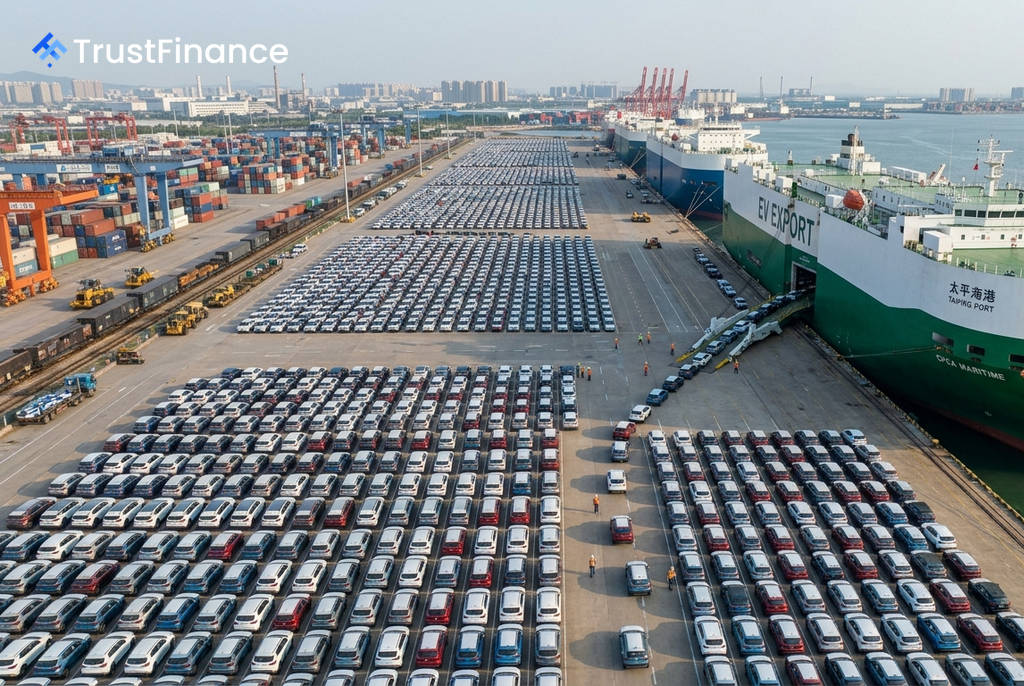
China's passenger vehicle sales fell for a 10th consecutive month in July, as automakers increasingly rely on surging exports to counteract fierce domestic competition and sluggish consumer spending. Data released Tuesday by the China Passenger Car Association (CPCA) highlights a starkly divergent trend between a weakening home market and a booming international business for the country's auto industry.
A Tale of Two Markets
Domestic sales slid 21.1% year-over-year in July to 1.47 million vehicles, a decline that industry officials described as more severe than anticipated. In stark contrast, exports jumped 88.2% over the same period to 923,000 units.
Key figures from the CPCA report include:
- Year-to-Date Domestic Sales: For the first seven months of the year, domestic sales are down 20.5%, representing about 2.65 million fewer vehicles sold compared to the same period a year earlier.
- EV and Hybrid Divide: The export boom is particularly pronounced for new energy vehicles. Exports of electric and plug-in hybrid models soared 147.8%, while their domestic sales fell by 3.9%.
"The downturn has proved more severe than we had expected," said Cui Dongshu, secretary-general of the CPCA. He attributed the domestic weakness to elevated fuel prices hurting sales of gasoline-powered cars and subdued demand for entry-level sedans.
Automakers Pivot Overseas Amid Intense Competition
 Ad
Facing a cut-throat environment at home, Chinese automakers are aggressively expanding into markets across Europe, Southeast Asia, Latin America, and the Middle East. This strategic pivot is creating a pronounced gap between domestic and overseas demand.
The domestic market is also characterized by a mismatch between supply and demand. While some automakers are pushing into the premium segment with feature-packed models, consumers are becoming more selective and cost-conscious. "What consumers want are vehicles with strong value for money, not necessarily premium models," Cui noted. "Automakers want to move upmarket, but consumers are looking for affordability."
Market Impact and Outlook
The pressure is evident even among industry leaders. BYD, the world's largest EV manufacturer, has been grappling with a slowing home market, but record overseas shipments in July helped lift its global sales for the third consecutive month. Conversely, challengers like Stellantis-backed Leapmotor have found success by catering to value-oriented buyers, with its global sales more than doubling in July to over 100,000 vehicles.
Looking ahead, market headwinds are expected to persist. Analysts at Deutsche Bank forecast that automakers will likely face "continued margin pressure from increased promotional activities and rising sourcing costs for lithium batteries and semiconductor memory" in the second half of the year.
Read next
More on Stocks
FTC Orders Walmart, Uber, Delta to Disclose Data on Personalized Pricing
The U.S. Federal Trade Commission is demanding nine major companies, including leading retail, travel, and gig economy firms, to provide information on how they use consumer data for setting individual prices and wages.

Google Launches Gemini 4 Carbon AI Model to Bolster Cybersecurity Capabilities
Alphabet's Google has unveiled Gemini 4 Carbon, its latest AI model specifically designed for advanced cybersecurity tasks like vulnerability detection and secure code generation. The launch escalates competition with rivals OpenAI and Anthropic in the enterprise AI market.

Oracle Shares Surge After Unveiling $225 Billion Revenue Target for 2030
Oracle stock rose sharply after the company presented a long-term financial outlook targeting at least $225 billion in annual revenue by fiscal 2030, driven by its expanding AI infrastructure business.

DOJ Scrutinizes Nvidia's $12.9B Hugging Face Deal Amid Broader Antitrust Probe, Sources Say
The U.S. Department of Justice is reportedly examining Nvidia's planned $12.93 billion acquisition of AI platform Hugging Face as part of a wider, ongoing antitrust investigation into the chipmaker's market conduct.