
Story
China's Burger Market Sees Influx of Competition from Hotpot, Coffee Chains
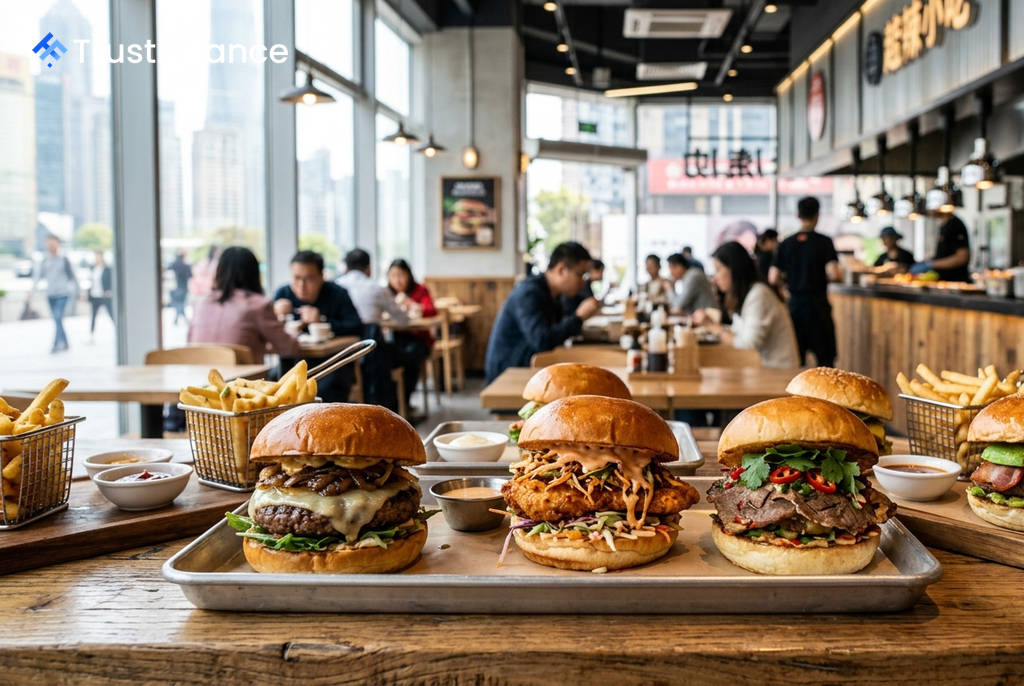
China's quick-service restaurant landscape is experiencing a surge in competition centered on burgers, as a wide array of brands from adjacent sectors like coffee and hotpot pivot to capture a growing consumer appetite for value and convenience. This influx of new players is transforming the burger segment into one of the country's most dynamic fast-food battlegrounds.
New Competitors Enter the Fray
Major food and beverage operators are aggressively expanding into the burger space. Yum China's Pizza Hut has rapidly scaled its Burger Bar format, a counter operating within existing restaurants, to over 200 locations in just six months with plans to reach 500-600 outlets by the end of 2026, according to a company statement in July.
The trend extends beyond traditional fast-food players. Last month, hotpot chain Haidilao launched "Huanxianbao," a new brand selling burgers and other Western fare. Similarly, coffee chain M Stand has opened burger-focused stores in select cities, signaling a broad-based rush to capitalize on the category's popularity.
Shifting Consumer Habits Fuel Demand
The burger boom is underpinned by significant shifts in Chinese consumption patterns. Amid economic uncertainty, diners are increasingly favoring lower-cost, portable meals. Burgers fit this need by offering a substantial and convenient meal at an accessible price point, according to China food industry analyst Zhu Danpeng, who called it a "good value-for-money choice."
Demographic changes, including a rise in single-person households and smaller families, are also fueling demand for individual meals. Yum China noted this trend is creating opportunities across its portfolio. The appeal is magnified by a strong delivery culture; data from Euromonitor shows 43% of Chinese consumers order delivery at least weekly, compared to a global average of 23%.
 Ad
Market Size and Growth Projections
The burger category is becoming a significant segment within China's larger Western fast-food market. According to data provider iiMedia Research, the Western fast-food market was valued at 499.65 billion yuan ($74.1 billion) in 2025 and is projected to hit 587.09 billion yuan by 2027.
While still a smaller piece of the total, the burger category itself was worth $18.4 billion in 2025 and is forecast to grow at an annual rate of 8.7% through 2035, according to Emergen Research. This strong growth trajectory is attracting both domestic chains like Tasiting and international brands eager to expand their footprint.
International Brands Expand Presence
Global chains are also intensifying their focus on the Chinese market. In May, U.S. chain Wendy's announced plans to enter China and open as many as 1,000 franchised restaurants over the next decade. The recent opening of Five Guys locations in Beijing drew long lines, underscoring strong consumer interest in new international offerings and the continued dominance of the burger format in the fast-food sector.
Read next
More on Stocks
FTC Orders Walmart, Uber, Delta to Disclose Data on Personalized Pricing
The U.S. Federal Trade Commission is demanding nine major companies, including leading retail, travel, and gig economy firms, to provide information on how they use consumer data for setting individual prices and wages.

Google Launches Gemini 4 Carbon AI Model to Bolster Cybersecurity Capabilities
Alphabet's Google has unveiled Gemini 4 Carbon, its latest AI model specifically designed for advanced cybersecurity tasks like vulnerability detection and secure code generation. The launch escalates competition with rivals OpenAI and Anthropic in the enterprise AI market.

Oracle Shares Surge After Unveiling $225 Billion Revenue Target for 2030
Oracle stock rose sharply after the company presented a long-term financial outlook targeting at least $225 billion in annual revenue by fiscal 2030, driven by its expanding AI infrastructure business.

DOJ Scrutinizes Nvidia's $12.9B Hugging Face Deal Amid Broader Antitrust Probe, Sources Say
The U.S. Department of Justice is reportedly examining Nvidia's planned $12.93 billion acquisition of AI platform Hugging Face as part of a wider, ongoing antitrust investigation into the chipmaker's market conduct.