
Story
China's Auto Exports Surge as Domestic Market Slumps
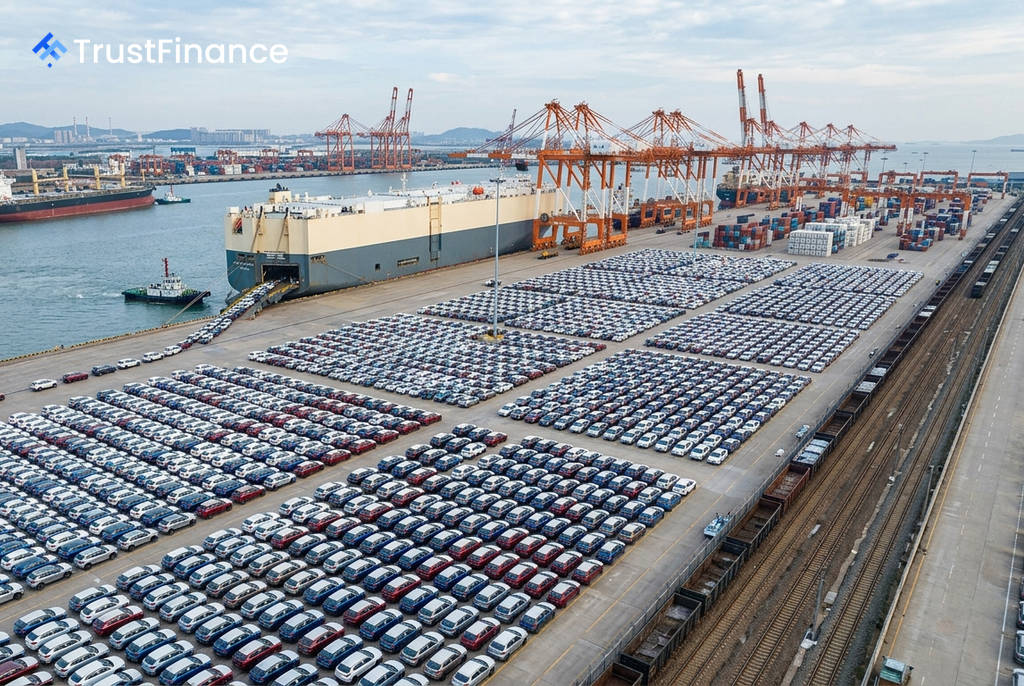
Chinese automakers are rapidly expanding their presence in global markets from Europe to Southeast Asia, driven by a sharp and prolonged downturn in domestic demand. This export boom is now a strategic necessity for companies like BYD and Geely, which are leveraging their competitive advantages in electric vehicles to challenge legacy brands such as Volkswagen and Toyota.
A Tale of Two Markets
Data from the China Passenger Car Association (CPCA) on Tuesday painted a starkly contrasting picture of the nation's auto industry. While exports soared, the domestic market continued to struggle.
- Domestic car sales fell 20% year-over-year to 1.47 million vehicles in July, the 10th consecutive month of decline.
- In contrast, exports surged by 88% to 923,000 vehicles during the same period.
This trend was consistent through the first half of the year, with domestic sales falling by 2.3 million vehicles while exports jumped 71%. Cui Dongshu, the head of the CPCA, attributed the domestic weakness to high fuel prices impacting gasoline-powered car sales and persistent softness in the entry-level sedan segment.
'Strategic Necessity' Drives Global Push
 Ad
Analysts argue that the push overseas is now fueled as much by necessity as by ambition. Faced with excess manufacturing capacity and intense price competition at home, Chinese automakers must seek growth abroad. "Going global 'is becoming a strategic necessity' for leading Chinese carmakers," said Bill Russo, CEO of the advisory firm Automobility.
Russo noted that Chinese firms benefit from "highly competitive supply chains, increasingly sophisticated products and a strong economic incentive to find growth outside China." Automaker BYD exemplifies this trend, having offset a 35% slump in its domestic sales in the first seven months of the year with a 79% surge in overseas sales.
European Market Disruption
The pressure from Chinese competitors is increasingly evident in key overseas markets, particularly Europe. According to Counterpoint Research, Chinese automakers expanded their share of Europe's passenger vehicle market from just 3% to 16% in the four years to the first quarter of 2026. Over the same period, Japanese automakers' share held steady at around 12%.
The divergence is most pronounced in the electric vehicle (EV) segment. Chinese brands now account for nearly a quarter of Europe’s EV shipments, while Japanese automakers represent just under 5%. "The real separation is in EVs," said Abhilash Gupta, a research analyst at Counterpoint. "This is an electrification gap, not just a price story." Counterpoint forecasts that Chinese brands could capture more than 20% of Europe's overall car market and 29% of its EV market by 2030.
Read next
More on Stocks
FTC Orders Walmart, Uber, Delta to Disclose Data on Personalized Pricing
The U.S. Federal Trade Commission is demanding nine major companies, including leading retail, travel, and gig economy firms, to provide information on how they use consumer data for setting individual prices and wages.

Google Launches Gemini 4 Carbon AI Model to Bolster Cybersecurity Capabilities
Alphabet's Google has unveiled Gemini 4 Carbon, its latest AI model specifically designed for advanced cybersecurity tasks like vulnerability detection and secure code generation. The launch escalates competition with rivals OpenAI and Anthropic in the enterprise AI market.

Oracle Shares Surge After Unveiling $225 Billion Revenue Target for 2030
Oracle stock rose sharply after the company presented a long-term financial outlook targeting at least $225 billion in annual revenue by fiscal 2030, driven by its expanding AI infrastructure business.

DOJ Scrutinizes Nvidia's $12.9B Hugging Face Deal Amid Broader Antitrust Probe, Sources Say
The U.S. Department of Justice is reportedly examining Nvidia's planned $12.93 billion acquisition of AI platform Hugging Face as part of a wider, ongoing antitrust investigation into the chipmaker's market conduct.