
Story
BofA's Hartnett Warns of Dollar Slump, Risk-Off Trade if Bond Intervention Fails
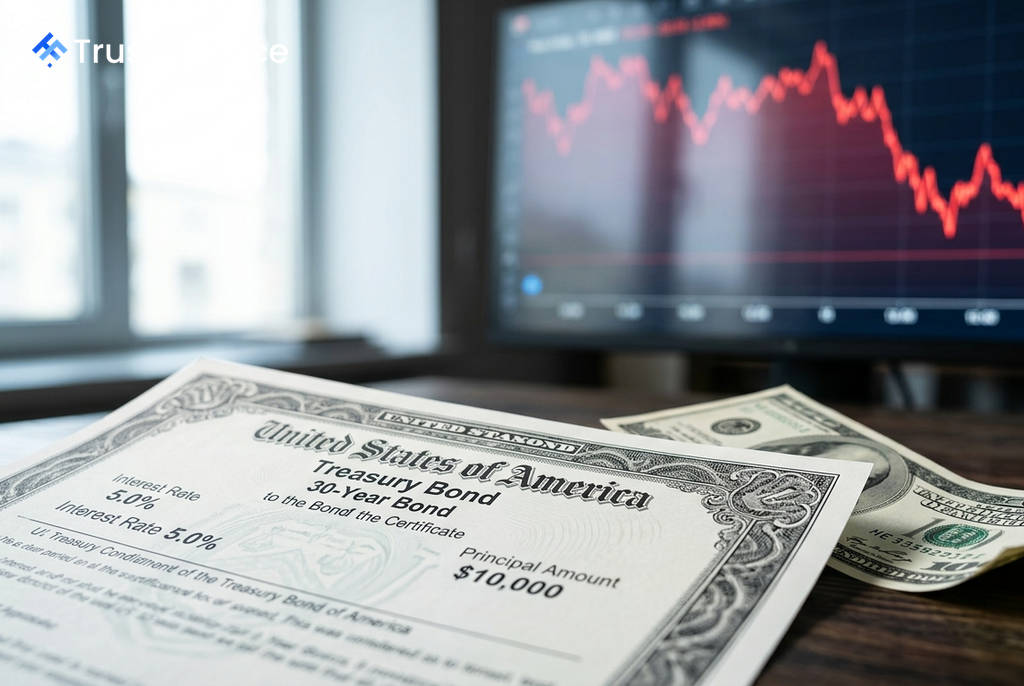
A failure by U.S. policymakers to cap long-term Treasury yields could trigger a slump in the dollar and a broad sell-off in risk assets, according to Bank of America strategists led by Michael Hartnett. The team believes the intervention is likely to succeed but warns of severe consequences if it falls short.
The High-Stakes Bond Market
In a recent note, Hartnett described efforts by the U.S. Treasury to keep 30-year bond yields below 5% as the latest in a series of policy interventions designed to support government financing and key sectors like artificial intelligence. The strategists argue that extraordinary monetary stimulus, such as quantitative easing, has been the primary driver of the current bull market and created a "too big to fail" conviction on Wall Street.
Given this history, BofA's base case is that ongoing efforts to stabilize the fixed-income market will work. However, should the Treasury fail to pull the 30-year yield back below the 5% threshold, Hartnett predicts a sharp negative reaction. This would likely involve a "dollar slump" and a pivot by investors to shorting risk assets, including AI-related stocks, private credit, and cyclical sectors like financials.
Contrarian Positioning and Market Flows
 Ad
The warning comes as BofA's Bull & Bear Indicator climbed to 9.5 from 9.3, a level deep in "sell" territory, reflecting "extreme bull" positioning in the market. Hartnett noted that despite this bullishness, stocks have only edged higher since the indicator first flashed a sell signal in late May.
Against this backdrop, the BofA team outlined several contrarian trades:
- Long: REITs, biotech, regional banks, small caps, and Hong Kong property.
- Short: AI-related bonds, paired with a long position in commodities and natural resources needed for the AI infrastructure buildout.
- Hedge: Gold is recommended as the "cleanest hedge against dollar debasement."
Recent fund flow data showed strong investor appetite for risk. Global equity funds attracted $40.1 billion last week, the largest inflow in three weeks, while bond funds added $21.4 billion. However, semiconductor funds saw a third straight week of outflows, and financials recorded their largest redemption in 11 weeks at $2 billion.
Read next
More on Stocks
FTC Orders Walmart, Uber, Delta to Disclose Data on Personalized Pricing
The U.S. Federal Trade Commission is demanding nine major companies, including leading retail, travel, and gig economy firms, to provide information on how they use consumer data for setting individual prices and wages.

Google Launches Gemini 4 Carbon AI Model to Bolster Cybersecurity Capabilities
Alphabet's Google has unveiled Gemini 4 Carbon, its latest AI model specifically designed for advanced cybersecurity tasks like vulnerability detection and secure code generation. The launch escalates competition with rivals OpenAI and Anthropic in the enterprise AI market.

Oracle Shares Surge After Unveiling $225 Billion Revenue Target for 2030
Oracle stock rose sharply after the company presented a long-term financial outlook targeting at least $225 billion in annual revenue by fiscal 2030, driven by its expanding AI infrastructure business.

DOJ Scrutinizes Nvidia's $12.9B Hugging Face Deal Amid Broader Antitrust Probe, Sources Say
The U.S. Department of Justice is reportedly examining Nvidia's planned $12.93 billion acquisition of AI platform Hugging Face as part of a wider, ongoing antitrust investigation into the chipmaker's market conduct.