
Story
Bitcoin Rallies Past $62,000 as Weak U.S. Jobs Data Cools Fed Rate Hike Fears
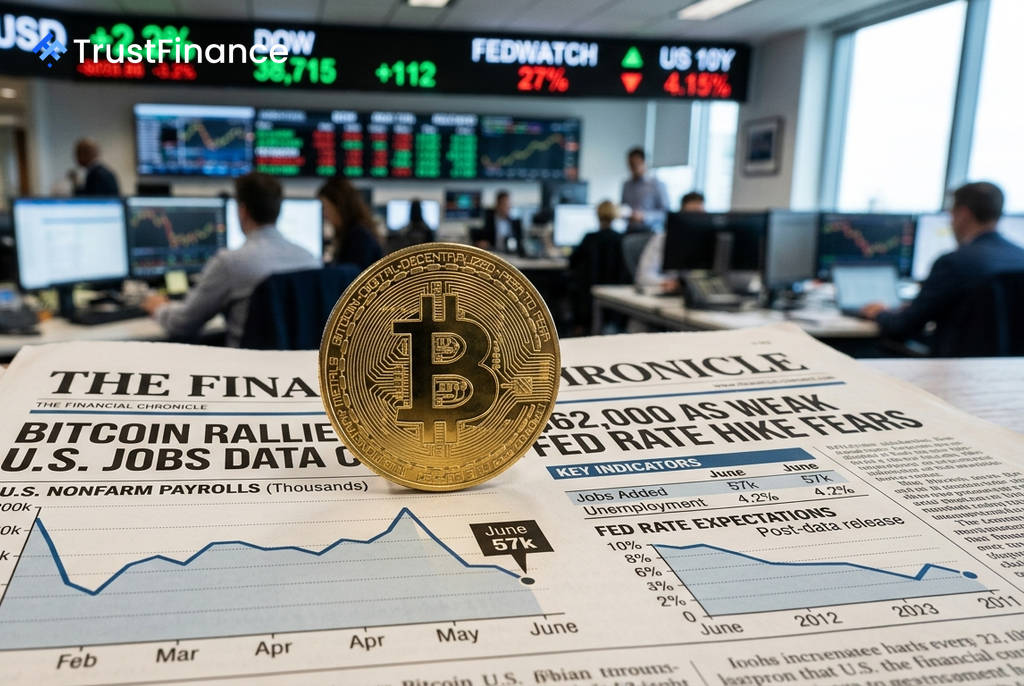
Bitcoin's price climbed on Thursday, briefly surpassing the $62,000 mark, after a U.S. labor market report came in significantly weaker than anticipated. The data eased investor concerns about further interest rate hikes from the Federal Reserve, providing a lift to risk-sensitive assets across the market.
Weak Jobs Data Fuels Rally
The world's largest cryptocurrency rose 2.2% to trade around $61,416.6 by late afternoon, according to data from Investing.com. The rally was sparked by the latest nonfarm payrolls report, which showed the U.S. economy added just 57,000 jobs in June.
This figure fell well short of the 115,000 jobs that economists surveyed by Dow Jones had forecast. The report complicated a narrative of a resilient labor market and suggested the economy may be cooling, giving the Federal Reserve more leeway to hold interest rates steady.
Impact on Markets and Fed Policy
The soft labor market data reduces the immediate pressure for further monetary tightening. Higher interest rates typically increase the appeal of safe-haven assets and can draw capital away from speculative investments like cryptocurrencies. Following the report, traders adjusted their expectations, with futures markets tracked by the CME Group’s FedWatch tool pricing out the chance of a rate increase in September.
 Ad
The positive sentiment extended across the digital asset space, with most major altcoins also posting gains. Key movers included:
- Ethereum (ETH): +5.1% to $1,699.19
- Solana (SOL): +4.7%
- Cardano (ADA): +5.0%
- XRP: +2.3% to $1.0820
Broader Context for Crypto
Thursday's gains offered some relief for investors, but the market remains under significant pressure from a broader downtrend. Bitcoin has been in a prolonged selloff, recording a decline of more than 30% in the first six months of 2026.
Analysts attribute the recent weakness to persistent capital outflows from U.S.-based spot Bitcoin exchange-traded funds (ETFs), slowing institutional demand, and a lack of clear progress on U.S. cryptocurrency legislation.