
Story
Bitcoin ETF Investors Weigh Cost Versus Structure as Low-Fee Options Emerge
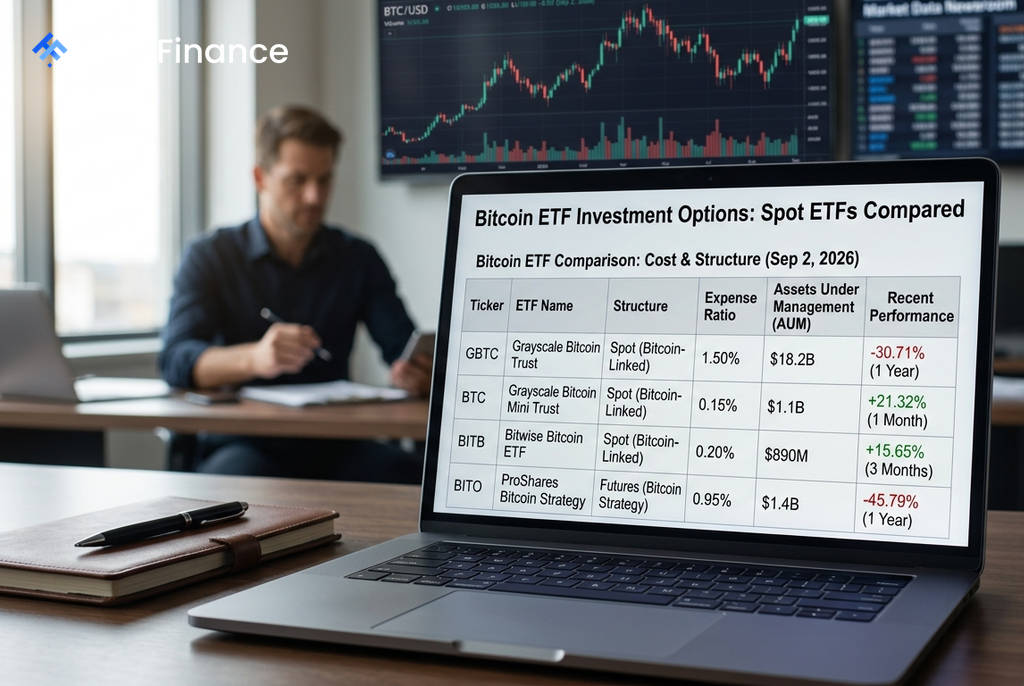
Investors seeking exposure to Bitcoin through exchange-traded funds now face a growing array of options, with management fees emerging as a key differentiator. The Grayscale Bitcoin Mini Trust (BTC) is a prominent example, offering a 0.15% expense ratio, which stands in sharp contrast to the 1.50% fee charged by its much larger sibling, the Grayscale Bitcoin Trust (GBTC), according to a comparison by Investing.com.
The Critical Role of Cost
For investors holding positions over the long term, the difference in expense ratios can significantly impact returns. A lower fee structure, like that of the Mini Trust, reduces the drag on performance and allows the fund to more closely track the price of the underlying Bitcoin. The report notes that while GBTC has the largest reported assets, providing deep liquidity, its higher cost structure presents a clear trade-off for cost-conscious investors.
The analysis positions unlevered spot ETFs as the most direct method for gaining Bitcoin exposure without the complexities of managing private keys and crypto wallets. Other spot products, such as the Bitwise Bitcoin ETF (BITB), also offer investors alternatives in this category.
Spot vs. Futures-Based Strategies
The market also includes products based on derivatives, such as the ProShares Bitcoin Strategy (BITO), which uses a futures strategy. This fund carries a 0.95% expense ratio and introduces different risk characteristics compared to spot ETFs.
 Ad
Investing.com highlighted a potential pitfall with BITO, pointing to its high distribution yield. While seemingly attractive, this yield is a byproduct of its futures-based structure and does not reflect its total return, which was reported to be -45.79% over the past year. This underscores the importance of understanding a fund's underlying strategy beyond its surface-level metrics.
Market Context and Volatility
These structural comparisons come as Bitcoin itself shows mixed performance signals. The cryptocurrency has gained 21.32% over the last month but remains down 30.71% over the past year, as of early September. Technical indicators cited in the report suggest the recent rally has pushed Bitcoin into "overbought" territory, signaling potential for a near-term pullback.
Ultimately, regardless of the fund structure, all Bitcoin ETFs are subject to the high volatility of the underlying asset. The analysis concludes that any investment in the space requires a long-term horizon and careful position sizing, as Bitcoin's price risk remains the dominant factor for all related financial products.
Read next
More on Stocks
FTC Orders Walmart, Uber, Delta to Disclose Data on Personalized Pricing
The U.S. Federal Trade Commission is demanding nine major companies, including leading retail, travel, and gig economy firms, to provide information on how they use consumer data for setting individual prices and wages.

Google Launches Gemini 4 Carbon AI Model to Bolster Cybersecurity Capabilities
Alphabet's Google has unveiled Gemini 4 Carbon, its latest AI model specifically designed for advanced cybersecurity tasks like vulnerability detection and secure code generation. The launch escalates competition with rivals OpenAI and Anthropic in the enterprise AI market.

Oracle Shares Surge After Unveiling $225 Billion Revenue Target for 2030
Oracle stock rose sharply after the company presented a long-term financial outlook targeting at least $225 billion in annual revenue by fiscal 2030, driven by its expanding AI infrastructure business.

DOJ Scrutinizes Nvidia's $12.9B Hugging Face Deal Amid Broader Antitrust Probe, Sources Say
The U.S. Department of Justice is reportedly examining Nvidia's planned $12.93 billion acquisition of AI platform Hugging Face as part of a wider, ongoing antitrust investigation into the chipmaker's market conduct.