
Story
Bank of America Sees Micron EPS Topping $230 by FY30, Argues Peak Cycle Fears Are Overblown
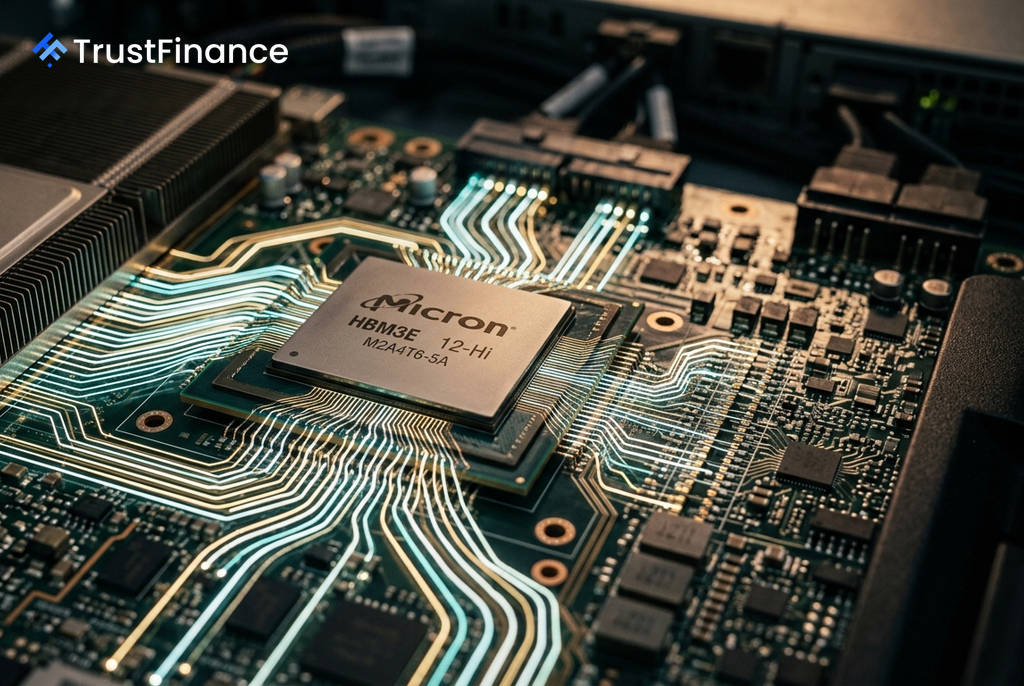
Bank of America has reiterated its bullish stance on Micron Technology (NASDAQ: MU), projecting the memory chipmaker's earnings per share could surpass $230 by fiscal year 2030. This forecast significantly outpaces current consensus, which the bank believes is anchored to an outdated cyclical model for the memory industry.
In a research note, BofA analyst Vivek Arya reiterated a Buy rating and a $1,550 price target on Micron, recently adding the stock to the firm's prestigious "US 1 List" of highest-conviction ideas. The analysis argues that the market is making a "category mistake" by underappreciating the company's structural earnings potential.
A New Earnings Framework
BofA's optimistic forecast is based on a framework derived from peer SanDisk's (SNDK) recent investor day. SanDisk committed to 15% annual sales growth and gross margins exceeding 80% through fiscal 2030, backed by strong customer demand and supply discipline.
Applying a similar model to Micron, BofA calculates a potential FY30 EPS range of $200–$250. This implies a compound annual growth rate of over 30% from FY26 to FY30. The firm contrasts this with current Wall Street expectations, which it estimates are for peak EPS of roughly $160–$170 in the next one to two years.
Valuation and Capital Returns
The core of BofA's thesis is that the memory sector is shifting from a highly cyclical industry to a "more durable phase." If Micron's earnings volatility proves to be structurally lower, the bank argues the stock deserves to re-rate from its historical 10x price-to-earnings (P/E) multiple to a 12x–15x P/E multiple, more in line with other AI infrastructure beneficiaries.
 Ad
This re-rating potential is supported by massive free cash flow (FCF) generation. BofA's model suggests Micron could generate:
- Over $80 billion in trailing-twelve-month FCF starting around December 2026.
- More than $640 billion in cumulative FCF through fiscal 2030.
- Sufficient cash to theoretically repurchase roughly 10% of its market capitalization annually.
Key Risks and Future Catalysts
While recent investor anxiety has focused on memory configurations in future GPUs, BofA dismisses these concerns as "overstated," pointing to industry roadmaps for higher-capacity HBM and a migration to taller chip stacks. Instead, the firm identifies capital deployment as the primary risk.
"The primary risk to our thesis is not memory demand, but capital deployment," Arya wrote. The key question is whether Micron will prioritize returning its growing cash pile to shareholders via buybacks or pursue broader ecosystem investments. Investors will be closely watching Micron's upcoming quarterly results and any updated capital allocation guidance from management for the next meaningful data points.
Read next
More on Stocks
FTC Orders Walmart, Uber, Delta to Disclose Data on Personalized Pricing
The U.S. Federal Trade Commission is demanding nine major companies, including leading retail, travel, and gig economy firms, to provide information on how they use consumer data for setting individual prices and wages.

Google Launches Gemini 4 Carbon AI Model to Bolster Cybersecurity Capabilities
Alphabet's Google has unveiled Gemini 4 Carbon, its latest AI model specifically designed for advanced cybersecurity tasks like vulnerability detection and secure code generation. The launch escalates competition with rivals OpenAI and Anthropic in the enterprise AI market.

Oracle Shares Surge After Unveiling $225 Billion Revenue Target for 2030
Oracle stock rose sharply after the company presented a long-term financial outlook targeting at least $225 billion in annual revenue by fiscal 2030, driven by its expanding AI infrastructure business.

DOJ Scrutinizes Nvidia's $12.9B Hugging Face Deal Amid Broader Antitrust Probe, Sources Say
The U.S. Department of Justice is reportedly examining Nvidia's planned $12.93 billion acquisition of AI platform Hugging Face as part of a wider, ongoing antitrust investigation into the chipmaker's market conduct.