
Story
AstraZeneca Adjusts New Drug Pricing Strategy in Response to US 'Most-Favoured-Nation' Policy
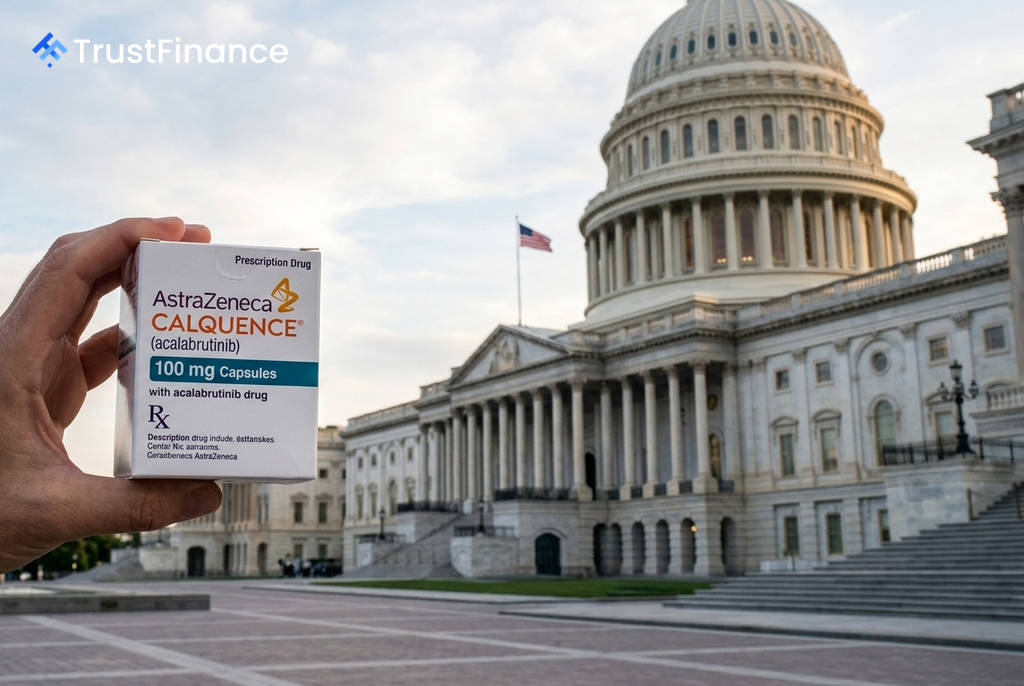
Pharmaceutical giant AstraZeneca is altering its pricing strategy for new drug launches in the United States, a direct response to the Trump administration's "most-favoured-nation" policy aimed at lowering prescription drug costs. The change was confirmed by a senior company executive on Monday.
Pricing Strategy Shift
David Fredrickson, AstraZeneca's Executive Vice President for the Oncology Business, told investors the company’s "pricing approach across all launches has evolved in response to the most-favoured-nation policy," according to a statement on Monday.
This adjustment signals a proactive move by the drugmaker to navigate potential U.S. government pricing controls. The statement suggests the new strategy is not limited to a single product but applies broadly to its pipeline of new medicines introduced to the American market.
Policy Context
The "most-favoured-nation" policy is a U.S. government initiative designed to ensure that the federal government does not pay more for certain prescription drugs than consumers in other economically comparable nations. The policy seeks to benchmark U.S. prices against an international average, a significant departure from the current market-based pricing system.
 Ad
This potential regulatory shift has created uncertainty for pharmaceutical companies, as the U.S. remains the world's largest and most profitable market for prescription medicines.
Implications for Investors
AstraZeneca's public acknowledgment of a strategy change could be a bellwether for the broader pharmaceutical industry. Other major drugmakers may be making similar, unannounced adjustments in anticipation of heightened political and regulatory pressure on pricing.
For investors, this development underscores the ongoing regulatory risk in the healthcare sector. Any policy that successfully limits the pricing power of drug manufacturers could impact long-term revenue projections and profitability for firms with significant exposure to the U.S. market.
Read next
More on Stocks
FTC Orders Walmart, Uber, Delta to Disclose Data on Personalized Pricing
The U.S. Federal Trade Commission is demanding nine major companies, including leading retail, travel, and gig economy firms, to provide information on how they use consumer data for setting individual prices and wages.

Google Launches Gemini 4 Carbon AI Model to Bolster Cybersecurity Capabilities
Alphabet's Google has unveiled Gemini 4 Carbon, its latest AI model specifically designed for advanced cybersecurity tasks like vulnerability detection and secure code generation. The launch escalates competition with rivals OpenAI and Anthropic in the enterprise AI market.

Oracle Shares Surge After Unveiling $225 Billion Revenue Target for 2030
Oracle stock rose sharply after the company presented a long-term financial outlook targeting at least $225 billion in annual revenue by fiscal 2030, driven by its expanding AI infrastructure business.

DOJ Scrutinizes Nvidia's $12.9B Hugging Face Deal Amid Broader Antitrust Probe, Sources Say
The U.S. Department of Justice is reportedly examining Nvidia's planned $12.93 billion acquisition of AI platform Hugging Face as part of a wider, ongoing antitrust investigation into the chipmaker's market conduct.