
Story
Apple Explores Chinese Memory Chips from CXMT Amid AI-Driven Supply Squeeze, WSJ Reports
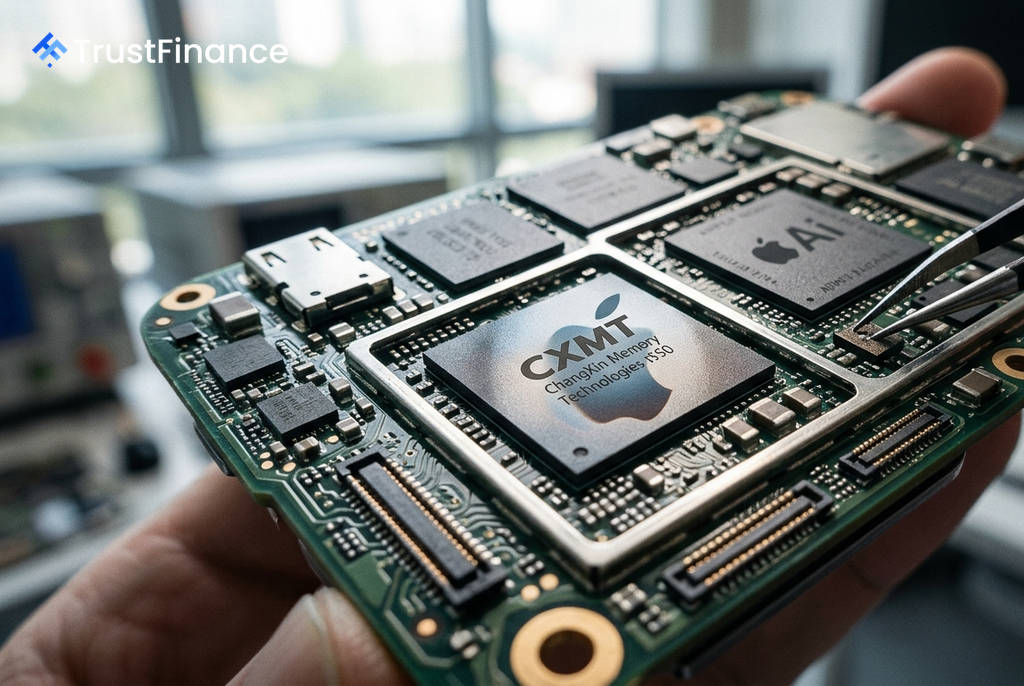
Apple Inc. is testing memory chips from China's ChangXin Memory Technologies (CXMT) for use in its products, a move that comes as the artificial intelligence boom strains the global supply of essential components, The Wall Street Journal reported Sunday, citing people familiar with the matter.
A Bid to Diversify Supply
According to the report, the iPhone maker is evaluating CXMT's memory for a range of devices, including iPhones and MacBooks. Apple has also reportedly held preliminary talks with CXMT about a potential deal to supply components for devices sold within China.
This exploration of a new supplier comes as technology companies worldwide grapple with a tightening memory market. The intense demand from the AI sector has driven up component costs, a pressure Apple has previously cited as a reason for raising product prices. Securing an alternative source like CXMT could help the company mitigate these cost pressures and diversify its supply chain away from established players like Micron Technology, SK Hynix, and Samsung Electronics.
Market and Regulatory Hurdles
A partnership with CXMT faces several significant obstacles. Any potential agreement would operate under the shadow of U.S. export controls that restrict American firms from transferring technology to the Chinese chipmaker. While these rules limit Apple's ability to co-develop customized chips with CXMT, the use of off-the-shelf components is still permissible, according to export-control lawyer Kevin Wolf, who was cited by the WSJ.
 Ad
Beyond the political sensitivities, there are immediate logistical and financial challenges:
- Limited Capacity: CXMT has reportedly already reached its production capacity for 2026, leaving little room for new large-scale orders.
- Pricing: The company's memory products are not necessarily a cheaper alternative, with prices said to be on par with or even higher than those from incumbent suppliers.
Industry-Wide Impact
The memory supply squeeze is already having a tangible effect on the broader electronics market. Citing data from Counterpoint Research, the WSJ noted that global PC shipments fell 4% year-over-year in the second quarter, while smartphone shipments declined 11%.
Meanwhile, CXMT has capitalized on the market dynamics, with its revenue surging more than eightfold in the second quarter and its global DRAM revenue share reaching 7%. The company is undertaking a significant expansion, with plans to more than double its production capacity by 2028.
Read next
More on Stocks
FTC Orders Walmart, Uber, Delta to Disclose Data on Personalized Pricing
The U.S. Federal Trade Commission is demanding nine major companies, including leading retail, travel, and gig economy firms, to provide information on how they use consumer data for setting individual prices and wages.

Google Launches Gemini 4 Carbon AI Model to Bolster Cybersecurity Capabilities
Alphabet's Google has unveiled Gemini 4 Carbon, its latest AI model specifically designed for advanced cybersecurity tasks like vulnerability detection and secure code generation. The launch escalates competition with rivals OpenAI and Anthropic in the enterprise AI market.

Oracle Shares Surge After Unveiling $225 Billion Revenue Target for 2030
Oracle stock rose sharply after the company presented a long-term financial outlook targeting at least $225 billion in annual revenue by fiscal 2030, driven by its expanding AI infrastructure business.

DOJ Scrutinizes Nvidia's $12.9B Hugging Face Deal Amid Broader Antitrust Probe, Sources Say
The U.S. Department of Justice is reportedly examining Nvidia's planned $12.93 billion acquisition of AI platform Hugging Face as part of a wider, ongoing antitrust investigation into the chipmaker's market conduct.