
Story
Appeals Court Revives $6.7 Billion Lawsuit Against Bristol Myers Over Drug Approval Delay
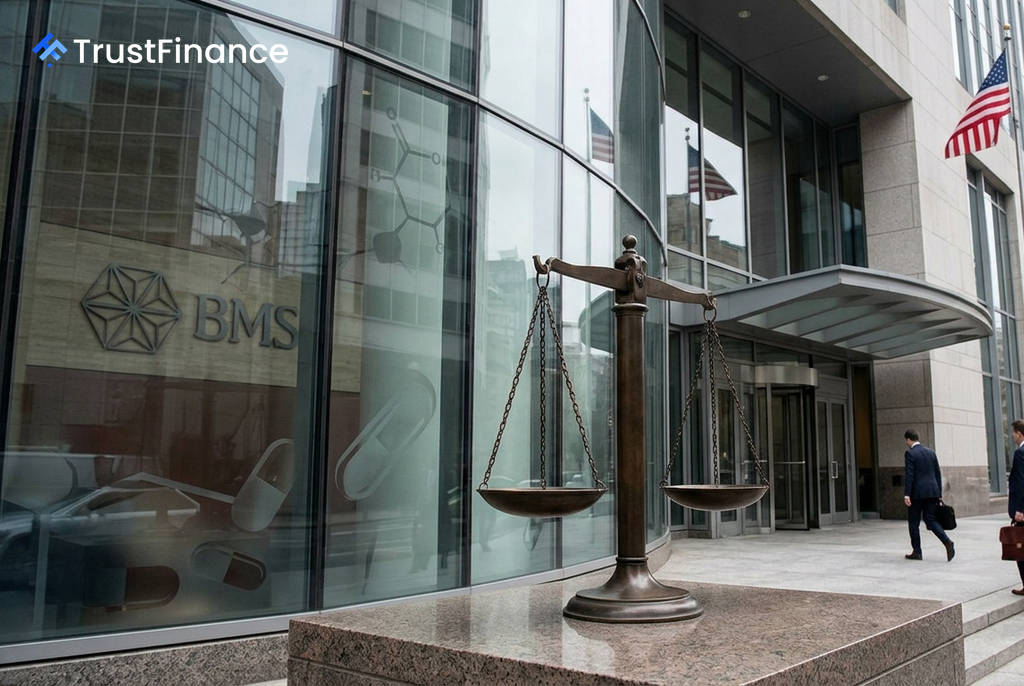
A U.S. federal appeals court has revived a $6.7 billion lawsuit against Bristol Myers Squibb (NYSE: BMY), overturning a lower court's decision to dismiss the case. The lawsuit alleges the pharmaceutical giant deliberately delayed regulatory approval for several drugs, including the cancer treatment Breyanzi, to avoid a substantial payment to former shareholders of Celgene.
The Court's Decision
In a unanimous 3-0 decision on Thursday, the 2nd U.S. Circuit Court of Appeals in Manhattan ruled that a district judge had erred in dismissing the lawsuit in September 2024. The lower court's dismissal was based on a technical error in how the trustee, UMB Bank, was appointed to represent the shareholders.
The appeals court found that UMB Bank did have the legal standing to sue. Circuit Judge Beth Robinson wrote that Bristol Myers, the previous trustee, and a majority of the investors had all approved UMB's appointment. "Bristol Myers was not confused about the status of the investors who purported to appoint UMB," the decision stated.
Background of the Dispute
The case stems from Bristol Myers' $80.3 billion acquisition of Celgene in 2019. As part of the deal, former Celgene shareholders received "contingent value rights" (CVRs), which entitled them to an additional $9 per share cash payment if Bristol Myers secured timely U.S. Food and Drug Administration (FDA) approvals for three specific drugs: Liso-cel (Breyanzi), Ozanimod, and Ide-cel.
 Ad
The lawsuit, filed by UMB Bank on behalf of the CVR holders, accuses Bristol Myers of failing to use "diligent efforts" to meet the FDA deadlines, thereby nullifying the massive payout. The FDA ultimately approved Breyanzi on February 5, 2021, five weeks after the deadline stipulated in the CVR agreement.
Implications for Investors
The revival of this lawsuit reopens a significant financial risk for Bristol Myers. The company has consistently denied the allegations, stating in court filings that it did not intentionally slow-roll the approval process. The appeals court decision allows the claims of breach of contract and failure to act in good faith to proceed.
This development is significant for CVR holders, whose securities were delisted from the New York Stock Exchange. The court's ruling gives them a renewed opportunity to argue their case for the multi-billion dollar payment they claim was wrongfully denied.
Read next
More on Stocks
FTC Orders Walmart, Uber, Delta to Disclose Data on Personalized Pricing
The U.S. Federal Trade Commission is demanding nine major companies, including leading retail, travel, and gig economy firms, to provide information on how they use consumer data for setting individual prices and wages.

Google Launches Gemini 4 Carbon AI Model to Bolster Cybersecurity Capabilities
Alphabet's Google has unveiled Gemini 4 Carbon, its latest AI model specifically designed for advanced cybersecurity tasks like vulnerability detection and secure code generation. The launch escalates competition with rivals OpenAI and Anthropic in the enterprise AI market.

Oracle Shares Surge After Unveiling $225 Billion Revenue Target for 2030
Oracle stock rose sharply after the company presented a long-term financial outlook targeting at least $225 billion in annual revenue by fiscal 2030, driven by its expanding AI infrastructure business.

DOJ Scrutinizes Nvidia's $12.9B Hugging Face Deal Amid Broader Antitrust Probe, Sources Say
The U.S. Department of Justice is reportedly examining Nvidia's planned $12.93 billion acquisition of AI platform Hugging Face as part of a wider, ongoing antitrust investigation into the chipmaker's market conduct.