
Story
APA Corp. Tops Q2 Profit Forecasts as Higher Oil Prices Offset Lower Output
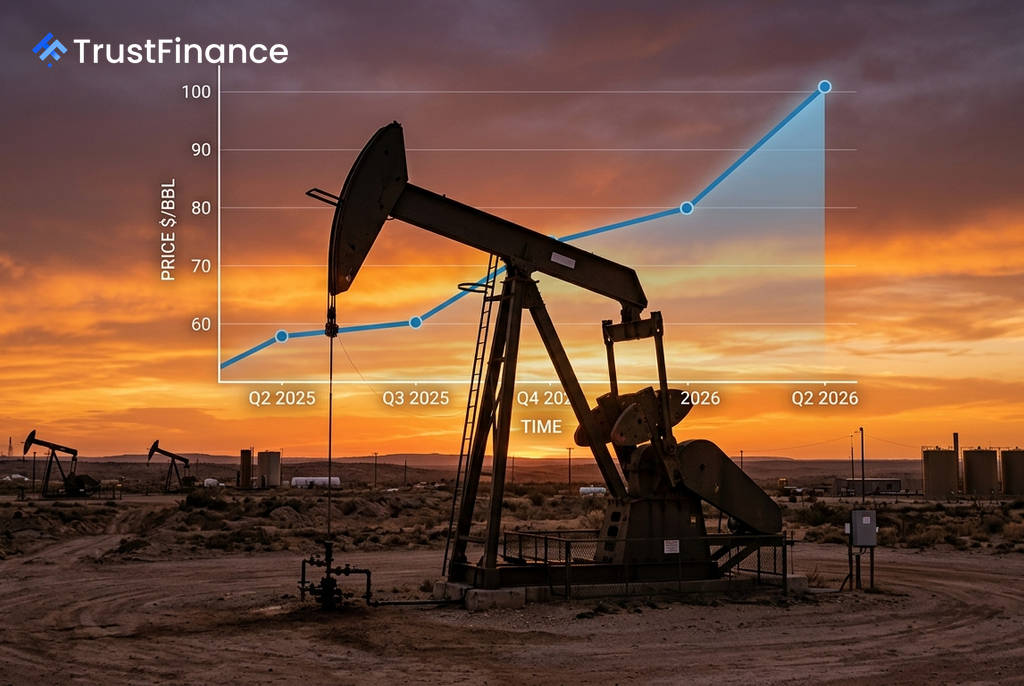
APA Corp. (NASDAQ: APA) beat Wall Street's second-quarter profit estimates, a result driven by significantly higher crude oil prices that compensated for a double-digit decline in production. The energy company reported an adjusted profit of $1.89 per share, edging out the analysts' average estimate of $1.87 per share, according to LSEG data.
Pricing Power Overcomes Production Dip
The company's financial performance was bolstered by a strong commodity price environment. Geopolitical tensions in the Middle East helped push the average price for benchmark Brent crude up 19.2% year-over-year to $89.62 a barrel during the quarter, according to a Reuters report.
This market strength was reflected in APA's realized prices, which surged to $98.24 per barrel from $65.58 in the same period a year ago. However, this revenue strength was challenged by a nearly 12% drop in total production, which fell to 410,000 barrels of oil equivalent per day (boepd) due to lower volumes from its U.S., Egypt, and North Sea operations.
Financial Discipline and Outlook
 Ad
APA highlighted its progress in strengthening its balance sheet, noting it has paid down $2.3 billion of debt since the end of 2024. This deleveraging has resulted in annualized interest savings of more than $155 million, with net debt standing at $3.3 billion at the end of the quarter.
The company also raised its cost-cutting targets, now expecting to achieve $500 million in annualized savings by the end of 2026, up from a previous goal of $450 million. Despite the quarterly production dip, APA slightly increased its full-year U.S. oil production forecast to 123,000 barrels per day from 122,000.
Industry Context
APA's results reflect a broader trend among U.S. shale producers, who have largely maintained capital discipline despite the sharp rise in oil prices. Many companies in the sector are prioritizing debt reduction and shareholder returns over aggressively increasing output, a strategic shift from previous boom cycles.
Read next
More on Stocks
FTC Orders Walmart, Uber, Delta to Disclose Data on Personalized Pricing
The U.S. Federal Trade Commission is demanding nine major companies, including leading retail, travel, and gig economy firms, to provide information on how they use consumer data for setting individual prices and wages.

Google Launches Gemini 4 Carbon AI Model to Bolster Cybersecurity Capabilities
Alphabet's Google has unveiled Gemini 4 Carbon, its latest AI model specifically designed for advanced cybersecurity tasks like vulnerability detection and secure code generation. The launch escalates competition with rivals OpenAI and Anthropic in the enterprise AI market.

Oracle Shares Surge After Unveiling $225 Billion Revenue Target for 2030
Oracle stock rose sharply after the company presented a long-term financial outlook targeting at least $225 billion in annual revenue by fiscal 2030, driven by its expanding AI infrastructure business.

DOJ Scrutinizes Nvidia's $12.9B Hugging Face Deal Amid Broader Antitrust Probe, Sources Say
The U.S. Department of Justice is reportedly examining Nvidia's planned $12.93 billion acquisition of AI platform Hugging Face as part of a wider, ongoing antitrust investigation into the chipmaker's market conduct.