
Story
Anthropic Previews AI Framework for Operating Physical Lab and Manufacturing Hardware
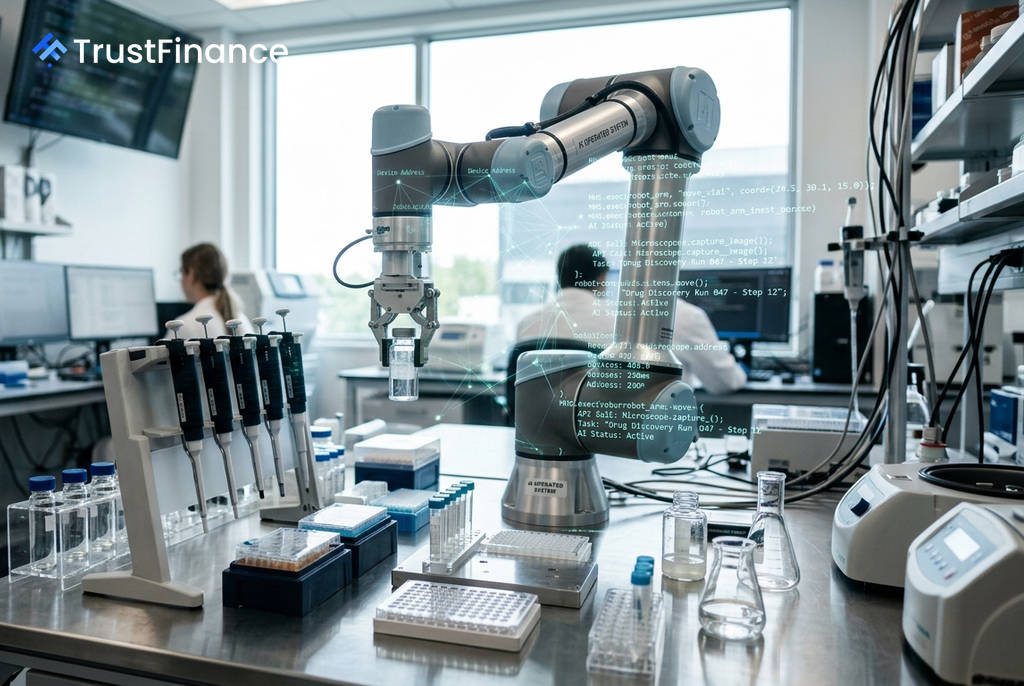
AI developer Anthropic on Thursday unveiled a research preview of its Model Hardware Standard (MHS), a new framework enabling artificial intelligence agents to operate physical equipment in scientific and industrial settings. The initiative aims to bridge the gap between AI and the physical world, potentially accelerating complex workflows in specialized fields.
Framework Aims to Automate Complex Workflows
According to the announcement, the MHS is designed to let AI agents operate a range of lab and manufacturing instruments, such as microscopes and robotic arms. Anthropic provided examples of potential applications, including automating routine drug discovery experiments and performing laser calibration on a quantum computer.
The stated goal is to empower researchers and engineers to execute autonomous, round-the-clock workflows with minimal human intervention. By integrating agentic AI with physical hardware, the company behind the Claude chatbot hopes to significantly speed up research and production processes.
Phased Rollout and Open-Source Goal
The standard is engineered to work on any device that has a programmable interface, allowing AI agents and physical hardware to communicate across networks. Anthropic described the current release as an early version that it is sharing with partners to build out comprehensive safety evaluations.
 Ad
Following this collaborative safety assessment phase, the company said it plans to make the Model Hardware Standard open source. This approach could encourage broader adoption and development across the industry.
Market Implications
This development marks a significant step in expanding AI's capabilities from purely digital tasks to direct interaction with the physical environment. For investors, this move signals a potential new frontier for AI applications in capital-intensive sectors like biotechnology, pharmaceuticals, and advanced manufacturing.
The push for an open standard could foster a new ecosystem of compatible hardware and AI agents. However, the prospect of AI-controlled physical systems also brings heightened scrutiny regarding safety, security, and operational risk management in industrial and research contexts.
Read next
More on Stocks
FTC Orders Walmart, Uber, Delta to Disclose Data on Personalized Pricing
The U.S. Federal Trade Commission is demanding nine major companies, including leading retail, travel, and gig economy firms, to provide information on how they use consumer data for setting individual prices and wages.

Google Launches Gemini 4 Carbon AI Model to Bolster Cybersecurity Capabilities
Alphabet's Google has unveiled Gemini 4 Carbon, its latest AI model specifically designed for advanced cybersecurity tasks like vulnerability detection and secure code generation. The launch escalates competition with rivals OpenAI and Anthropic in the enterprise AI market.

Oracle Shares Surge After Unveiling $225 Billion Revenue Target for 2030
Oracle stock rose sharply after the company presented a long-term financial outlook targeting at least $225 billion in annual revenue by fiscal 2030, driven by its expanding AI infrastructure business.

DOJ Scrutinizes Nvidia's $12.9B Hugging Face Deal Amid Broader Antitrust Probe, Sources Say
The U.S. Department of Justice is reportedly examining Nvidia's planned $12.93 billion acquisition of AI platform Hugging Face as part of a wider, ongoing antitrust investigation into the chipmaker's market conduct.