
Story
AMAG First-Half Revenue Climbs 8.2% on Stronger Shipments and Higher Aluminum Prices
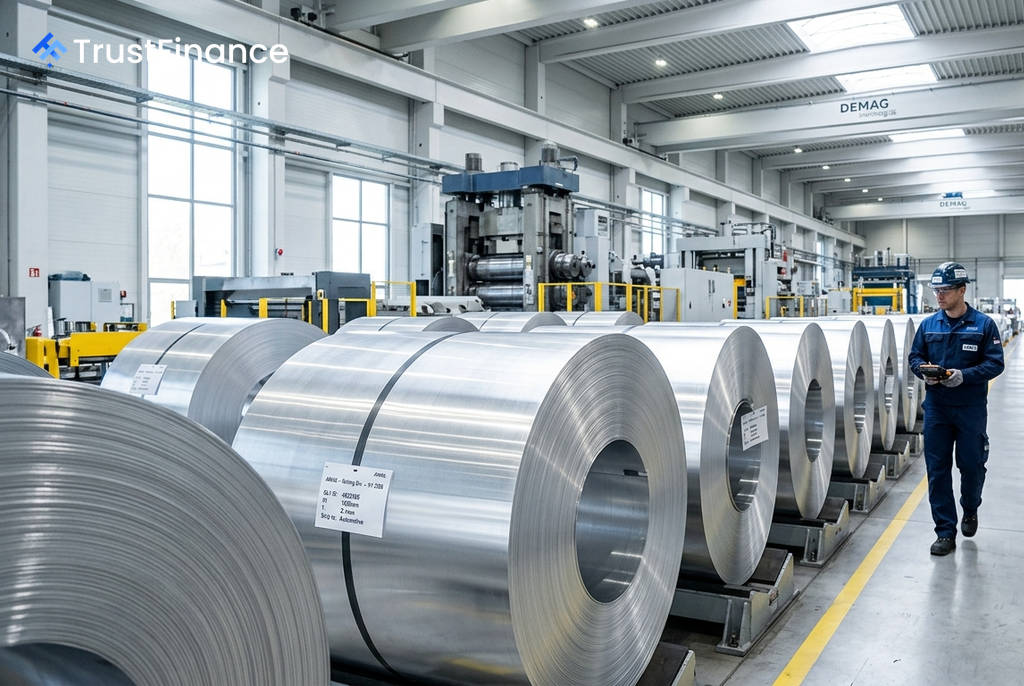
Austrian aluminium supplier AMAG announced that its revenue for the first half of 2026 rose 8.2% to €850.70 million, driven by a combination of higher shipment volumes and elevated aluminium prices. The company's profitability also saw substantial growth, with net income surging over the period.
First-Half Financial Highlights
AMAG reported strong growth across key profitability metrics, according to its H1 2026 results. Earnings before interest, taxes, depreciation, and amortization (EBITDA) increased by 25.4% to €101.10 million, leading to an improved EBITDA margin of 11.9%.
Net income after taxes experienced the most significant growth, climbing 73.7% to reach €40.70 million. However, the company's operating cash flow was negative at -€56.70 million for the first half of the year.
Drivers of Performance
The revenue increase was primarily supported by higher shipment volumes in the company's Rolling Division, with particularly strong demand from the automotive and heat exchanger markets. AMAG attributed the improved profitability to productivity gains and cost-efficiency measures implemented in its Casting and Rolling Divisions.
 Ad
Favorable external market conditions also provided a significant tailwind. The company's earnings were boosted by higher global aluminium prices and positive performance from its interest in the Canadian Alouette smelter.
Full-Year Outlook
Looking ahead, AMAG forecasts a full-year 2026 EBITDA in the range of €170 million to €190 million. The company anticipates continued strong earnings from its Metal Division, supported by high production levels and robust aluminium prices.
Despite the positive outlook, the company noted several market uncertainties that could pose risks. These include geopolitical developments, potential tariffs, volatile energy prices, and fluctuations in market prices for its products.
Read next
More on Stocks
FTC Orders Walmart, Uber, Delta to Disclose Data on Personalized Pricing
The U.S. Federal Trade Commission is demanding nine major companies, including leading retail, travel, and gig economy firms, to provide information on how they use consumer data for setting individual prices and wages.

Google Launches Gemini 4 Carbon AI Model to Bolster Cybersecurity Capabilities
Alphabet's Google has unveiled Gemini 4 Carbon, its latest AI model specifically designed for advanced cybersecurity tasks like vulnerability detection and secure code generation. The launch escalates competition with rivals OpenAI and Anthropic in the enterprise AI market.

Oracle Shares Surge After Unveiling $225 Billion Revenue Target for 2030
Oracle stock rose sharply after the company presented a long-term financial outlook targeting at least $225 billion in annual revenue by fiscal 2030, driven by its expanding AI infrastructure business.

DOJ Scrutinizes Nvidia's $12.9B Hugging Face Deal Amid Broader Antitrust Probe, Sources Say
The U.S. Department of Justice is reportedly examining Nvidia's planned $12.93 billion acquisition of AI platform Hugging Face as part of a wider, ongoing antitrust investigation into the chipmaker's market conduct.