
Story
AI Focus Reverses Earnings Season Volatility Pattern, Options Data Shows
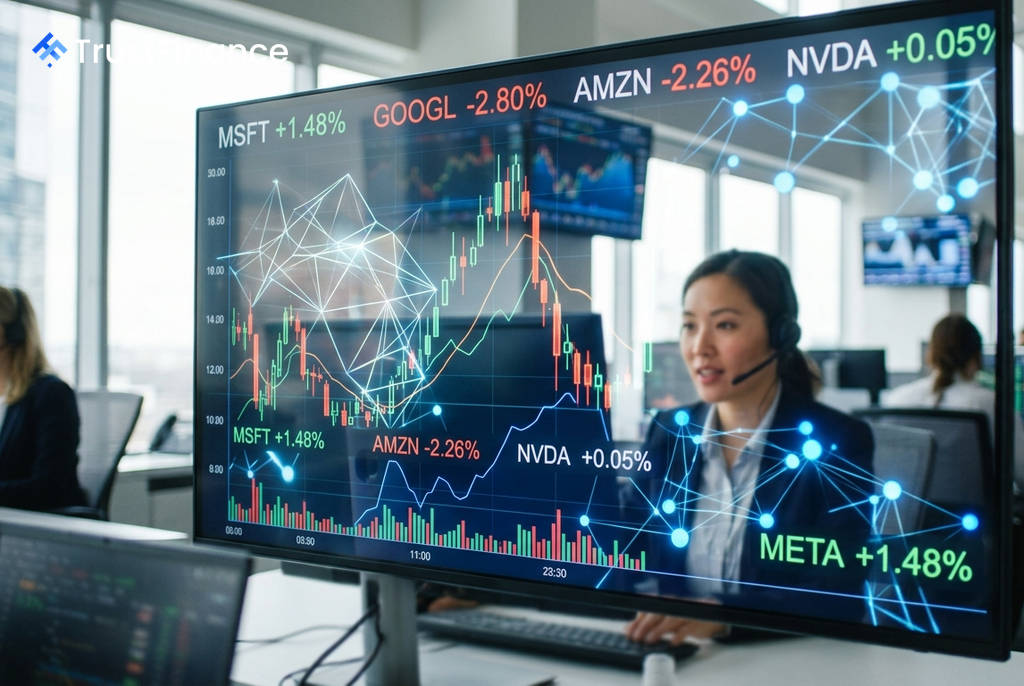
Investor focus on artificial intelligence has upended a long-standing pattern in earnings season volatility, with mega-cap technology firms seeing larger-than-usual stock swings while smaller companies experienced more muted reactions. Data from options analytics service ORATS shows that so-called "hyperscalers" broke from the norm where smaller, less liquid stocks typically see the largest post-earnings price moves.
AI-Driven Volatility Hits Mega-Caps
During the second-quarter earnings season that began in mid-July, some of the largest technology companies, including Amazon, Microsoft, Google, and Meta, produced significant stock swings that surpassed their historical averages. These moves were largely driven by investor reactions to the companies' capital expenditures on AI and whether those substantial investments appeared to be generating returns.
"The smaller companies in recent weeks have had more muted earnings moves – a contrast to the early weeks when AI and hyperscalers’ reports helped drive larger-than-usual moves," said ORATS founder Matt Amberson in a comment to Reuters.
Options Market Confirms Trend
 Ad
Analysis of options trading strategies highlights the reversal. An options straddle, which involves buying both a put and a call option and profits from a large move in either direction, was particularly profitable for mega-cap earnings reports early in the season.
- Week 1 (Mega-caps): The straddle strategy yielded an average gain of 23%, compared to a historical 12-quarter average loss of 2%.
- Week 4 (Smaller caps): The same strategy produced an average loss of 6%, slightly worse than the historical average loss of 5%.
A Break from Convention
Typically, smaller companies exhibit greater stock price volatility following earnings announcements. This is attributed to several factors, including thinner liquidity, smaller public floats, less institutional ownership, and sparser analyst coverage compared to their mega-cap counterparts. This season's results suggest that intense thematic focus, such as the current investor scrutiny of AI development, can be powerful enough to reverse these established market patterns.
Read next
More on Stocks
FTC Orders Walmart, Uber, Delta to Disclose Data on Personalized Pricing
The U.S. Federal Trade Commission is demanding nine major companies, including leading retail, travel, and gig economy firms, to provide information on how they use consumer data for setting individual prices and wages.

Google Launches Gemini 4 Carbon AI Model to Bolster Cybersecurity Capabilities
Alphabet's Google has unveiled Gemini 4 Carbon, its latest AI model specifically designed for advanced cybersecurity tasks like vulnerability detection and secure code generation. The launch escalates competition with rivals OpenAI and Anthropic in the enterprise AI market.

Oracle Shares Surge After Unveiling $225 Billion Revenue Target for 2030
Oracle stock rose sharply after the company presented a long-term financial outlook targeting at least $225 billion in annual revenue by fiscal 2030, driven by its expanding AI infrastructure business.

DOJ Scrutinizes Nvidia's $12.9B Hugging Face Deal Amid Broader Antitrust Probe, Sources Say
The U.S. Department of Justice is reportedly examining Nvidia's planned $12.93 billion acquisition of AI platform Hugging Face as part of a wider, ongoing antitrust investigation into the chipmaker's market conduct.