
Story
AI Chipmaker AXERA Reports 182% Revenue Surge in H1, Driven by Automotive and Edge AI Growth
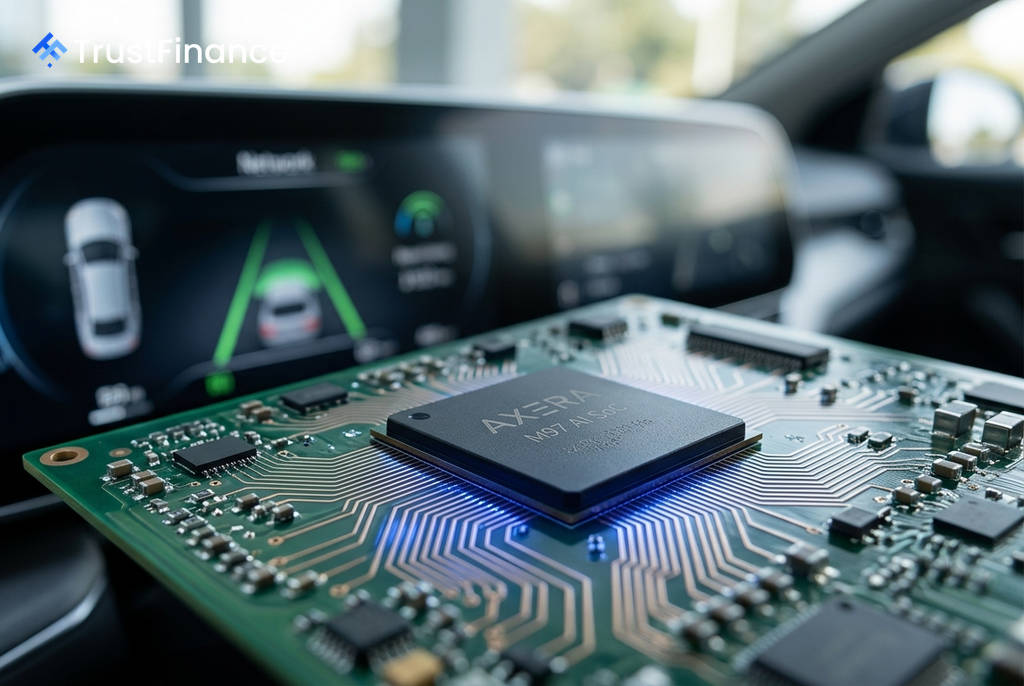
Chinese AI chip company AXERA reported a significant surge in revenue for the first six months of the year, with total income reaching RMB 402 million (approx. $55.5 million), an increase of 181.8% compared to the same period last year. The company's gross margin also saw a notable improvement, reaching 29%, according to its interim results filing.
Despite the rapid top-line growth, the company posted a net loss attributable to shareholders of RMB 582 million for the period.
Automotive and Edge AI Segments Lead Growth
The company's performance was driven by explosive growth in its core business units. The smart vehicle and edge AI divisions were the standout performers, both expanding by over 250%.
- Smart Vehicle Business: Revenue grew by 252.1% year-over-year.
- Edge AI Business: Revenue increased by 251.9% year-over-year.
- Terminal Computing Business: Revenue saw a 169.5% year-over-year increase.
The company attributed the growth to rising market demand for on-device AI processing power, particularly as large models shift from the cloud to edge devices and vehicles.
Smart Vehicle Chip Shipments Accelerate
 Ad
AXERA's intelligent automotive division shipped approximately 420,000 System-on-Chips (SoCs) in the first half of the year. The company secured 24 new mass-production vehicle model contracts during the period, bringing its total number of official OEM partners to 25, including seven international and joint-venture brands.
This growth is partly fueled by the implementation of new mandatory national safety standards in China for advanced driver-assistance systems (ADAS). The company also reported progress on its next-generation high-performance ADAS chips, with its M97 SoC delivering engineering samples and its M95 SoC successfully taping out in July.
Capturing On-Device AI Demand
In its edge AI segment, AXERA is capitalizing on the trend toward local AI processing, driven by the rise of AI agents and heightened user concerns over data privacy. The company launched its AX Clawbox series of solutions to meet demand for new "Agent Box" hardware for smart home and office applications.
Meanwhile, the terminal computing division's growth was powered by a more than 200% sales increase in its "Blacklight" series of visual perception SoCs. This demand stems from the need for high-quality, low-light video imaging in applications such as industrial automation, smart cities, and intelligent agriculture.
Read next
More on Stocks
FTC Orders Walmart, Uber, Delta to Disclose Data on Personalized Pricing
The U.S. Federal Trade Commission is demanding nine major companies, including leading retail, travel, and gig economy firms, to provide information on how they use consumer data for setting individual prices and wages.

Google Launches Gemini 4 Carbon AI Model to Bolster Cybersecurity Capabilities
Alphabet's Google has unveiled Gemini 4 Carbon, its latest AI model specifically designed for advanced cybersecurity tasks like vulnerability detection and secure code generation. The launch escalates competition with rivals OpenAI and Anthropic in the enterprise AI market.

Oracle Shares Surge After Unveiling $225 Billion Revenue Target for 2030
Oracle stock rose sharply after the company presented a long-term financial outlook targeting at least $225 billion in annual revenue by fiscal 2030, driven by its expanding AI infrastructure business.

DOJ Scrutinizes Nvidia's $12.9B Hugging Face Deal Amid Broader Antitrust Probe, Sources Say
The U.S. Department of Justice is reportedly examining Nvidia's planned $12.93 billion acquisition of AI platform Hugging Face as part of a wider, ongoing antitrust investigation into the chipmaker's market conduct.