
Story
AI Bubble Named Top Tail Risk by Fund Managers in BofA Survey
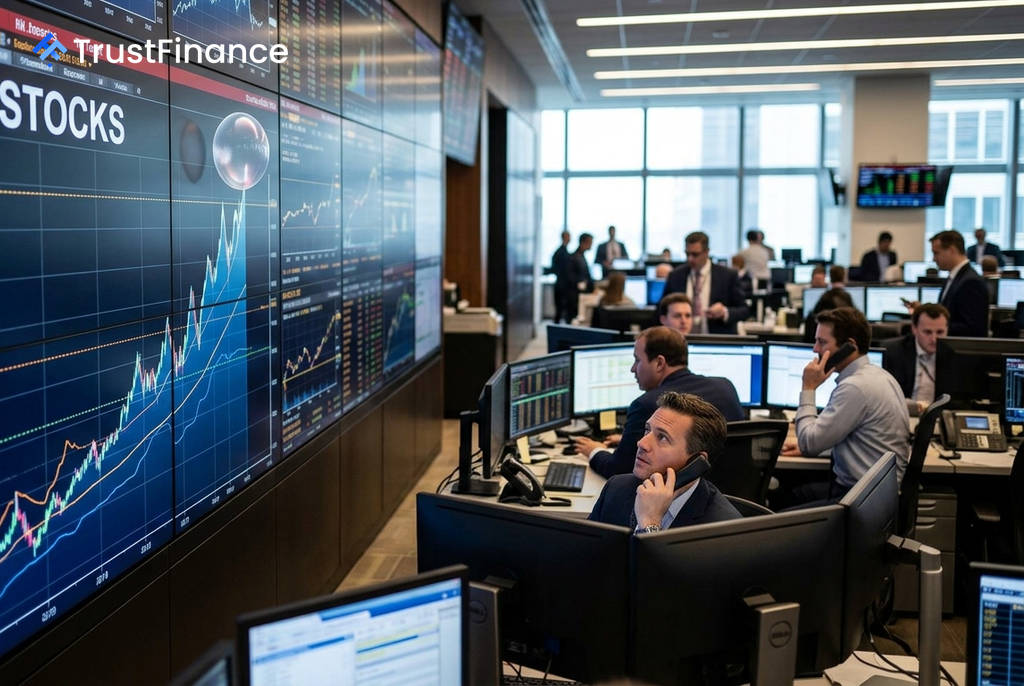
Fears of an artificial intelligence bubble have surged to become the top concern among global fund managers, according to Bank of America’s August survey released Tuesday. The report highlights a growing tension between widespread bullish positioning and rising anxiety over stretched valuations in the technology sector.
Bullish Positioning Meets Bubble Fears
The monthly Global Fund Manager Survey reveals a significant shift in perceived risks, with an AI bubble now cited as the biggest tail risk by 32% of respondents. This concern has overtaken previous top risks such as inflation and geopolitical instability.
Despite this anxiety, managers remain heavily invested in equities. Key indicators from the survey point to a deeply bullish, or potentially complacent, market stance:
- Cash levels have dropped to 3.5%, the sixth-lowest reading since 1998.
- This low cash position triggers Bank of America’s proprietary contrarian “sell” signal, which is activated when levels fall to 4% or below.
- A majority of managers, 56%, now expect a “no landing” scenario for the economy, the highest level of optimism since February 2022.
- Global equity allocation reached a net 56% overweight, its highest point since November 2021.
De-Risking Under the Surface
While the headline figures suggest widespread bullishness, the data also indicates that sophisticated investors may already be reducing their exposure. The most crowded trade, “long semiconductors,” saw its prevalence drop sharply from 82% of managers in July to 53% in August.
 Ad
This rotation is further supported by BofA’s Asia-focused survey, where 59% of fund managers reported moving into defensive, value, and cyclical stocks to hedge against potential AI-related downside. A majority also indicated they require clearer evidence of AI monetization before increasing their exposure.
Underpinning the long-term case for AI, however, is a strong outlook for capital spending. BofA recently raised its forecast for hyperscaler AI capex to $3.6 trillion through 2028, a 17% increase from the prior month's projection, suggesting the foundational investment cycle remains robust.
Implications for Investors
The survey paints a complex picture for markets. The primary concern is the disconnect between managers identifying an AI bubble as the top risk while simultaneously holding minimal cash and high equity allocations. BofA’s contrarian sell signal suggests that with most investors already fully invested, there may be fewer marginal buyers to push the market higher, increasing vulnerability to a downturn.
The significant unwinding of the crowded semiconductor trade suggests that while the bubble narrative is gaining traction, a tactical de-risking is already in progress. The market appears caught between a powerful, long-term technology spending cycle and signs of short-term speculative froth and crowded positioning.
Read next
More on Stocks
FTC Orders Walmart, Uber, Delta to Disclose Data on Personalized Pricing
The U.S. Federal Trade Commission is demanding nine major companies, including leading retail, travel, and gig economy firms, to provide information on how they use consumer data for setting individual prices and wages.

Google Launches Gemini 4 Carbon AI Model to Bolster Cybersecurity Capabilities
Alphabet's Google has unveiled Gemini 4 Carbon, its latest AI model specifically designed for advanced cybersecurity tasks like vulnerability detection and secure code generation. The launch escalates competition with rivals OpenAI and Anthropic in the enterprise AI market.

Oracle Shares Surge After Unveiling $225 Billion Revenue Target for 2030
Oracle stock rose sharply after the company presented a long-term financial outlook targeting at least $225 billion in annual revenue by fiscal 2030, driven by its expanding AI infrastructure business.

DOJ Scrutinizes Nvidia's $12.9B Hugging Face Deal Amid Broader Antitrust Probe, Sources Say
The U.S. Department of Justice is reportedly examining Nvidia's planned $12.93 billion acquisition of AI platform Hugging Face as part of a wider, ongoing antitrust investigation into the chipmaker's market conduct.