
Story
Wynn Resorts Sees Surge in Bullish Options Activity
Summary
Options volume for Wynn Resorts climbed to nearly 10,000 contracts, with call options representing over 90% of the activity, signaling strong bullish sentiment among traders.
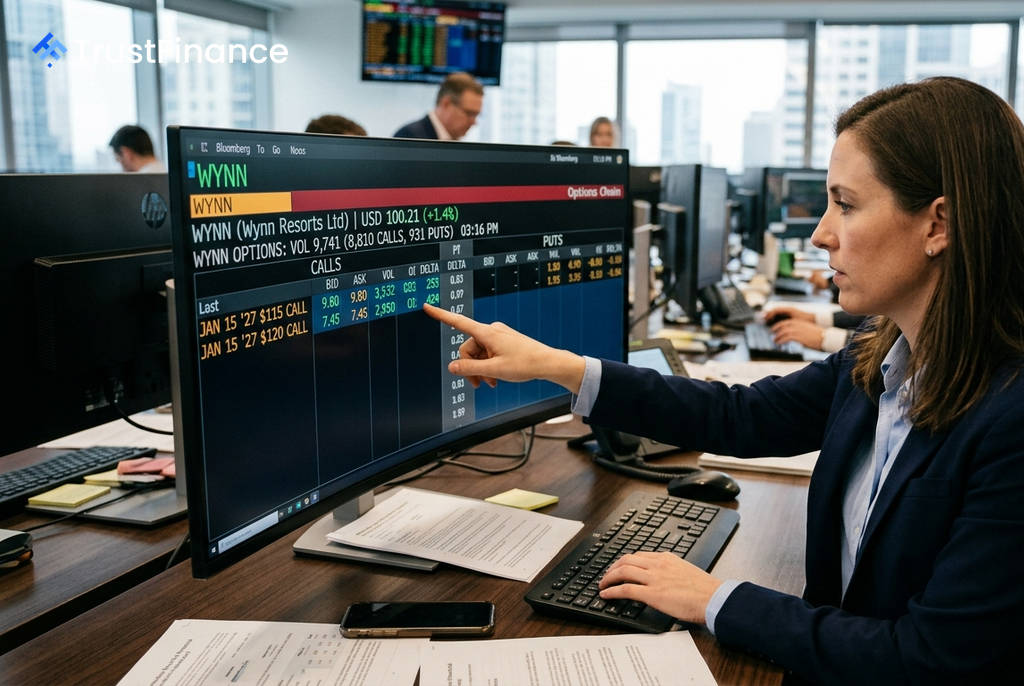
Wynn Resorts (WYNN) experienced a significant surge in options trading on Friday, with total volume reaching 9,741 contracts by late afternoon. The activity was overwhelmingly bullish, with call options accounting for the vast majority of trades as the company's shares posted gains.
Trading Volume Breakdown
According to exchange data compiled by Bloomberg, trading was heavily skewed towards optimistic bets on the stock's future price. The key figures as of 3:10 p.m. New York time include:
- Total Contracts: 9,741
- Call Options (Bullish): 8,810 contracts
- Put Options (Bearish): 931 contracts
This lopsided ratio indicates a strong speculative interest in the potential for Wynn's stock to rise. Concurrent with the options activity, Wynn Resorts shares were trading up 1.4% at $100.21.
Spotlight on Long-Term Calls
The most significant activity was concentrated in long-dated call options, specifically those expiring in January 2027. This suggests traders are positioning for substantial price appreciation over the next few years.
 Ad
AdTwo contracts stood out for their high volume relative to their existing open interest, which points to the establishment of new positions:
- The January 15, 2027 $115 call saw 3,532 contracts change hands, far exceeding the prior open interest of 253 contracts.
- The January 15, 2027 $120 call accounted for 2,850 contracts, compared to its open interest of 424 contracts.
Volatility and Skew Analysis
Market data also showed a decline in the stock's implied volatility. Wynn's three-month volatility fell by 0.77 percentage points to 36.85%, which can occur when a stock's price rises steadily.
Meanwhile, the three-month 90/110 skew, a measure of the relative demand for puts versus calls, increased slightly. This suggests that despite the overall bullish sentiment, the cost of protection against a downturn has not significantly decreased, a common feature in equity options markets.