
Story
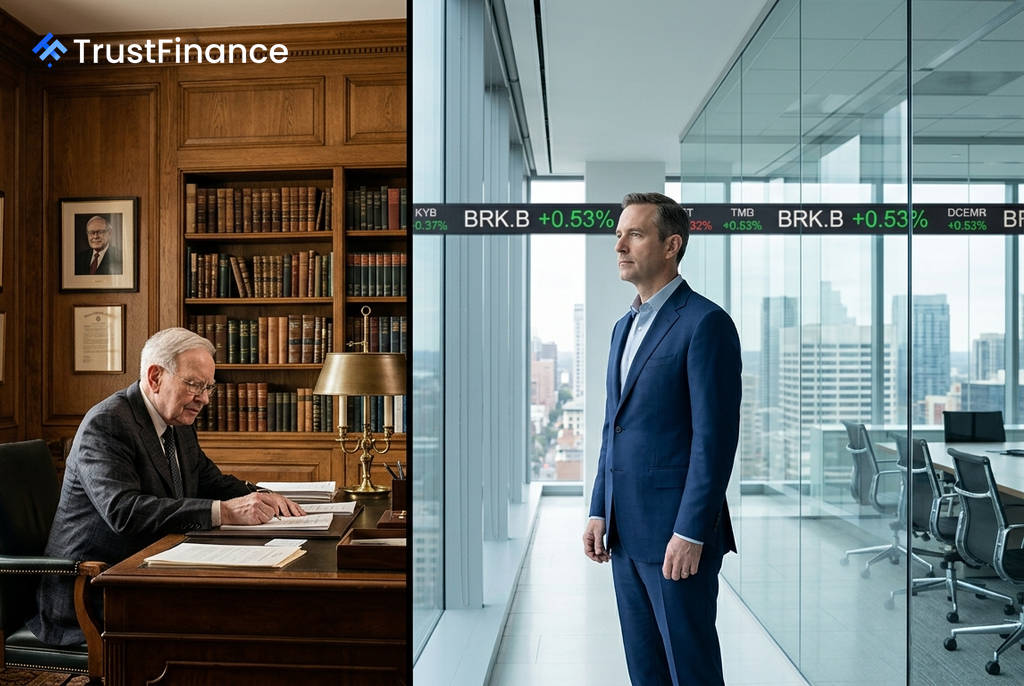
Berkshire Hathaway Faces Succession Test as Buffett Sets 8-Year Share Donation Plan
Summary
Warren Buffett's plan to donate his entire Berkshire Hathaway stake by 2034 introduces a significant supply overhang, testing the company's financial strength and the leadership of his successor, Greg Abel.
Berkshire Hathaway is navigating a pivotal transition as its founder, Warren Buffett, has formalized a plan to donate his entire multi-billion dollar stake within eight years. This development creates an unprecedented structural challenge for the $1.06 trillion conglomerate, pitting a new era of leadership against the company's legendary financial fortitude.
A New Supply Overhang
The most significant factor for investors is the timeline for the distribution of Buffett's holdings. The 95-year-old, who stepped down as CEO this year, has publicly committed to donating his entire stake—equivalent to 12 million Class B shares—by the end of 2034. This creates a predictable and substantial supply of shares set to enter the market via philanthropic organizations over the next eight years, a variable investors have never before had to factor into Berkshire's valuation.
This succession plan coincides with other pressures. The company's net income is projected to decline this year, and its stock has underperformed the broader market year-to-date with a -2.02% return. Without a dividend, investors are now weighing whether the historical "Buffett premium" will be replaced by a succession discount as CEO Greg Abel's capital allocation strategy is tested on a grand scale.
Fortress Balance Sheet Endures
Countering these concerns is Berkshire's formidable financial position. The company maintains a massive cash hoard that provides both a defensive cushion during economic downturns and the firepower to make opportunistic acquisitions. This strength has been central to its six-decade history of compounding value.
 Ad
AdThe investment portfolio also continues to evolve under Buffett's guidance. Recent strategic moves include building a roughly $31 billion stake in Alphabet and acquiring homebuilder Taylor Morrison, signaling a pivot toward technology and assets positioned to benefit from structural economic trends. Despite a CEO transition at Apple, Berkshire's largest single stock holding, Buffett has reaffirmed his conviction in the tech giant.
Market Implications
For investors, the central question is how to price Berkshire's future without its iconic founder as a permanent anchor. The company's stock is known for its low volatility, an attractive feature for risk-averse investors, but the portfolio carries significant concentration risk, with Apple and Alphabet dominating its equity holdings.
While the Class B shares (BRK.B) offer an accessible entry point for most investors, the new dynamics shift the investment thesis. The bull case relies on the company's institutional DNA and balance sheet, while the bear case is now clearly defined by the eight-year share distribution timeline and the unproven nature of the post-Buffett era.
Read next
More on Stocks
ExxonMobil in Advanced Talks for Venezuela Return, Eyeing Former Orinoco Project
The U.S. oil major is reportedly negotiating a return to the Petromonagas heavy oil project, a significant reversal nearly two decades after its assets were nationalized by the Venezuelan government.

US House Passes Bill Targeting Data Center Power Grid Costs
The U.S. House of Representatives has advanced the Ratepayer Protection Act, the first legislation of its kind aimed at making large power users like data centers bear the costs of new electricity infrastructure.

New Zealand's Q2 GDP Growth Exceeds Forecasts but Remains Tepid at 0.2%
New Zealand's economy grew 0.2% in the second quarter, topping analyst and central bank forecasts, according to official data. However, the pace of expansion remains slow amid persistent economic headwinds and recent interest rate hikes.

Snap Partners With Salesforce, Nvidia to Target Enterprise Market With AR Glasses
Snap Inc. has announced strategic partnerships with Salesforce, Nvidia, and Amazon Web Services to integrate enterprise-grade AI and software tools into its Specs augmented-reality glasses, signaling a major push into the corporate market.